GRS Space
A blogger whose audience follows her lifestyle online opens a studio — not as a business in the conventional sense, but as her content made physical.
Gallery
Drawings
Description
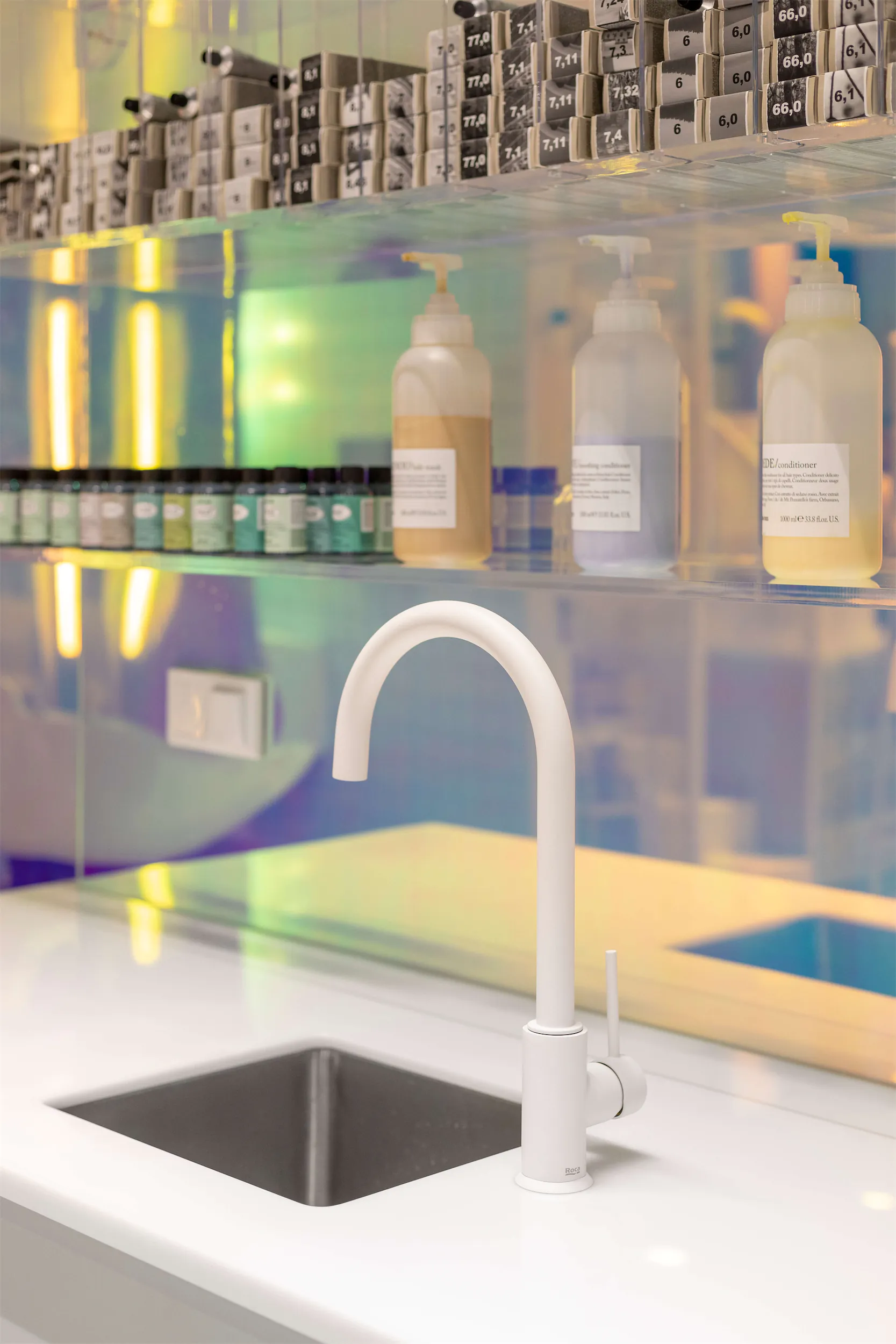
The Blog as Brief
Valeria Simakova runs a blog about makeup, healthy eating, and conscious consumption. Japanese matcha, recycling, makeup as a way to enhance rather than transform — all of this existed in her online presence before the studio did. By the time she decided to open GRS Space, the meaning of the space already existed. What remained was to translate it into an architectural brief.
This is a rare starting point for a commercial interior. Beauty studios are usually built around an image: softness, pink, mirrors, neon signs. Here the image already existed — and it was about something else entirely.
From this came a concrete brief: a studio without a gendered division, where nail care is for everyone. A minimum of new materials. Recycled and restored wherever possible.
Open Space Without Unnecessary Boundaries
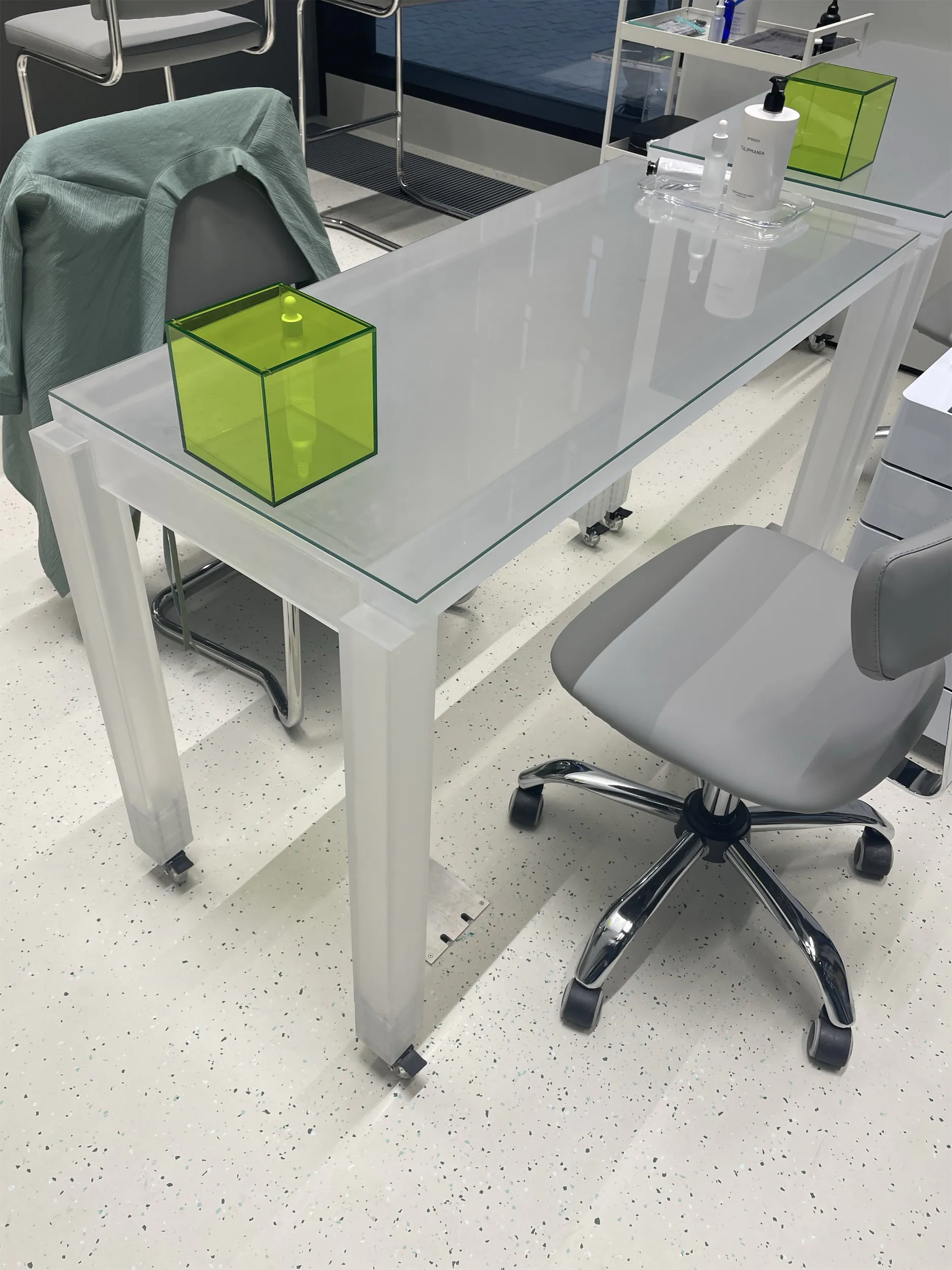
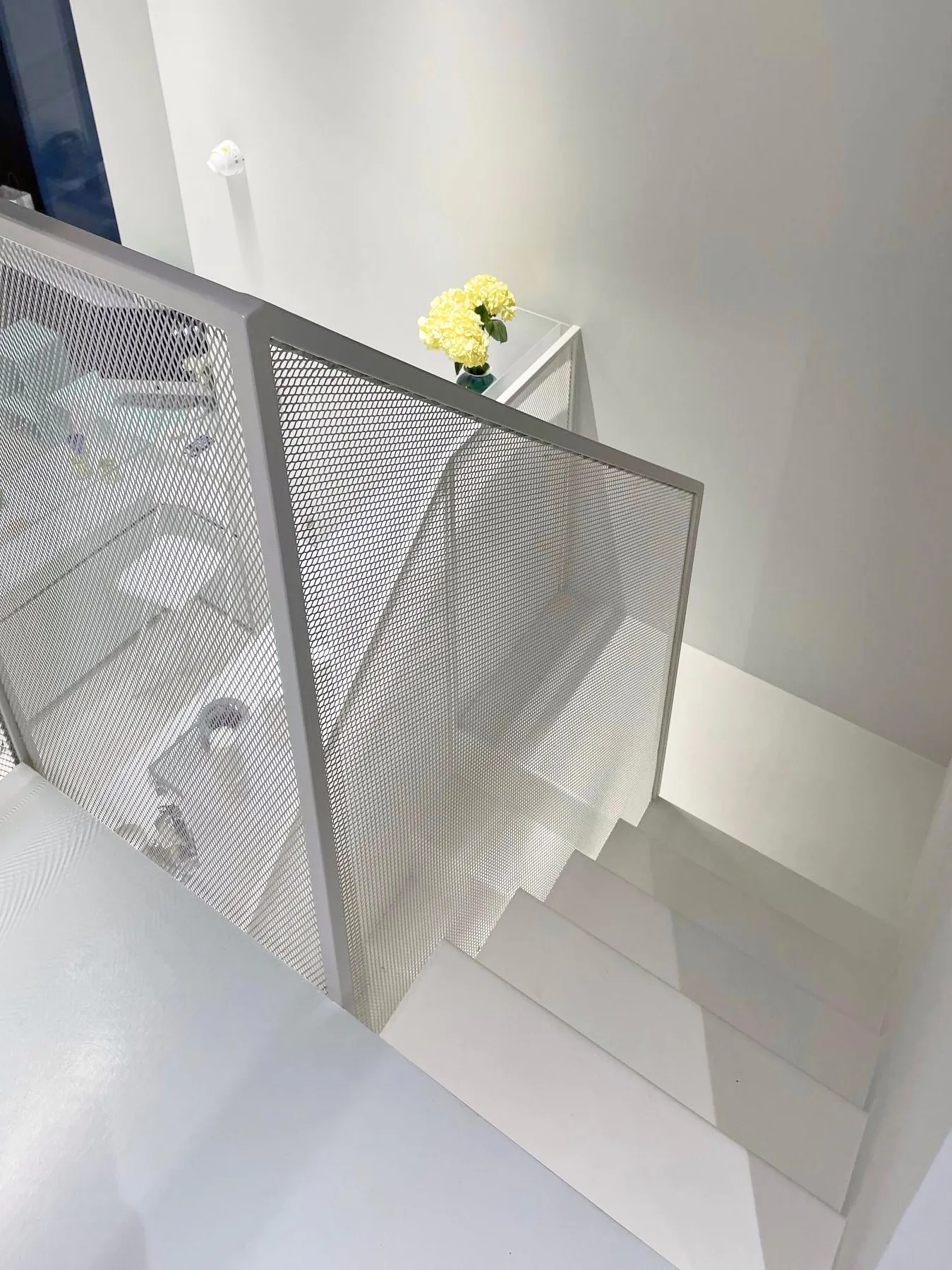
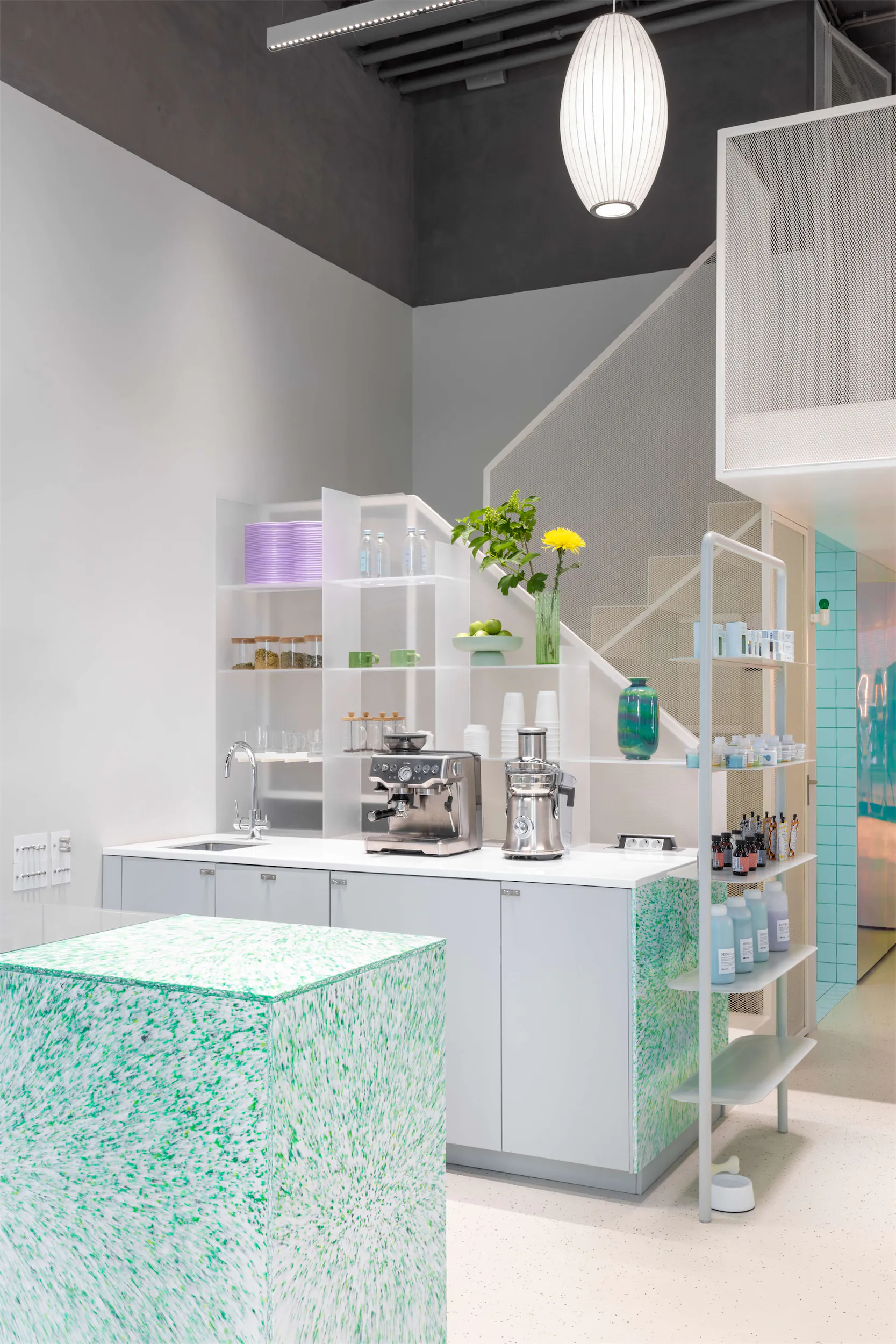
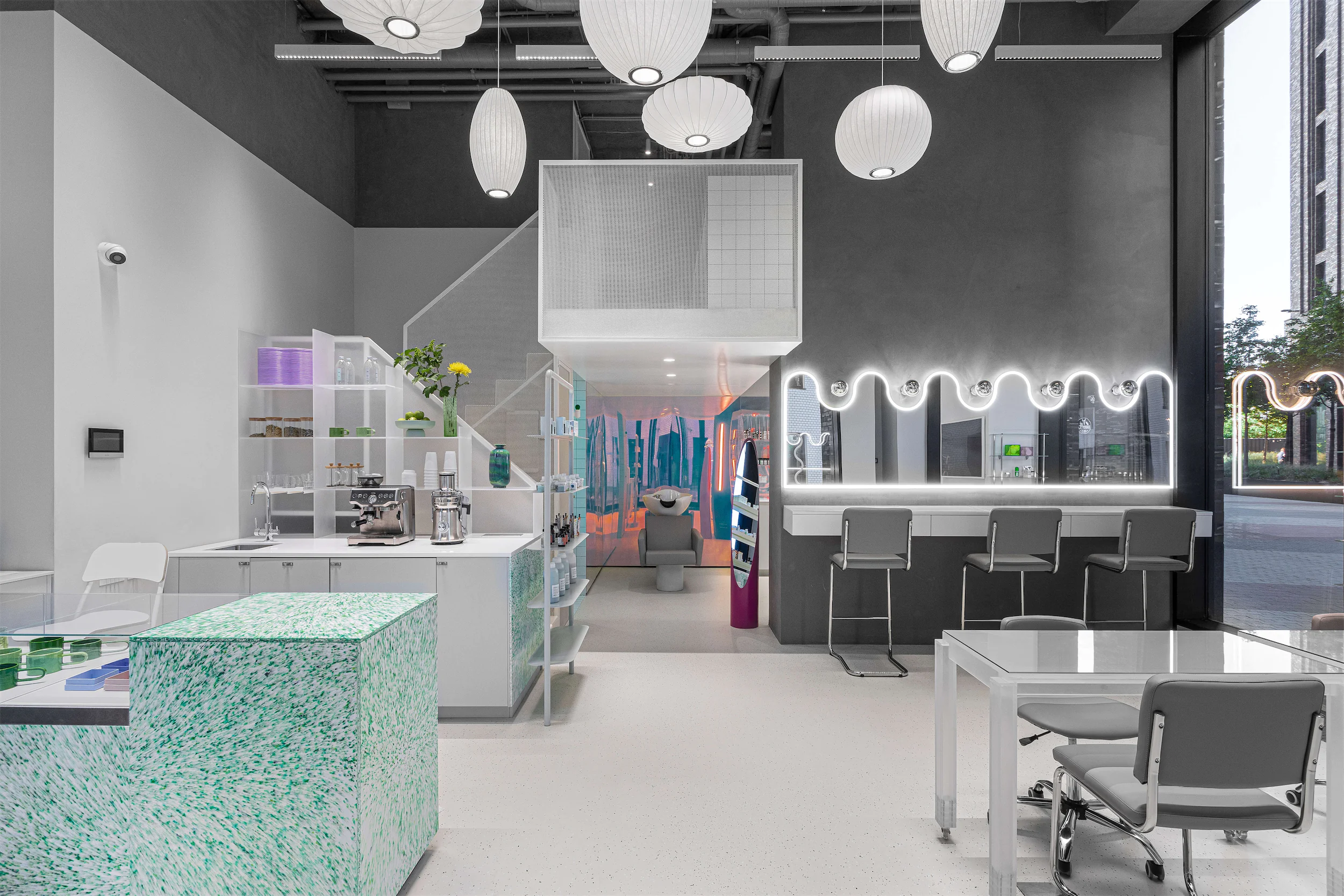
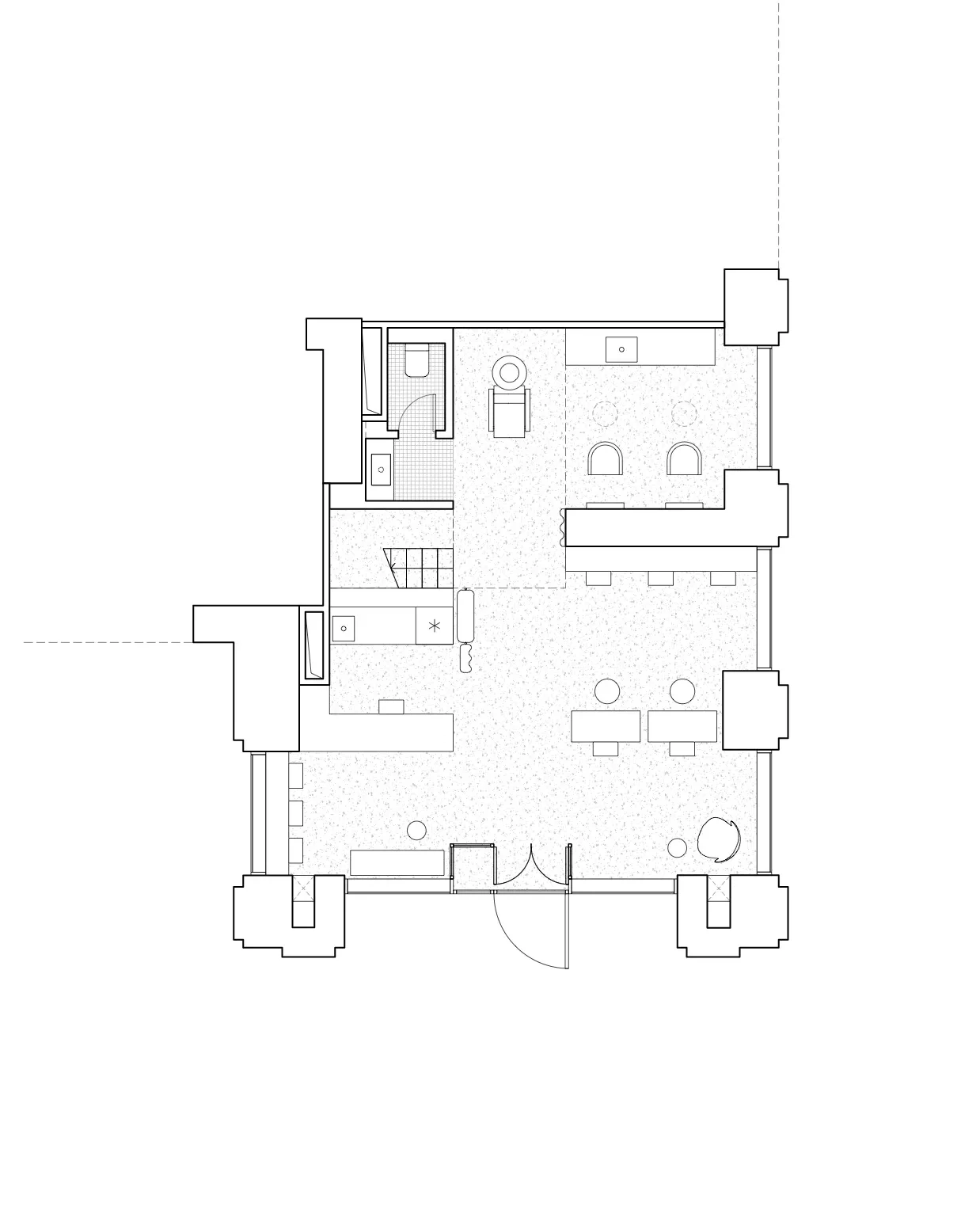
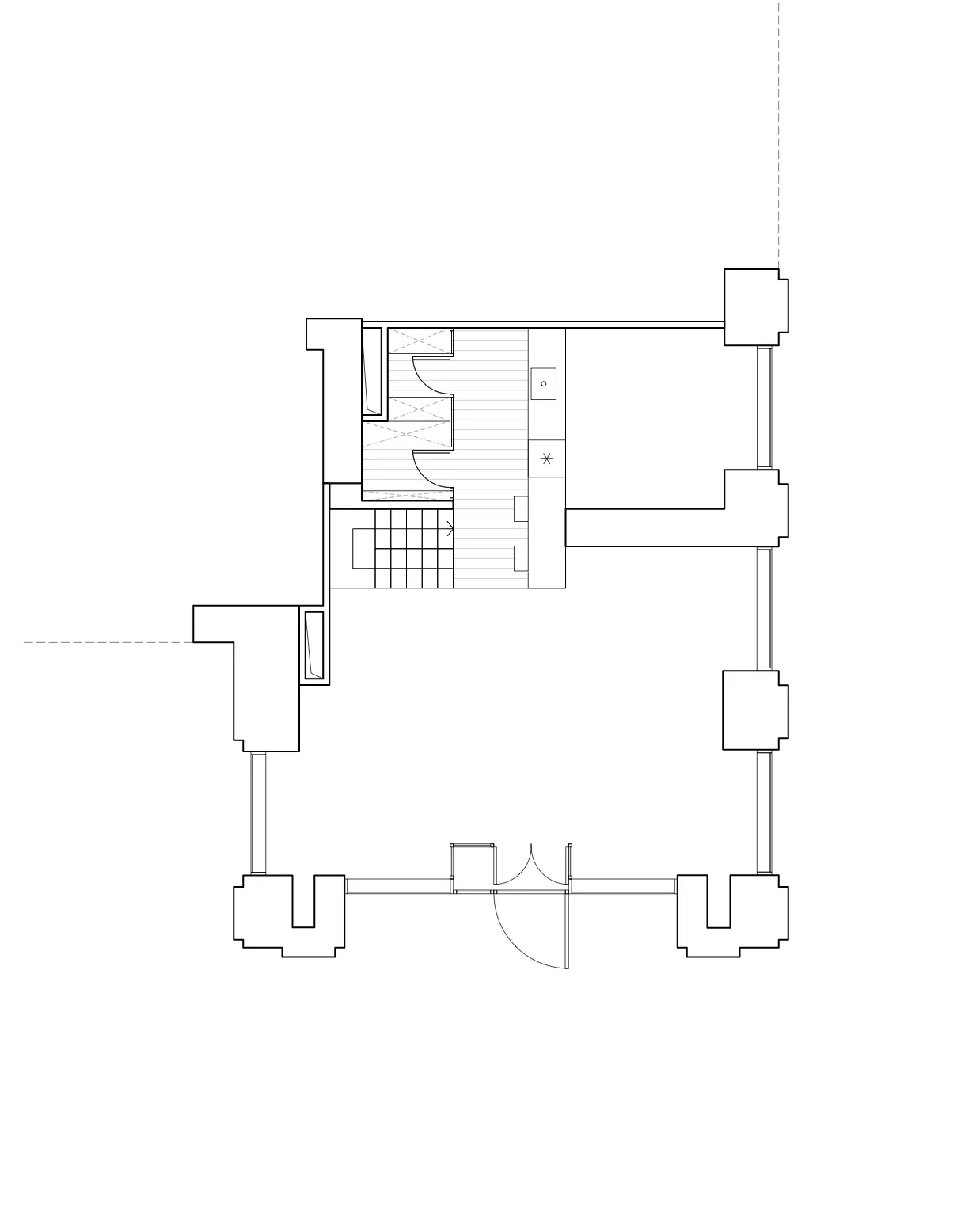
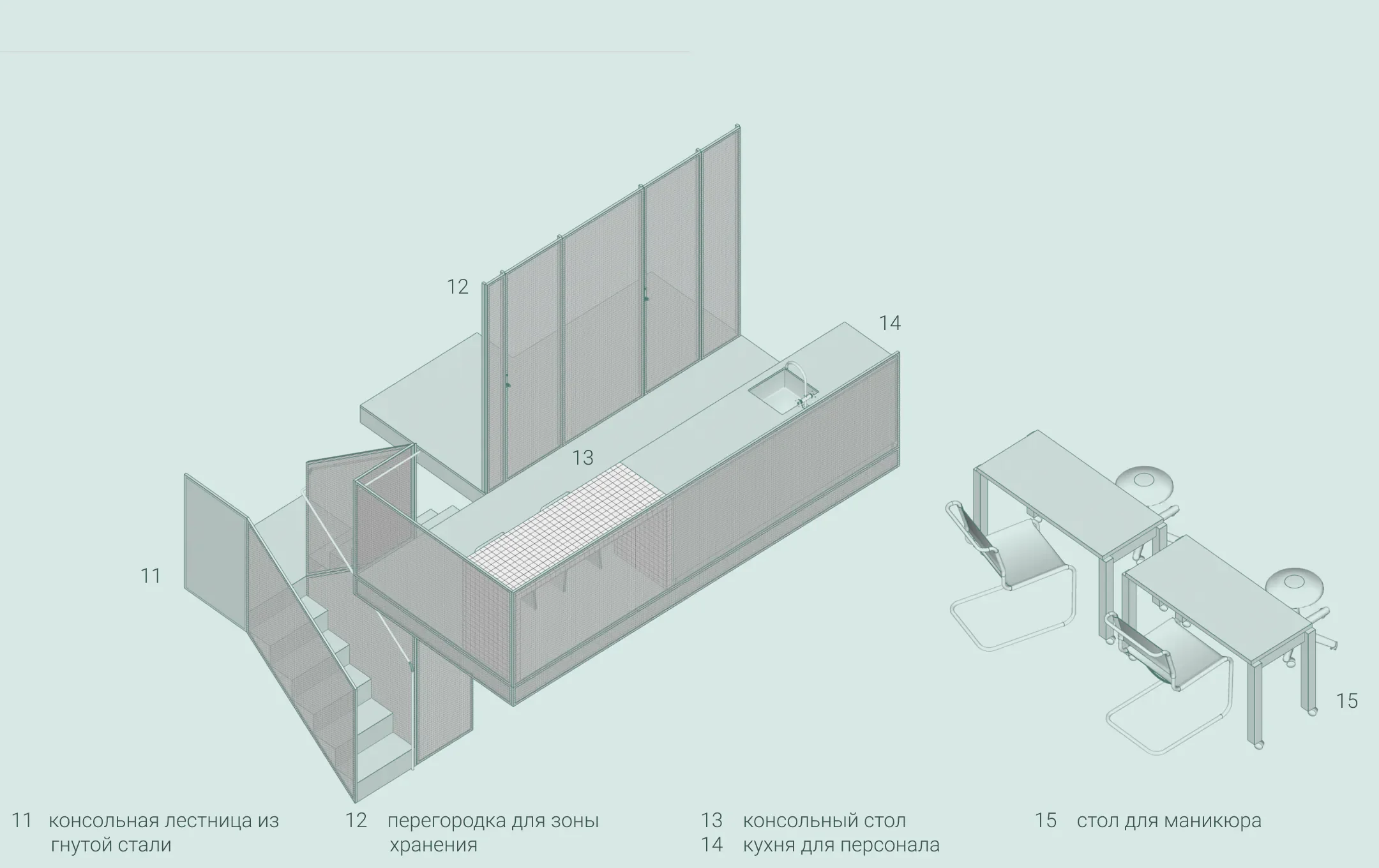
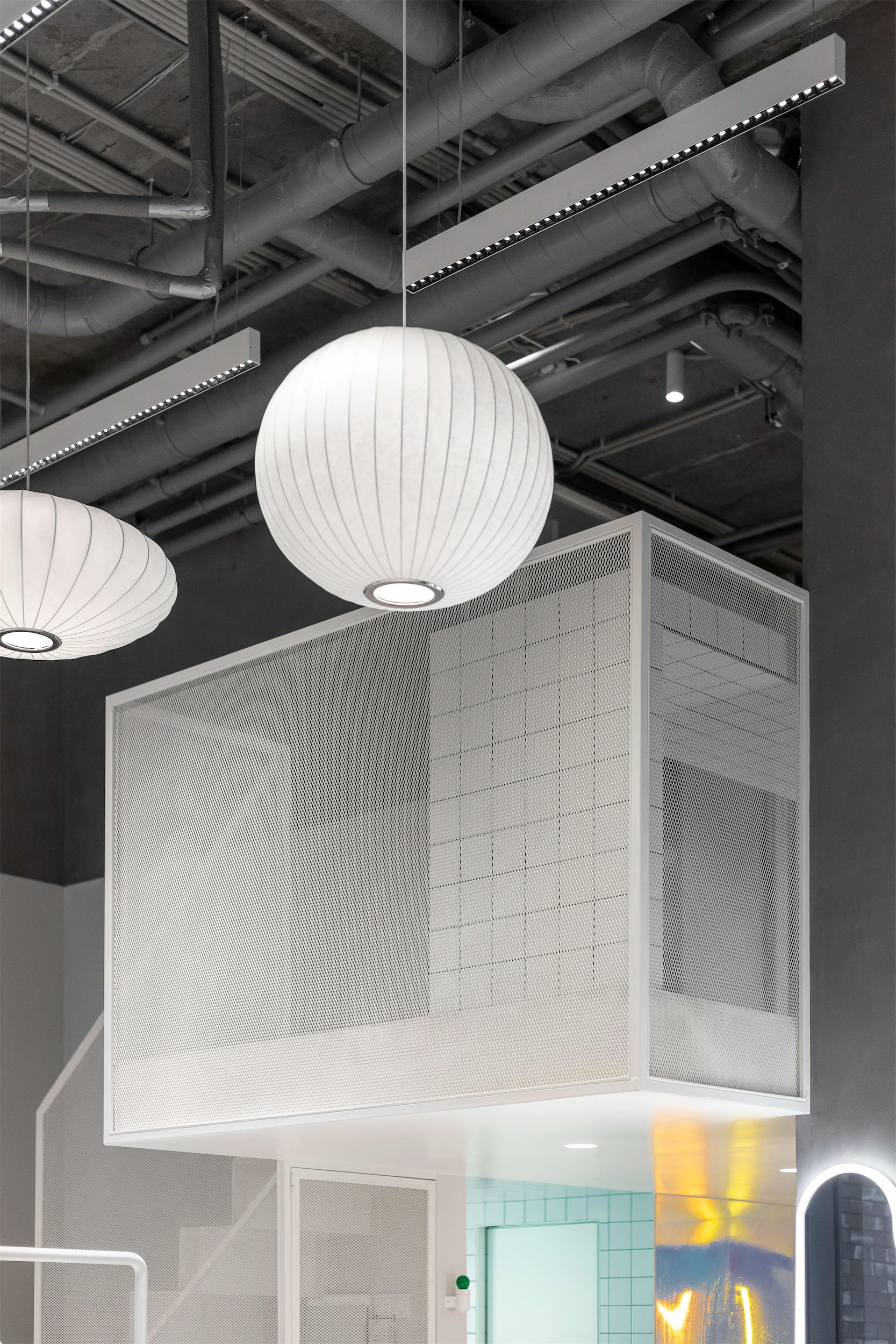
All working zones of the studio — reception, manicure, styling, café — exist in a single space without partitions. Storage is tucked above the bathroom block, the only enclosed volume. The finish palette is minimal: no decorative panels or suspended structures that would produce a sense of completion through added bulk.
The open plan serves the stated neutrality. When someone enters, they see the whole studio at once and are not choosing between their zone and someone else’s. Private cabinets would create exactly the division the project set out to refuse.
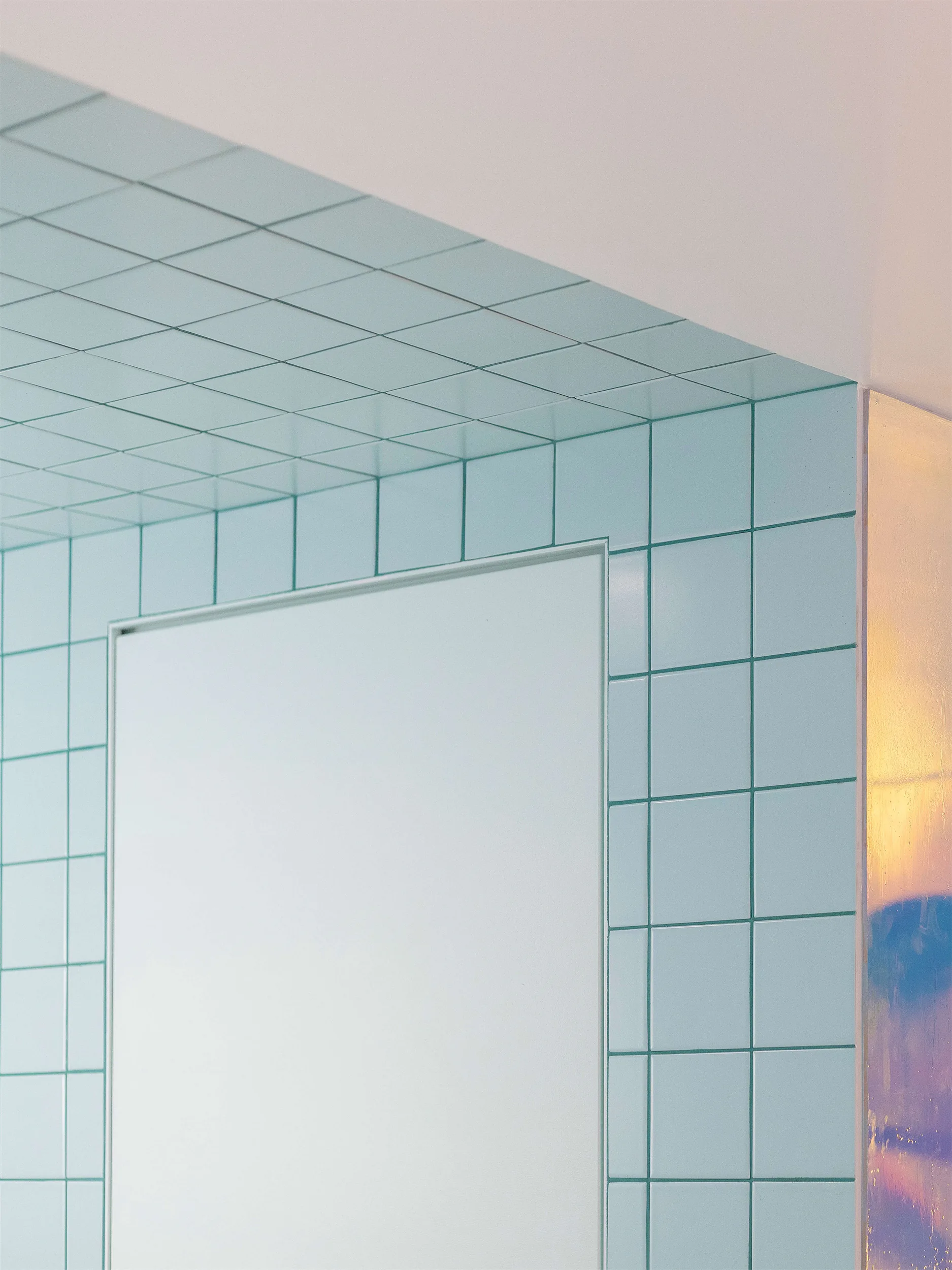
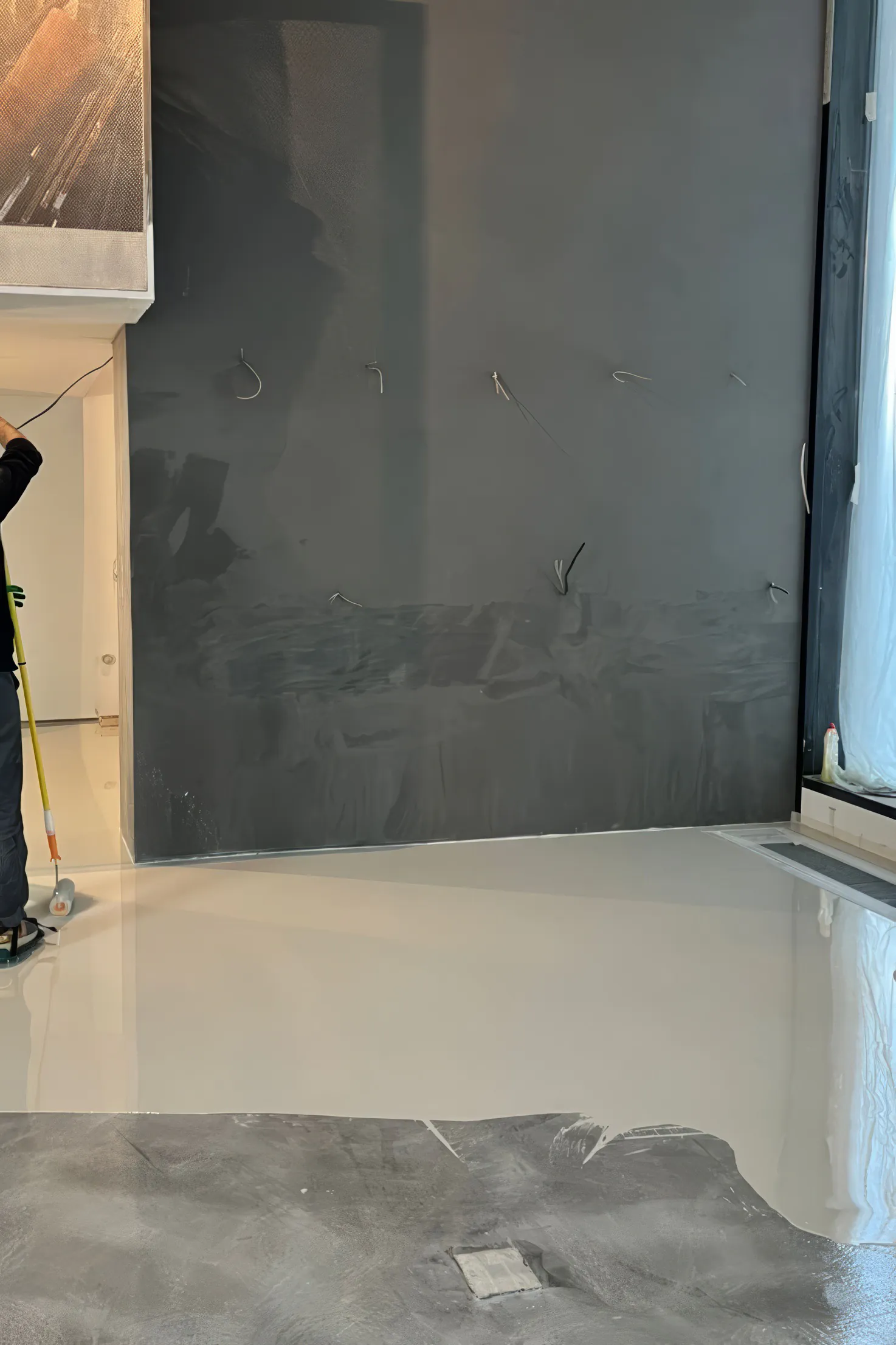
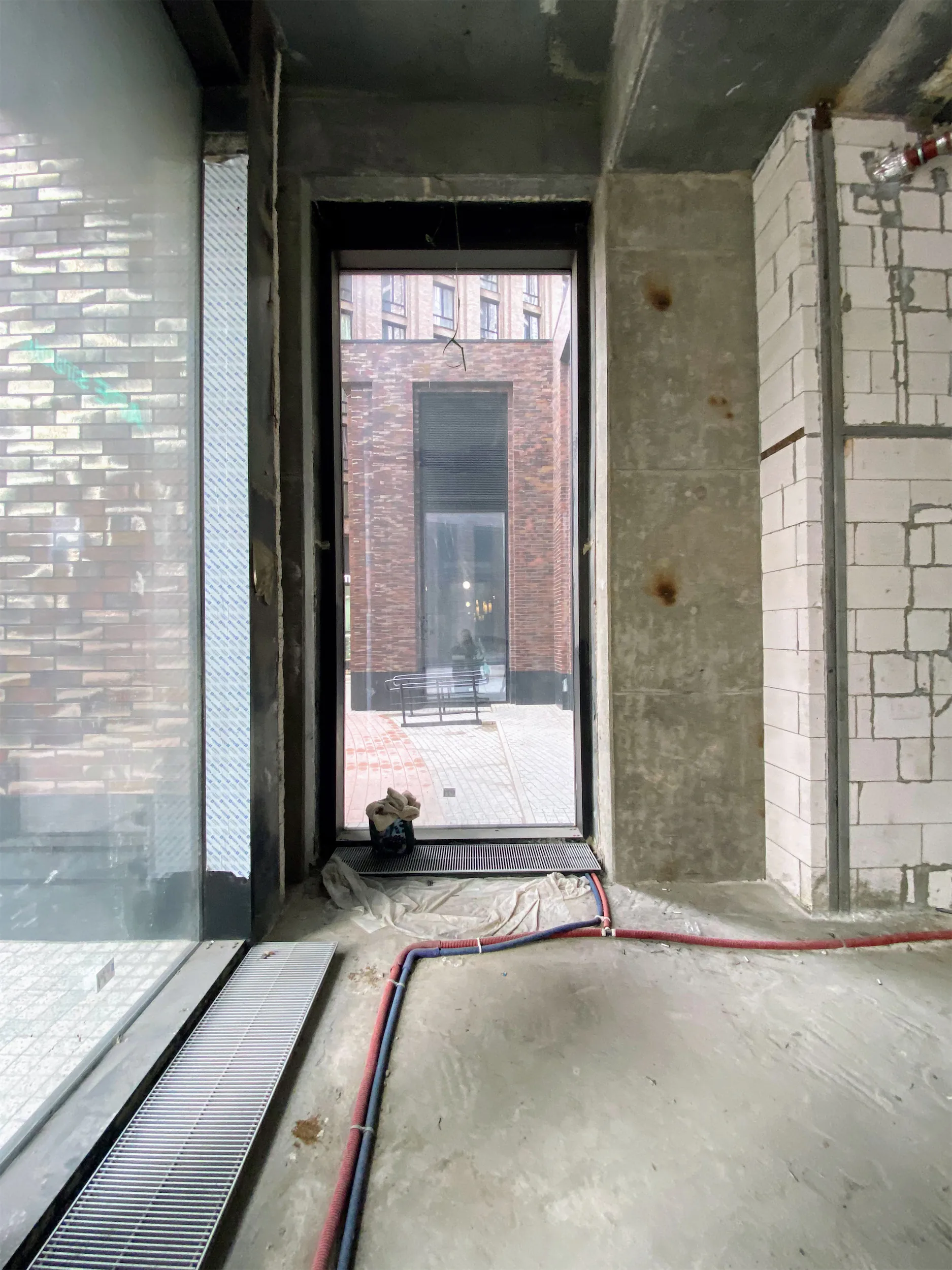
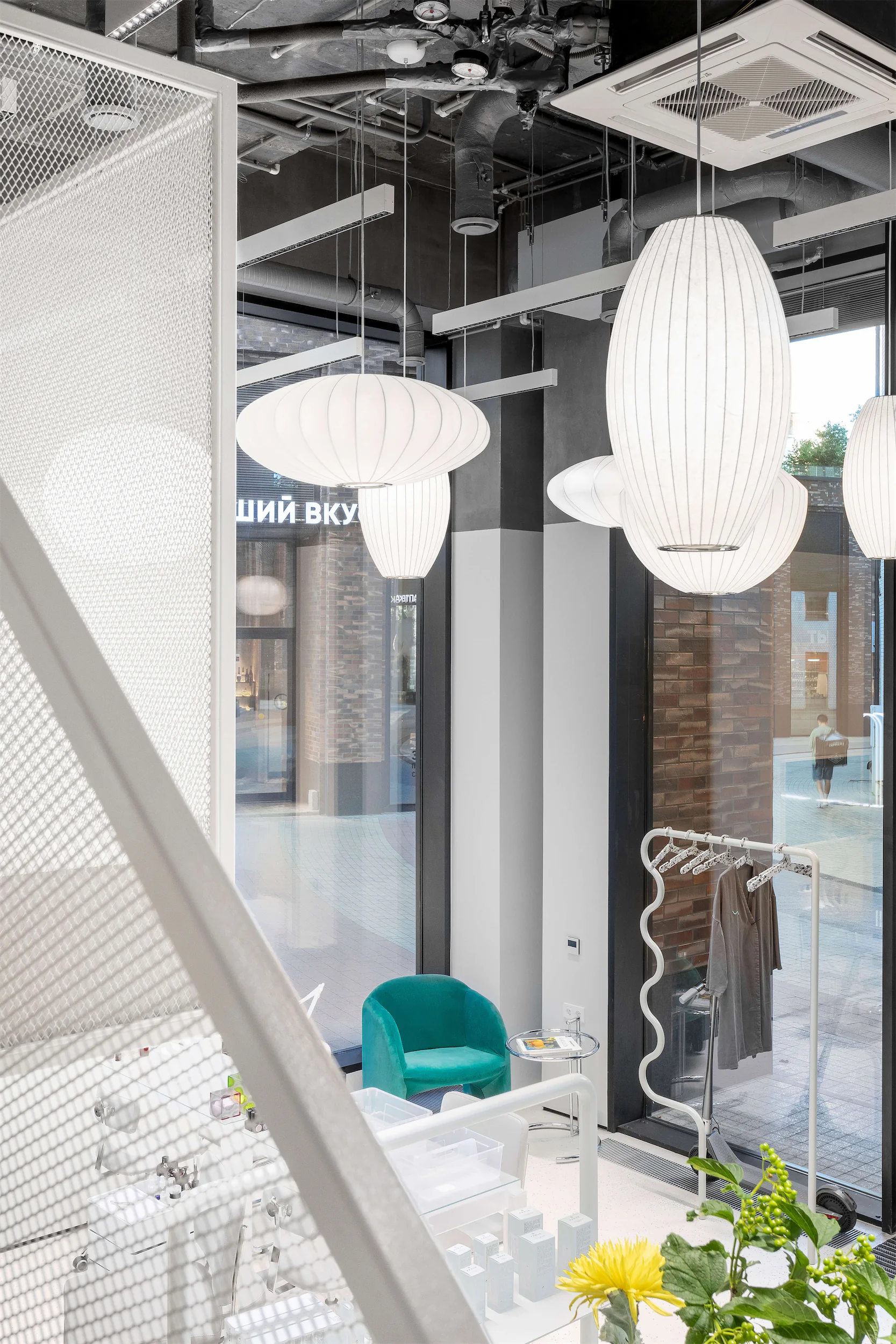
The same logic governs the finishes. The textured concrete ceiling with exposed services is left as found — it contrasts with the smooth light floor and holds the height of the room without additional volume. The uneven surface is not a defect but part of the material honesty of the space.
200 kg of Bottle Caps
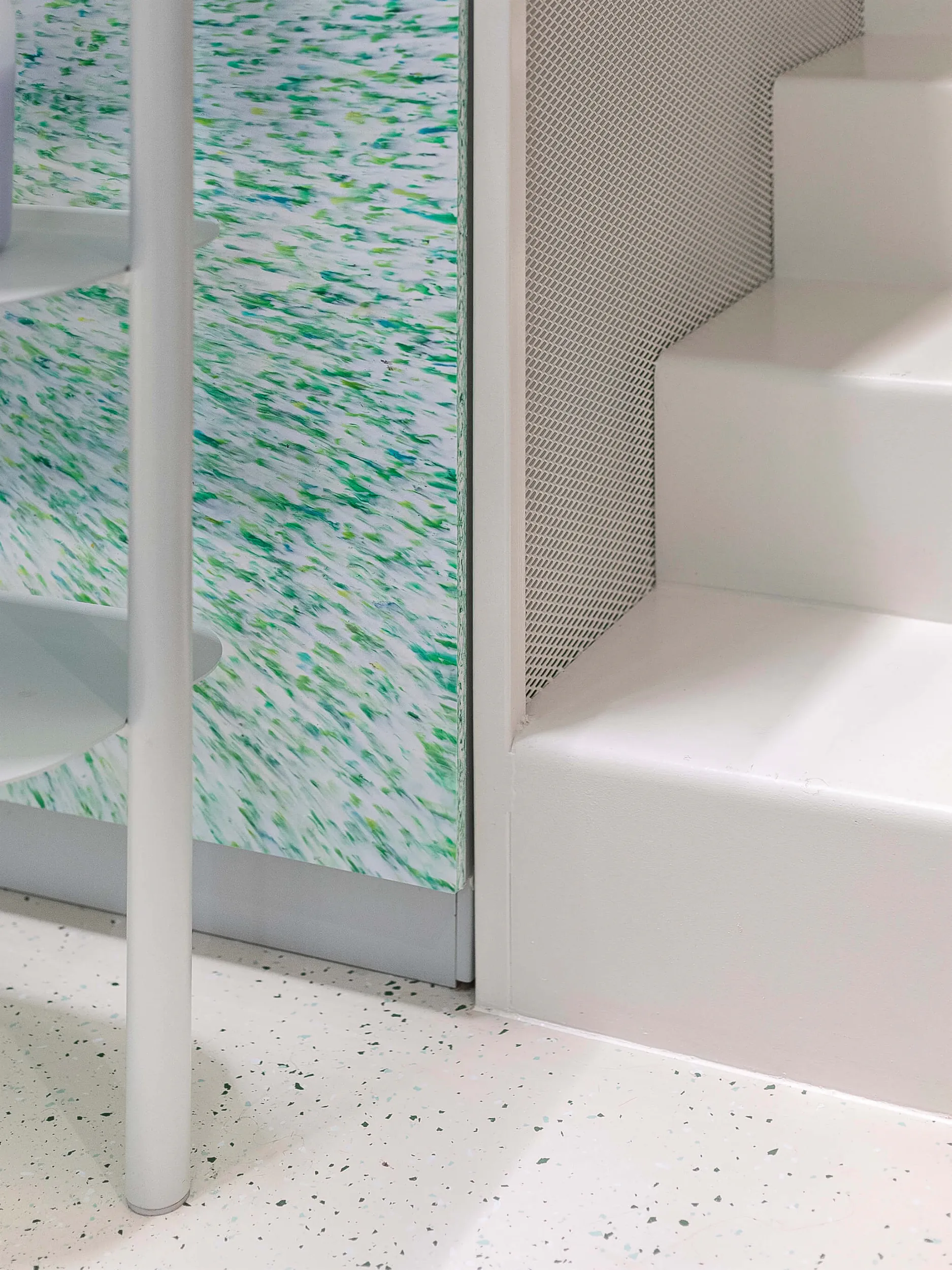
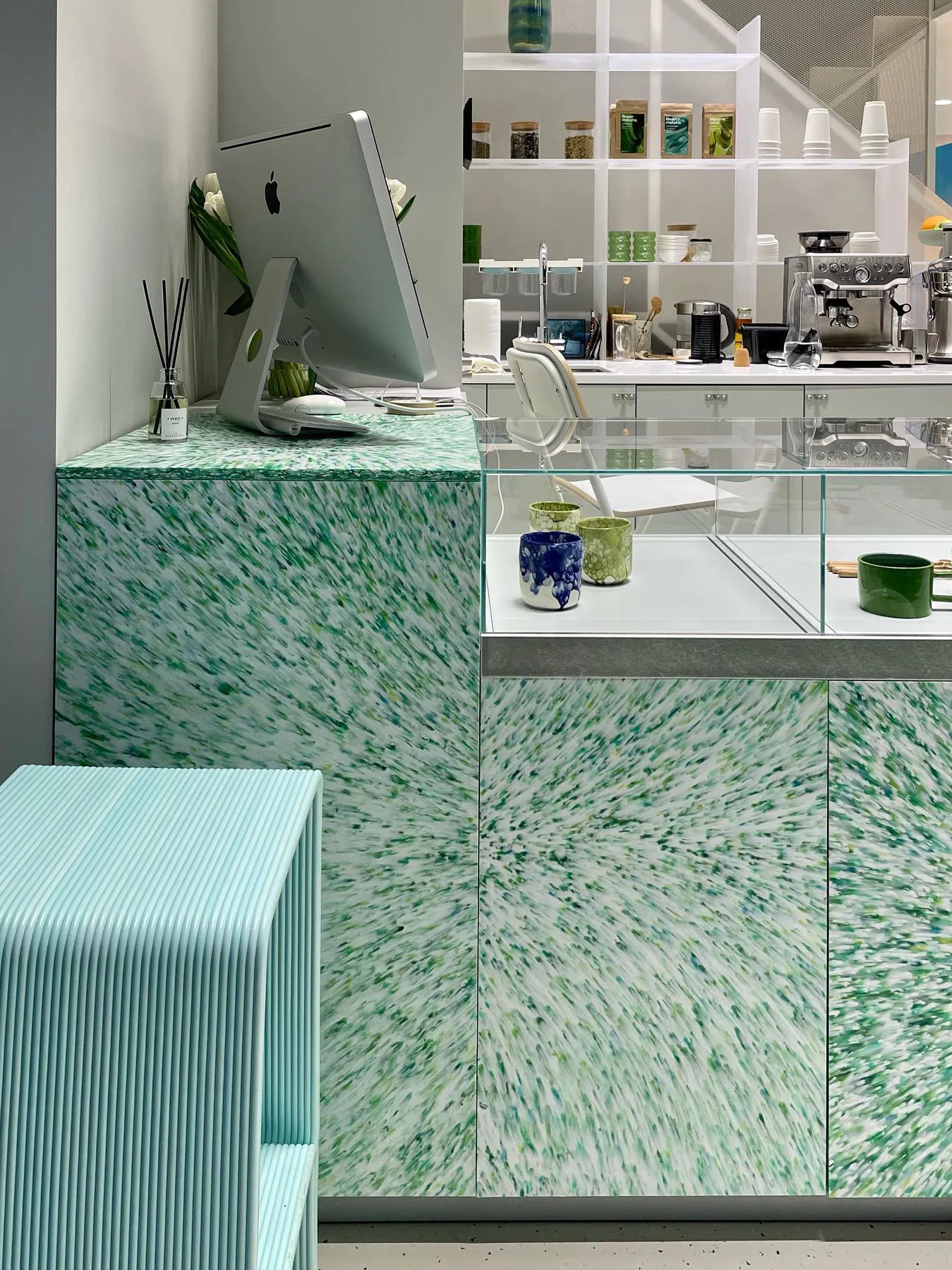
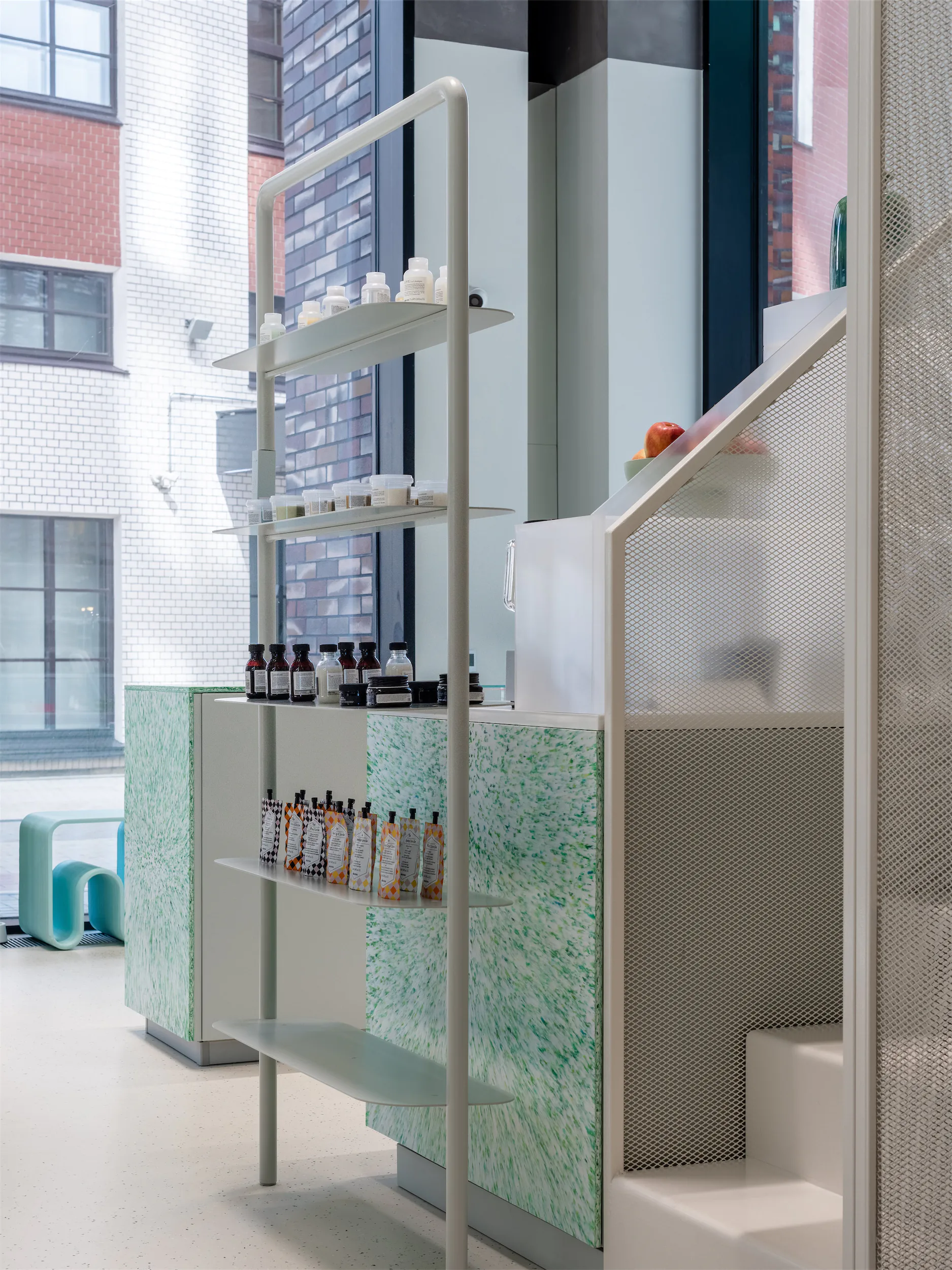
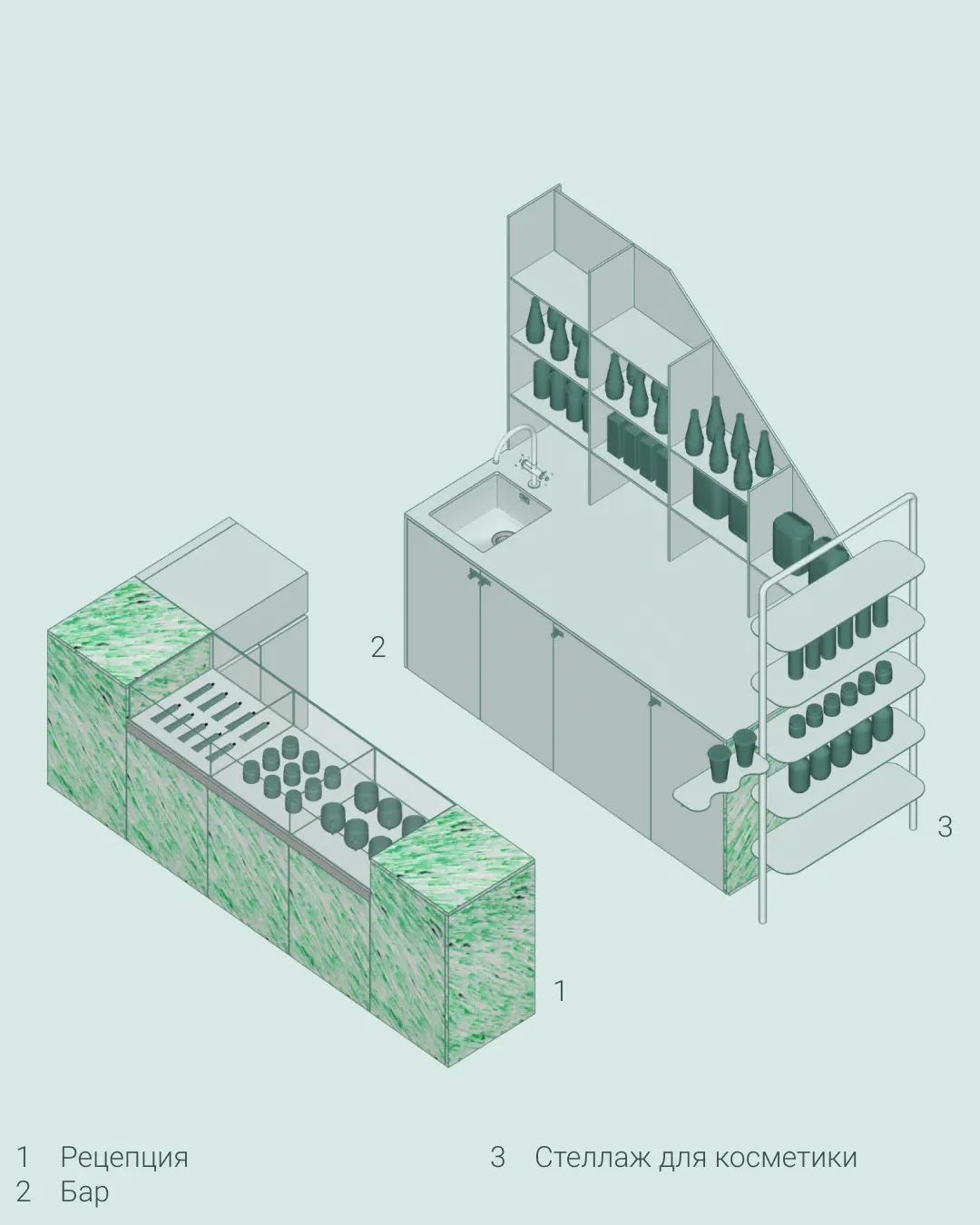
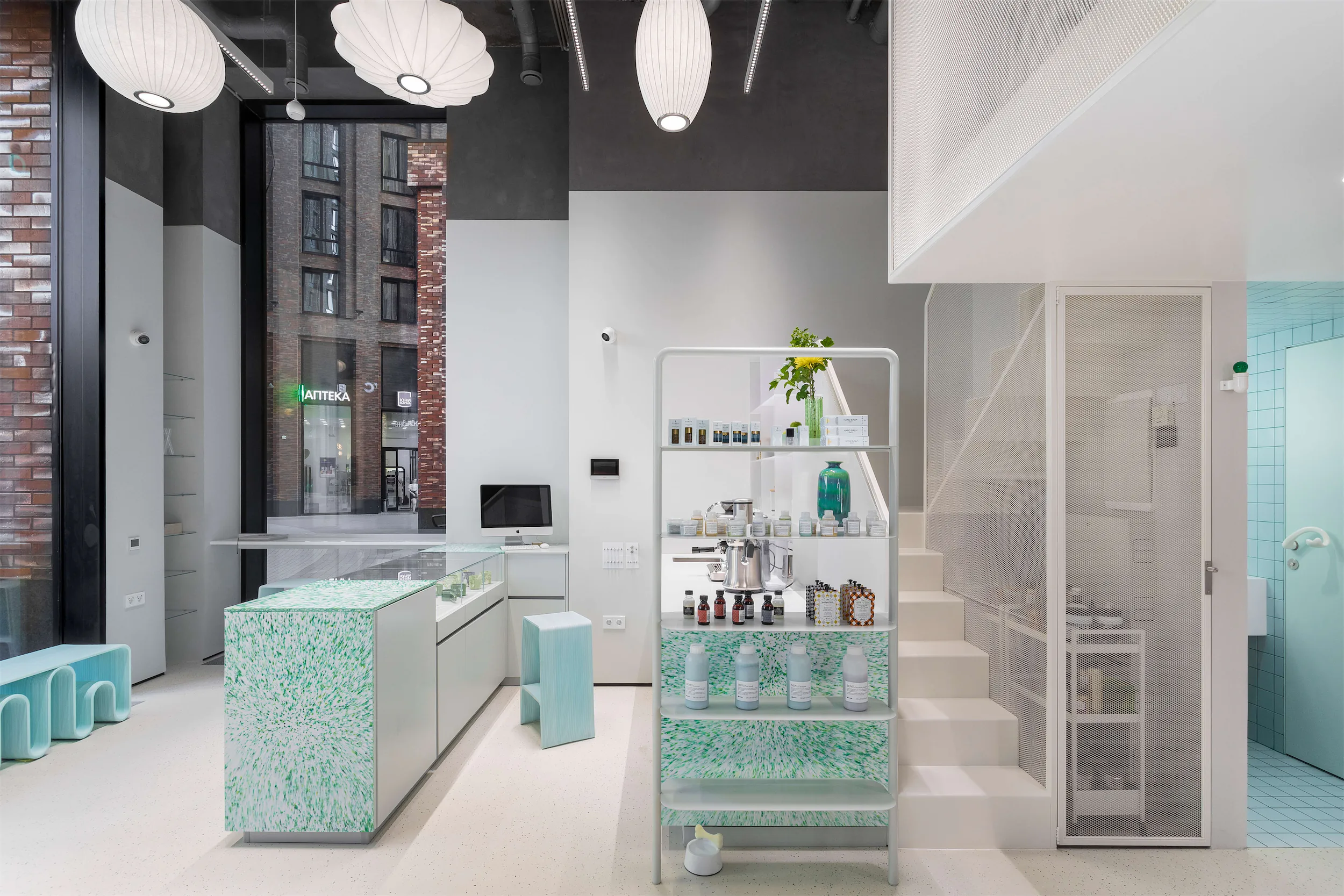
The reception panels were produced by 99Recycle1 from recycled plastic. The shade was selected manually through several tests, finding the precise ratio of green to white. The panels for the reception area alone required approximately 200 kg of old bottle caps.
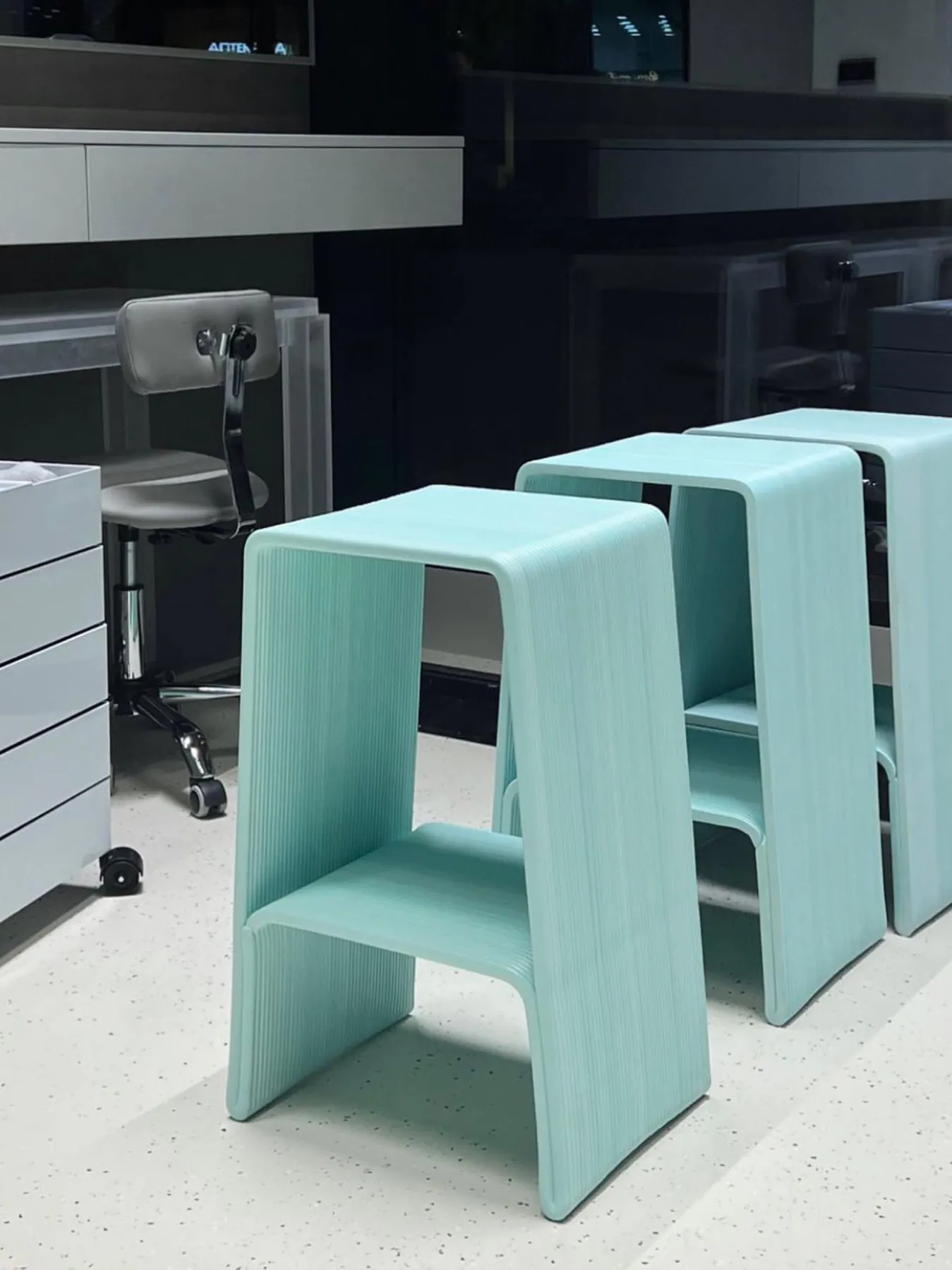
The bar stools and bench in the café zone were made by Eburet2, with a custom turquoise shade developed specifically for this project. The material of both brands is uneven in texture: granules of different origins produce a mottled surface that cannot be replicated from virgin stock.
Chairs With a History
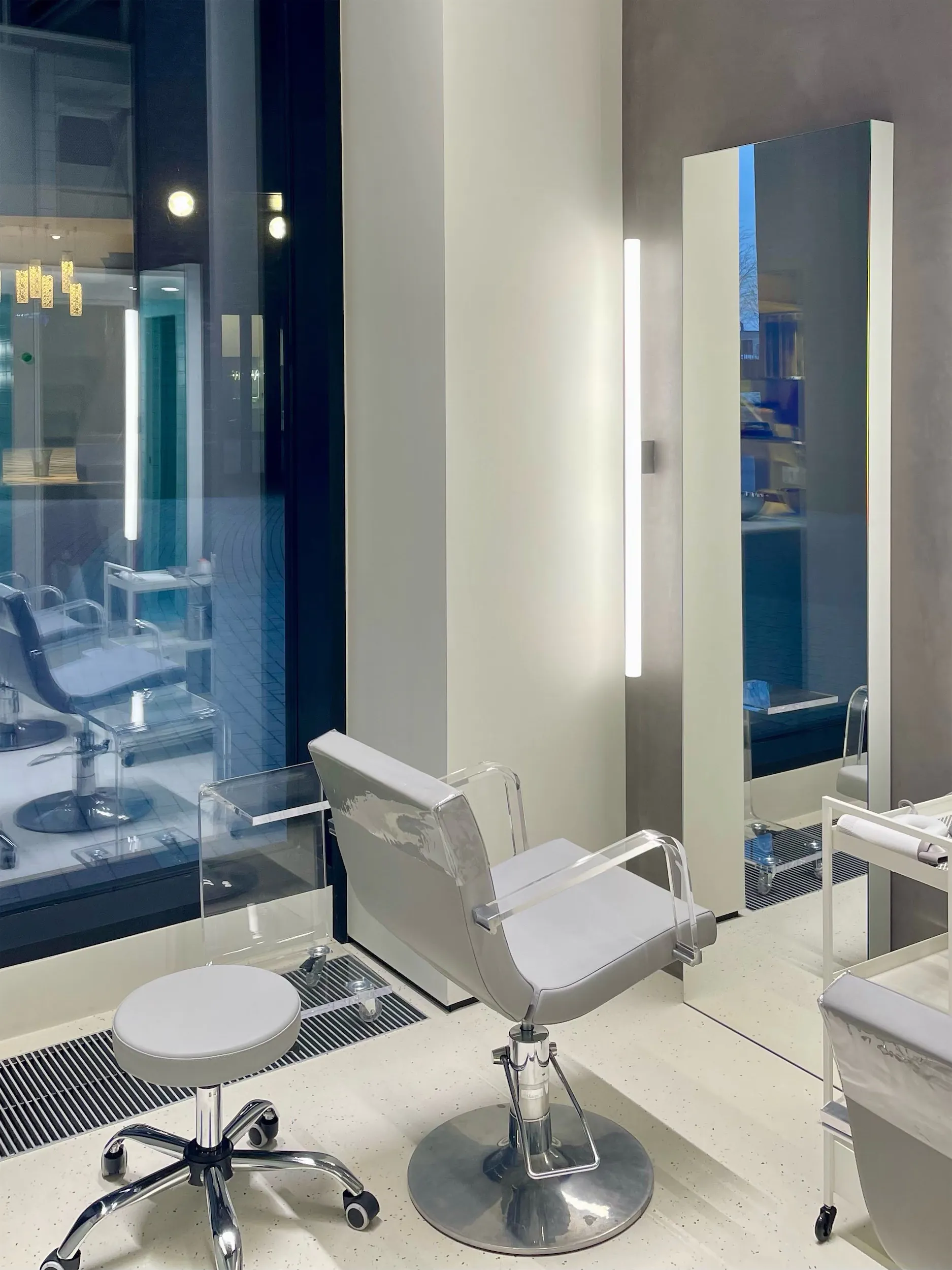
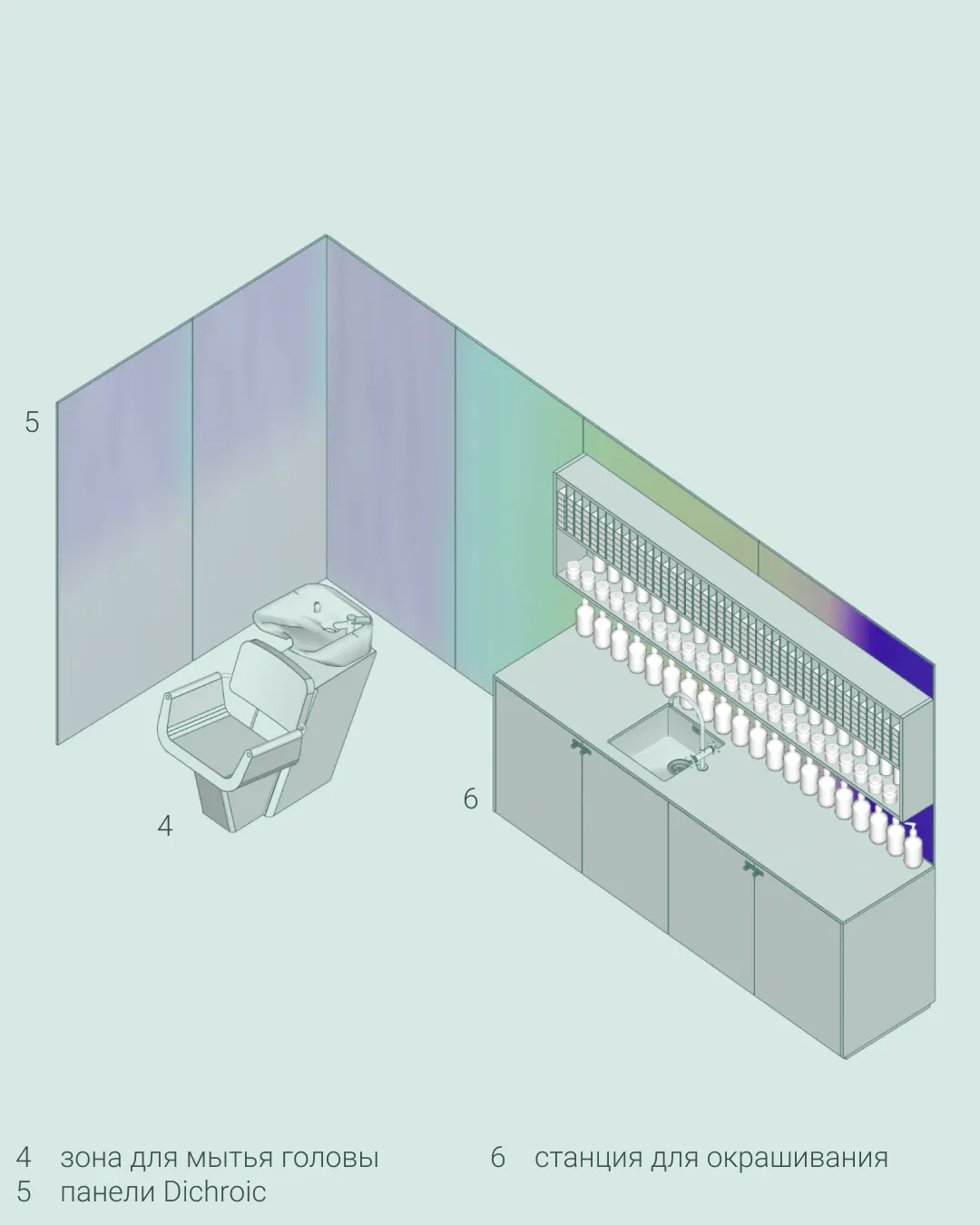
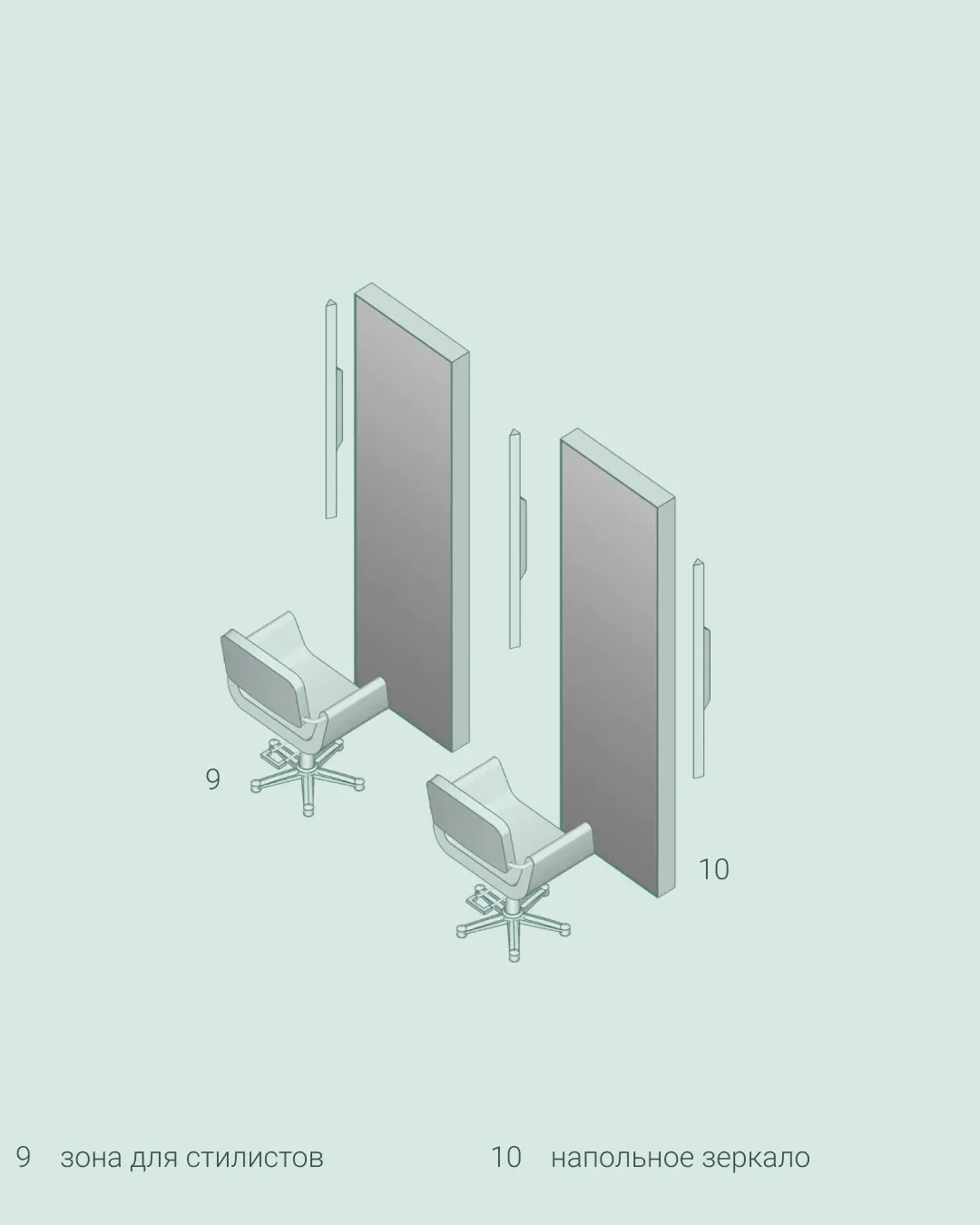
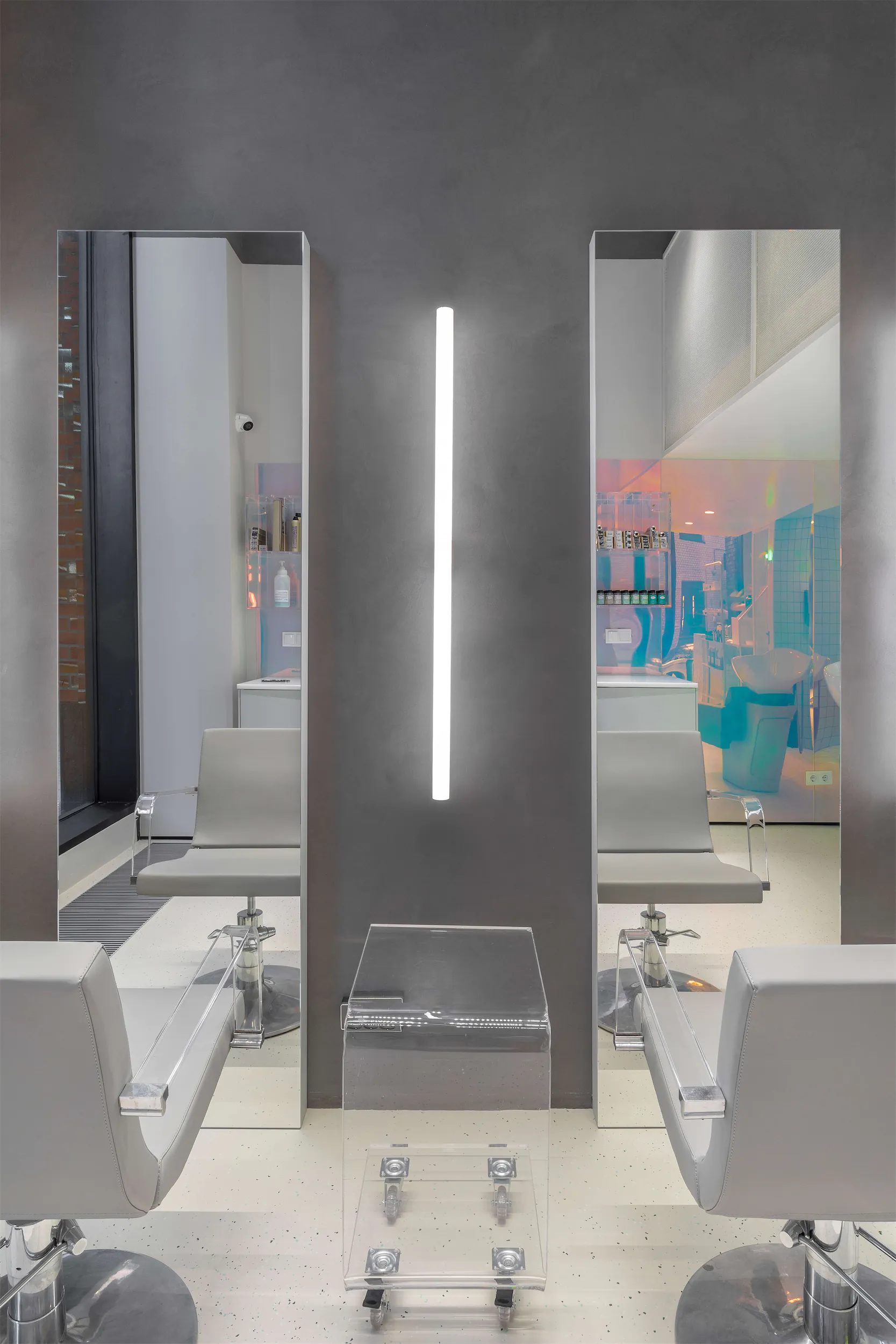
The styling chairs and the chair with an integrated shampoo basin were purchased from a closed salon. They were restored and reupholstered in vegan leather to match the interior palette. The logic is the same as with the plastic: do not produce new where good existing material already exists. The reupholstery integrated the chairs into the studio’s palette without erasing their origin.
Details That Solve Specific Problems
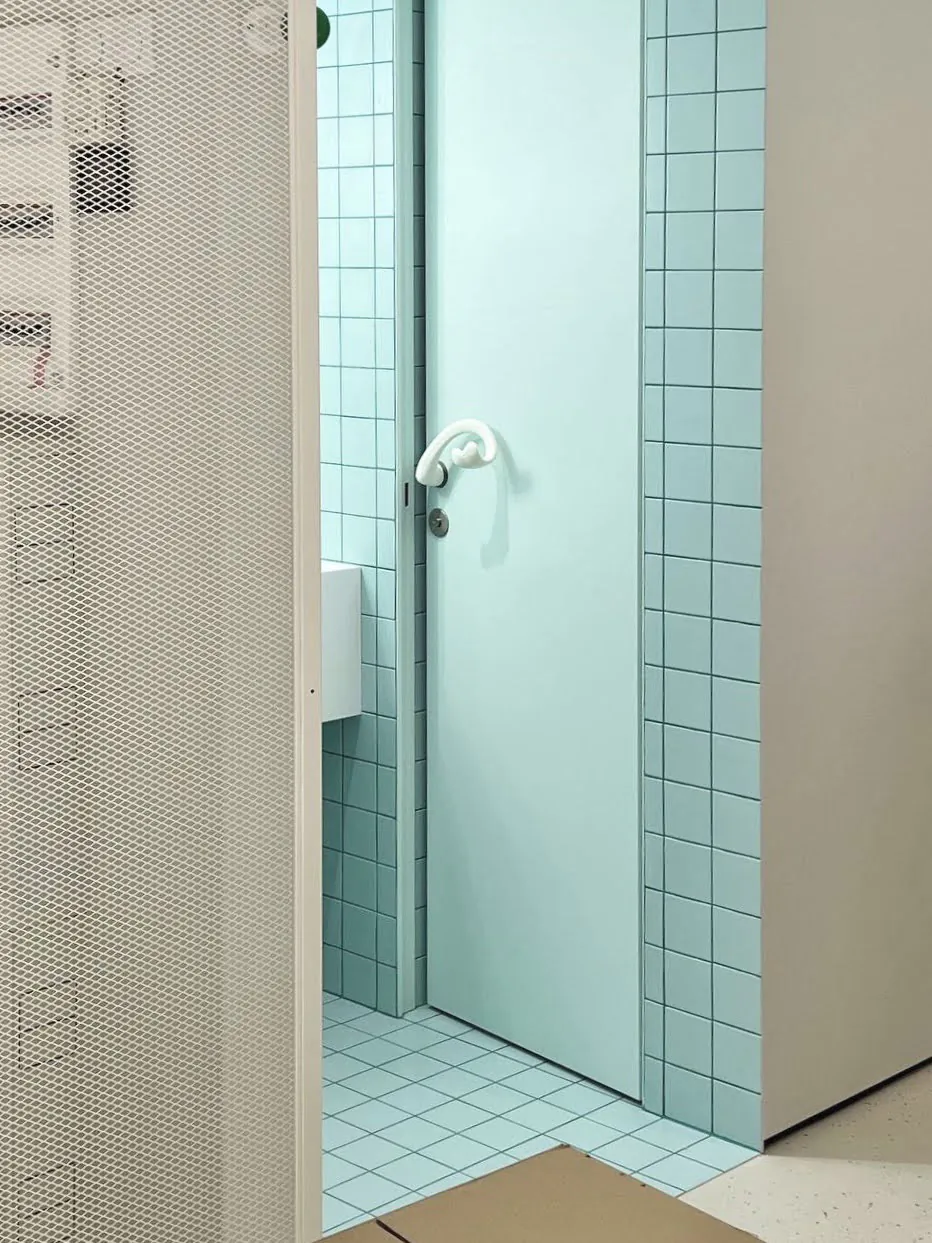
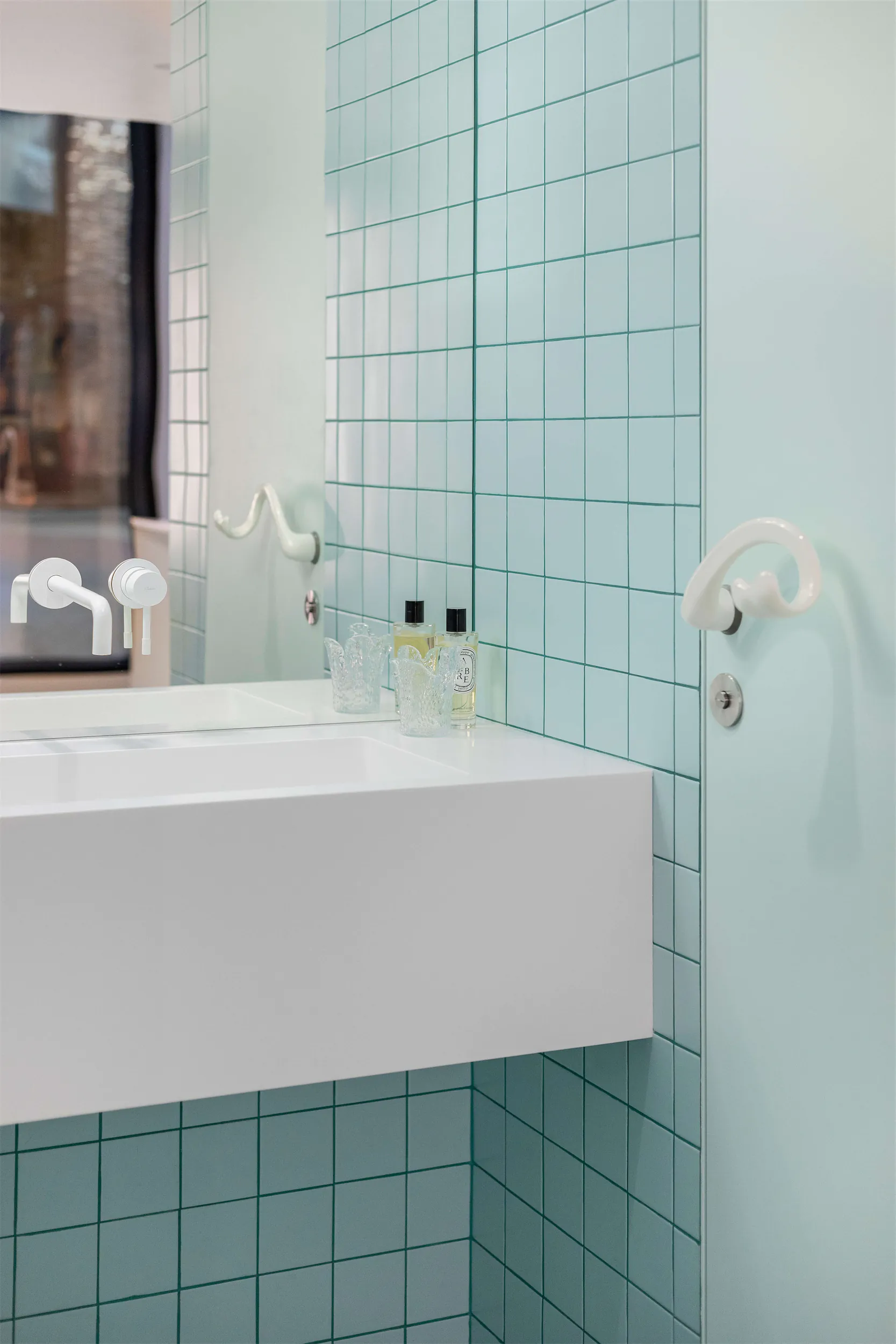
The bathroom doors are fitted with elbow handles of Italian manufacture. Designed for users with limited mobility, they open with the forearm and require no grip. In a studio where clients leave with freshly done nails, this is a direct functional decision rather than an accessibility measure. The white handles are placed against a bright background so they read without searching.
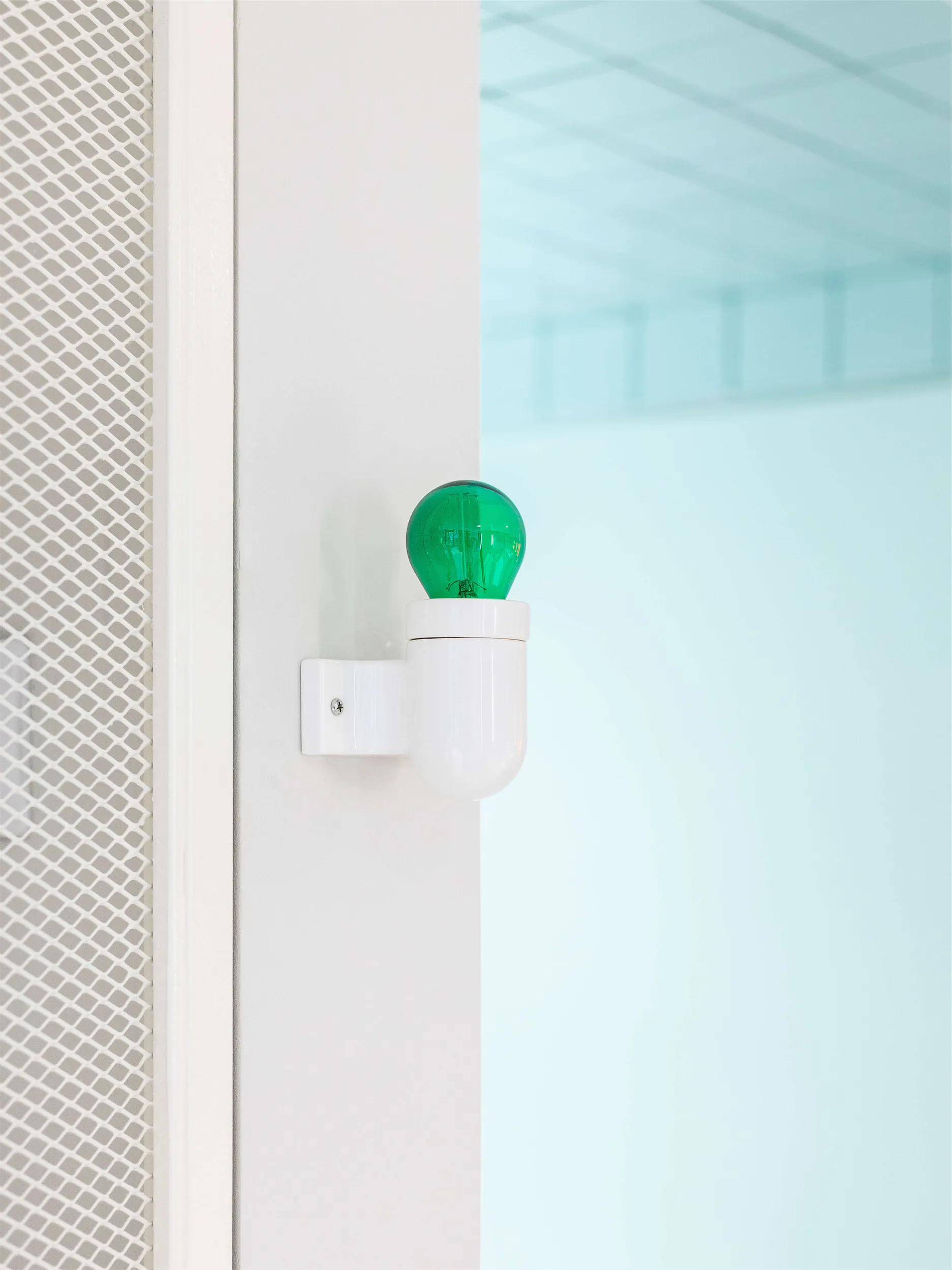
Next to the toilet cubicle, a green indicator light signals occupancy. It functions as a navigation sign: a visitor reads the status from a distance; the administrator does not escort each person individually.
Paper towels are replaced by hand dryers. Single-use sheet towels for public spaces are produced predominantly from virgin3 pulp and generate a significant waste stream. The dryers eliminate it entirely.
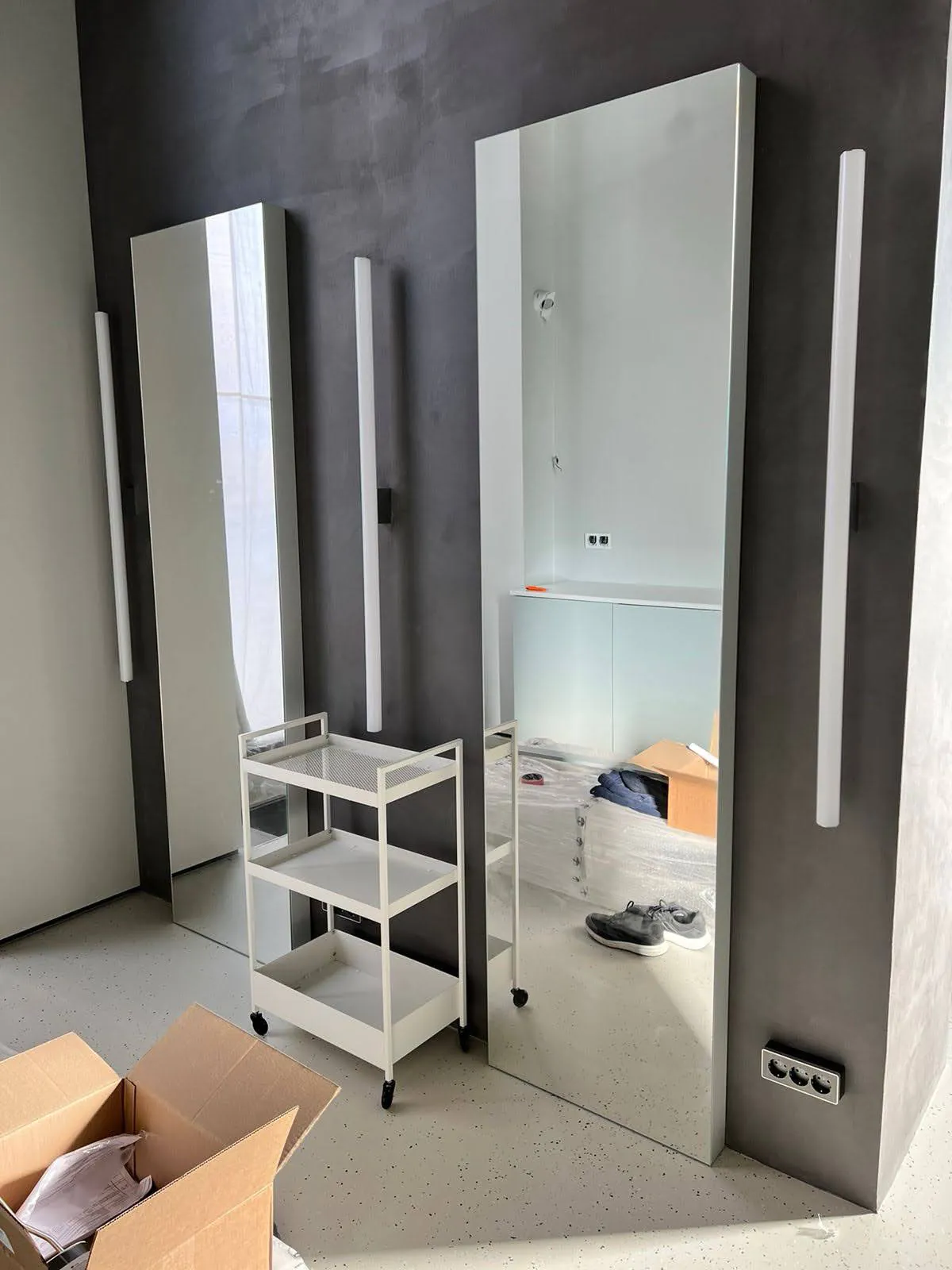
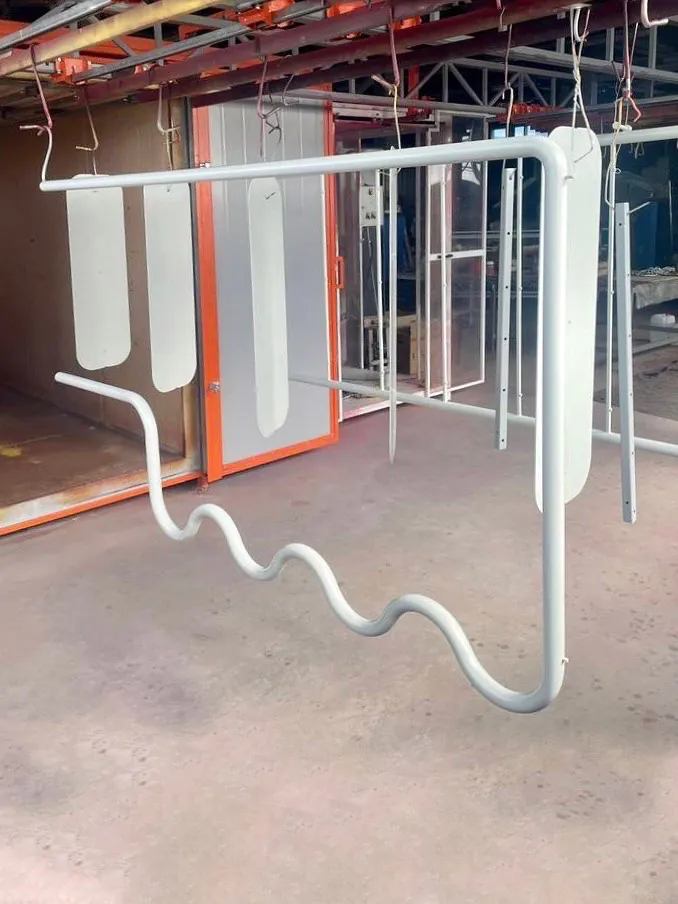
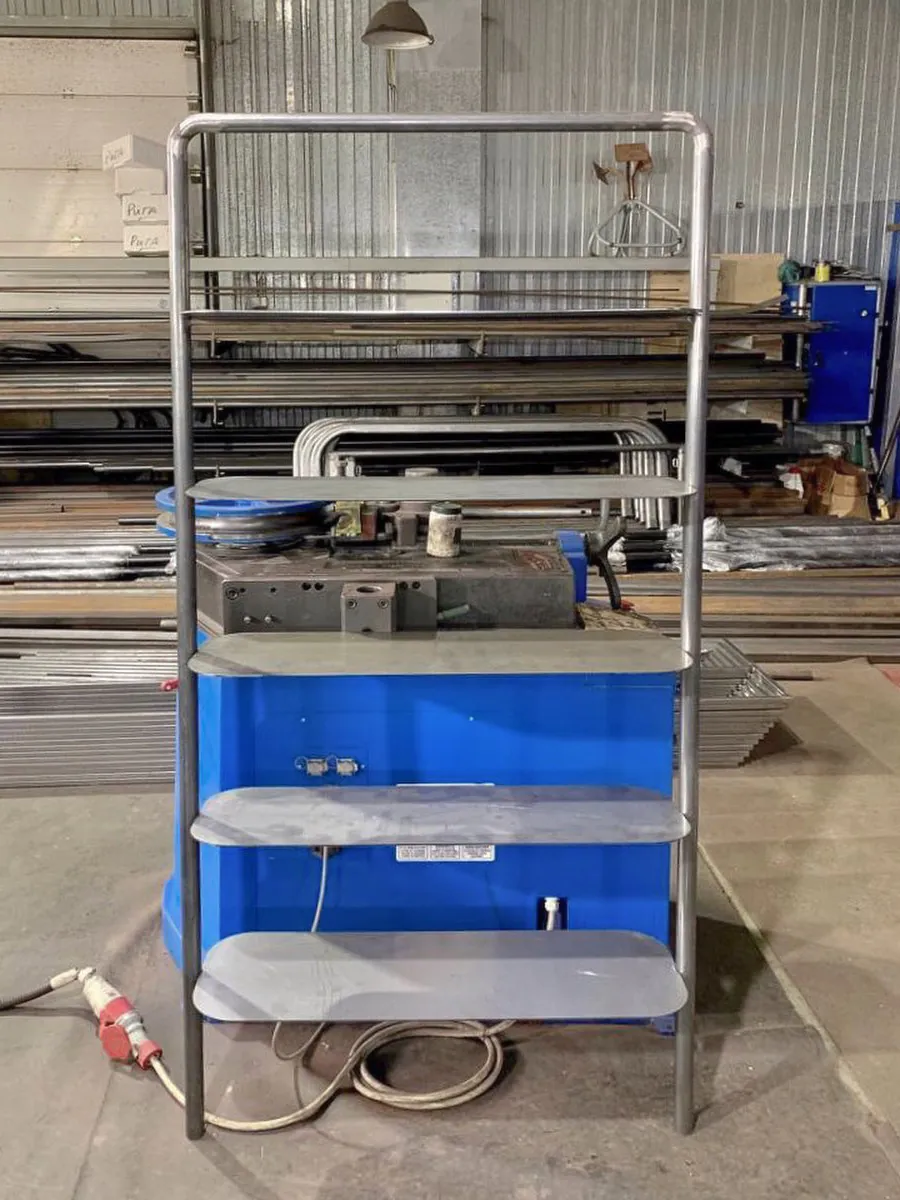
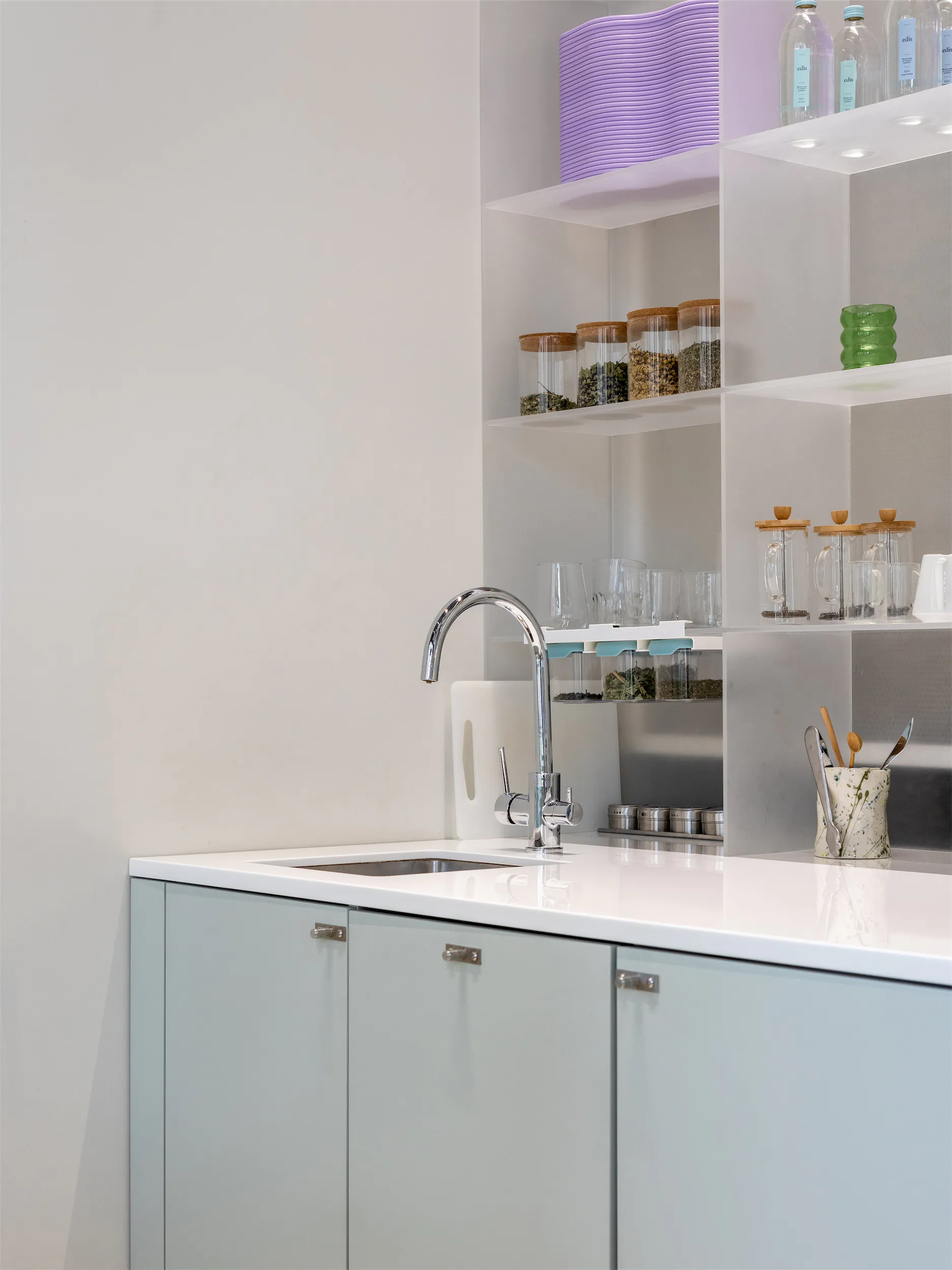
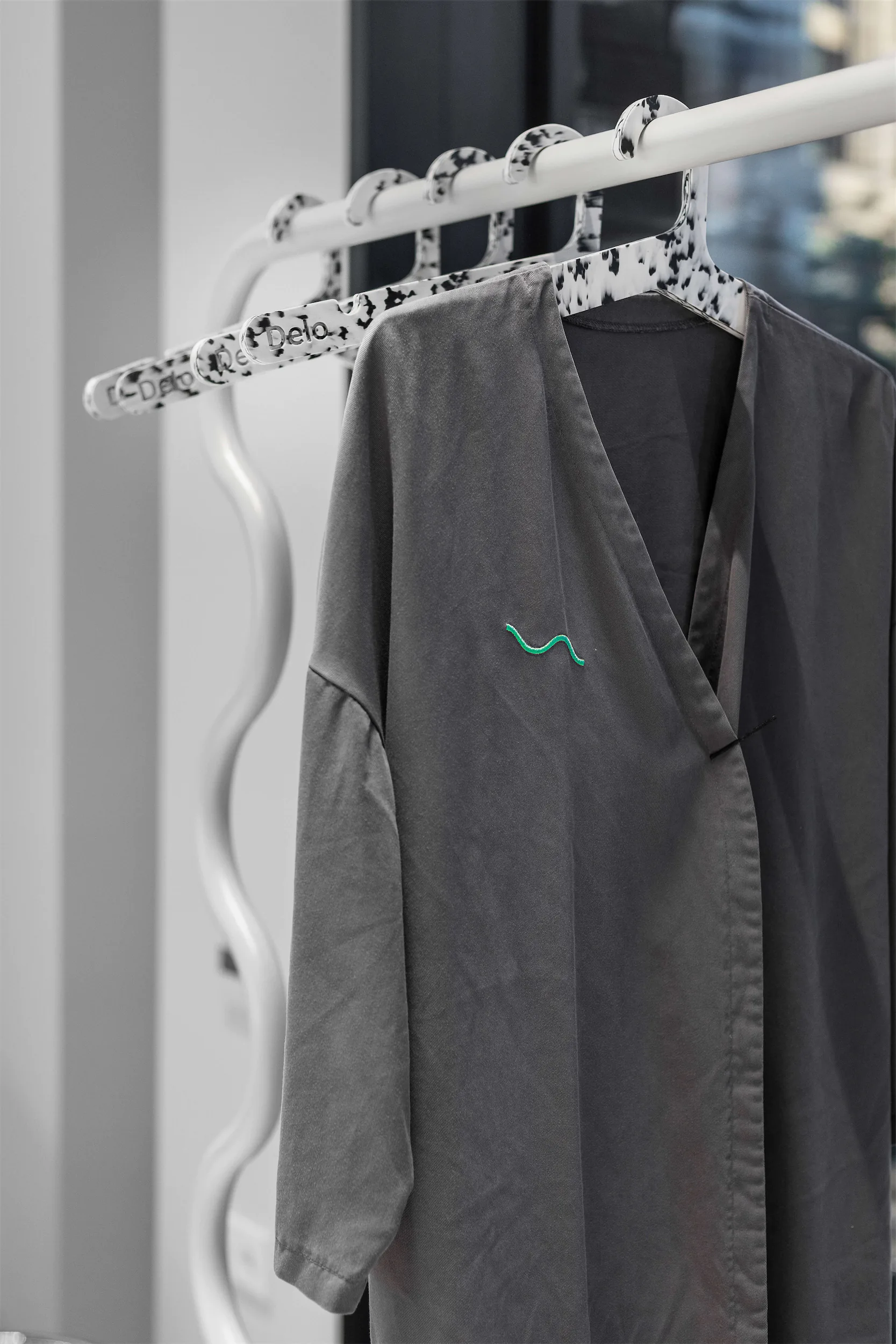
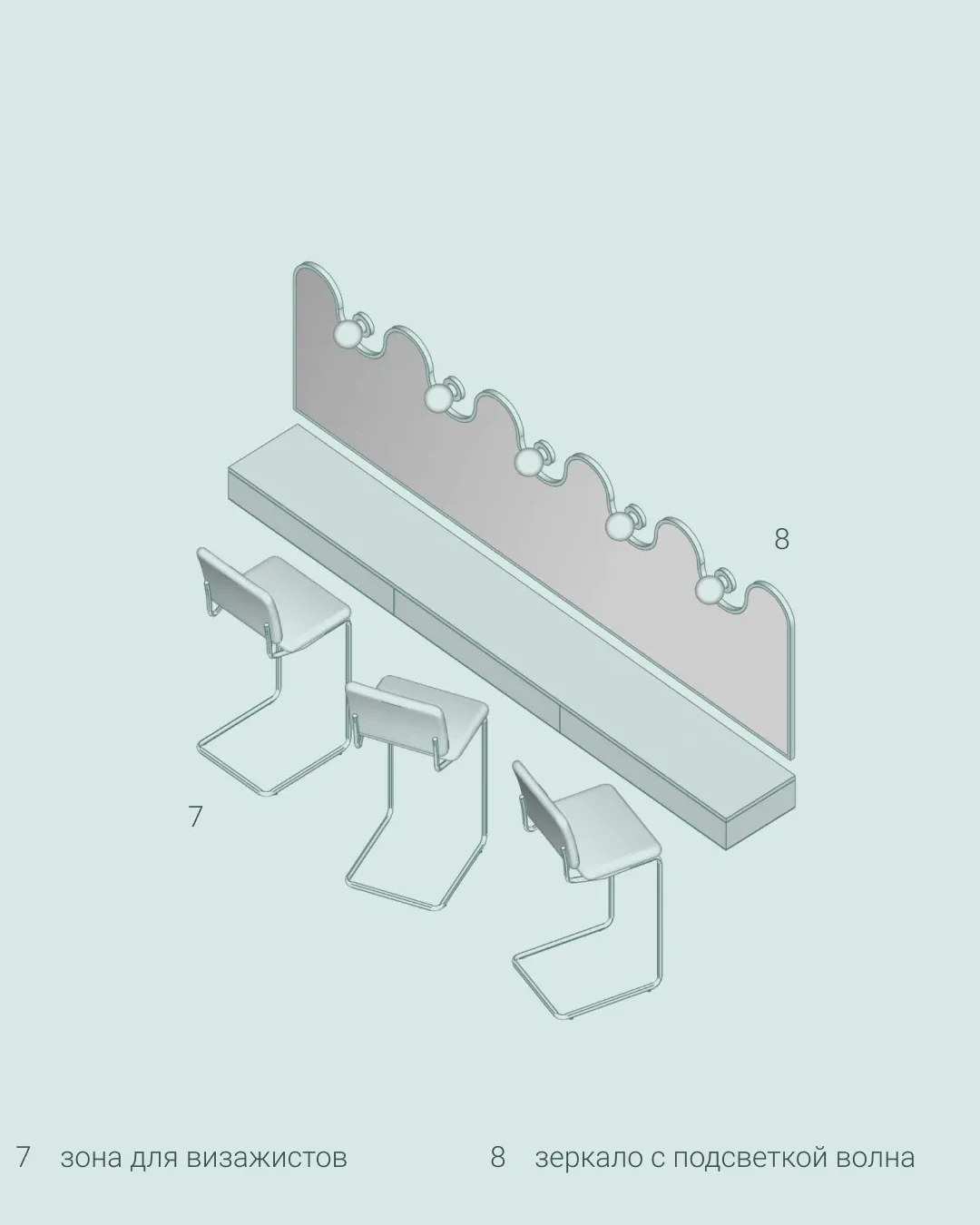
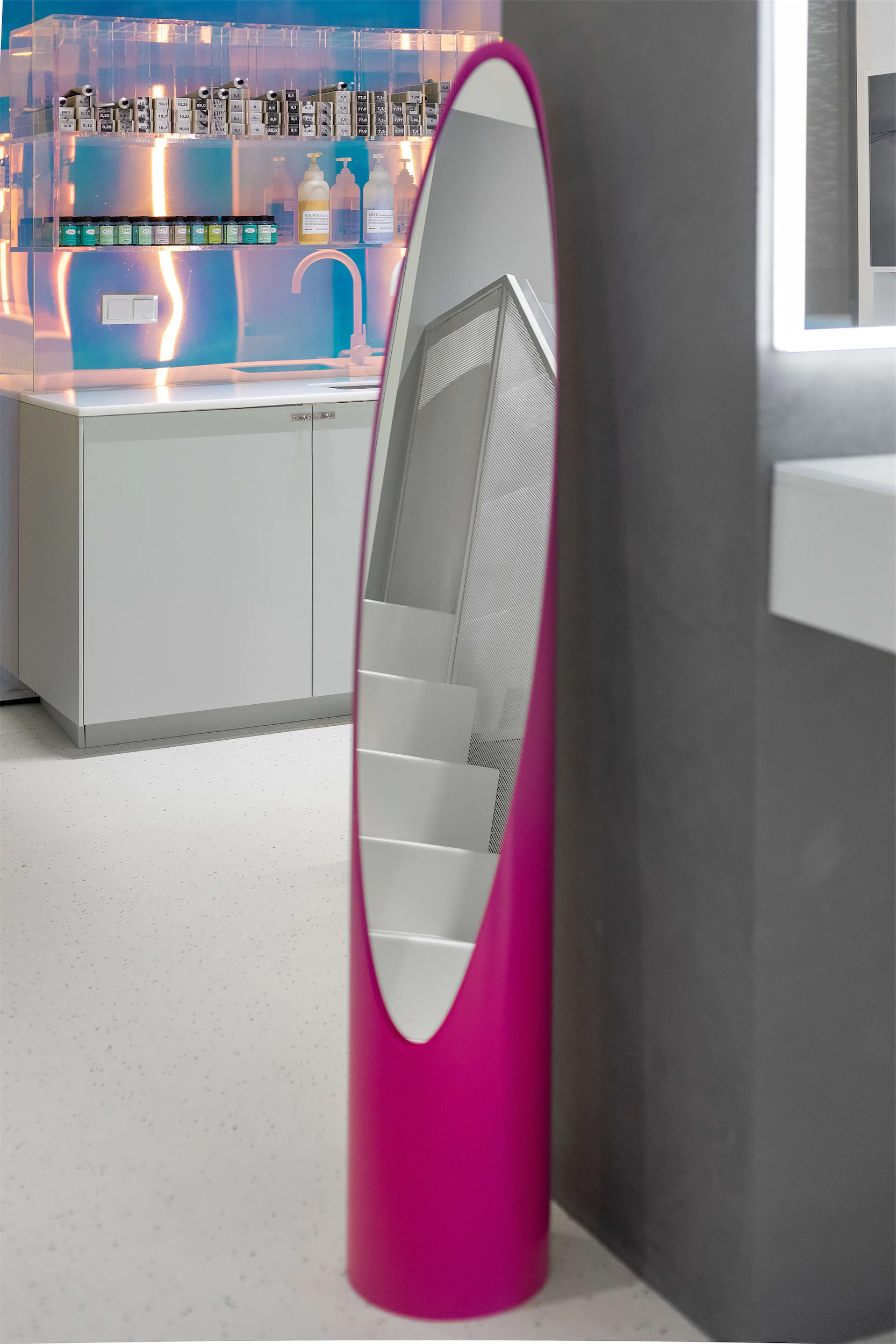
The space includes several objects with a distinct authorial character: a mirror with wave-form lighting, a coat rack, and a shelving unit with the same wave profile. In an interior where most surfaces are neutral, these pieces establish scale without competing with the working equipment.
From Online to Offline
GRS Space is a case where a media identity precedes the space and sets its terms. Lera Simakova’s blog existed before the studio, and the studio was built not as a separate object but as its continuation in a different medium. Recycling, matcha, nail care for everyone — all of this was part of an online identity before it became part of an interior.
This order of things shifts the criterion for evaluating the space. The question is not whether it looks good, but whether a regular reader of the blog recognizes their space when they walk in.
Footnotes
-
99Recycle — manufacturer of recycled plastic products. 99recycle.ru ↩
-
Eburet — furniture manufacturer working with recycled plastic and custom project colours. eburet.ru ↩
-
According to TAPPI (Technical Association of the Pulp and Paper Industry), single-use paper towels carry a significantly higher carbon footprint compared to electric hand dryers over long-term use. tappi.org ↩
Process