"Once Upon a Summer" Rug Collection
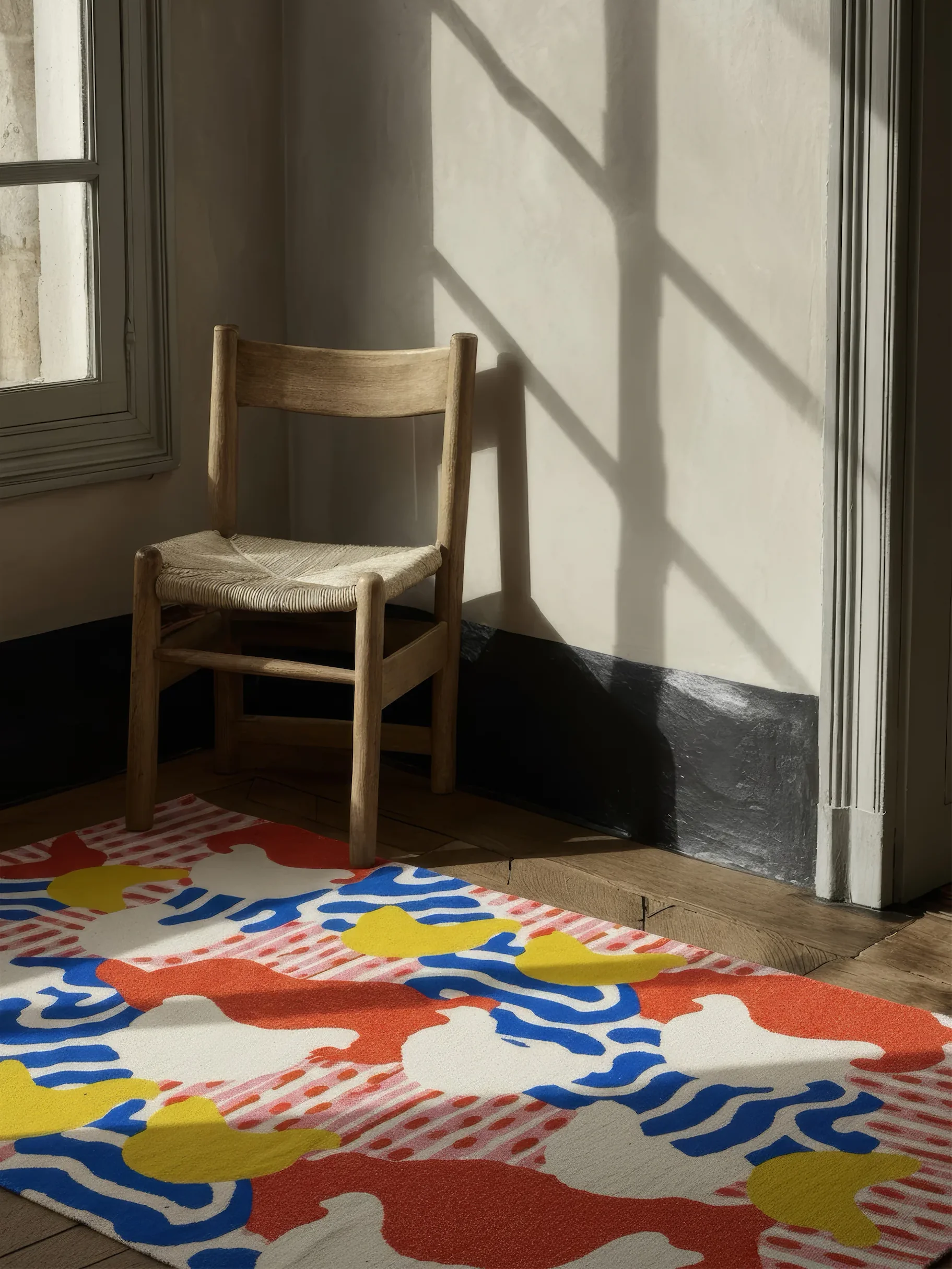
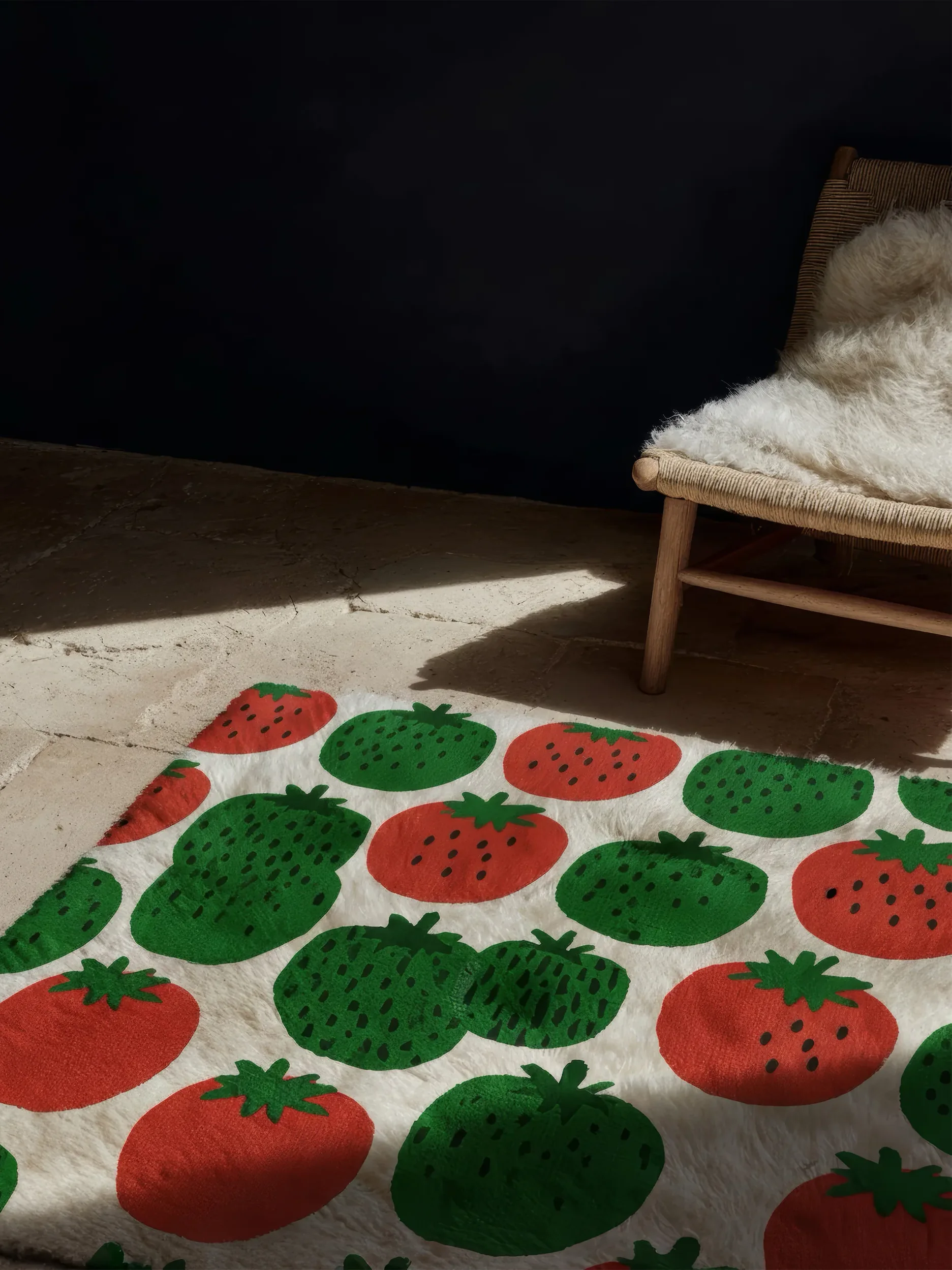
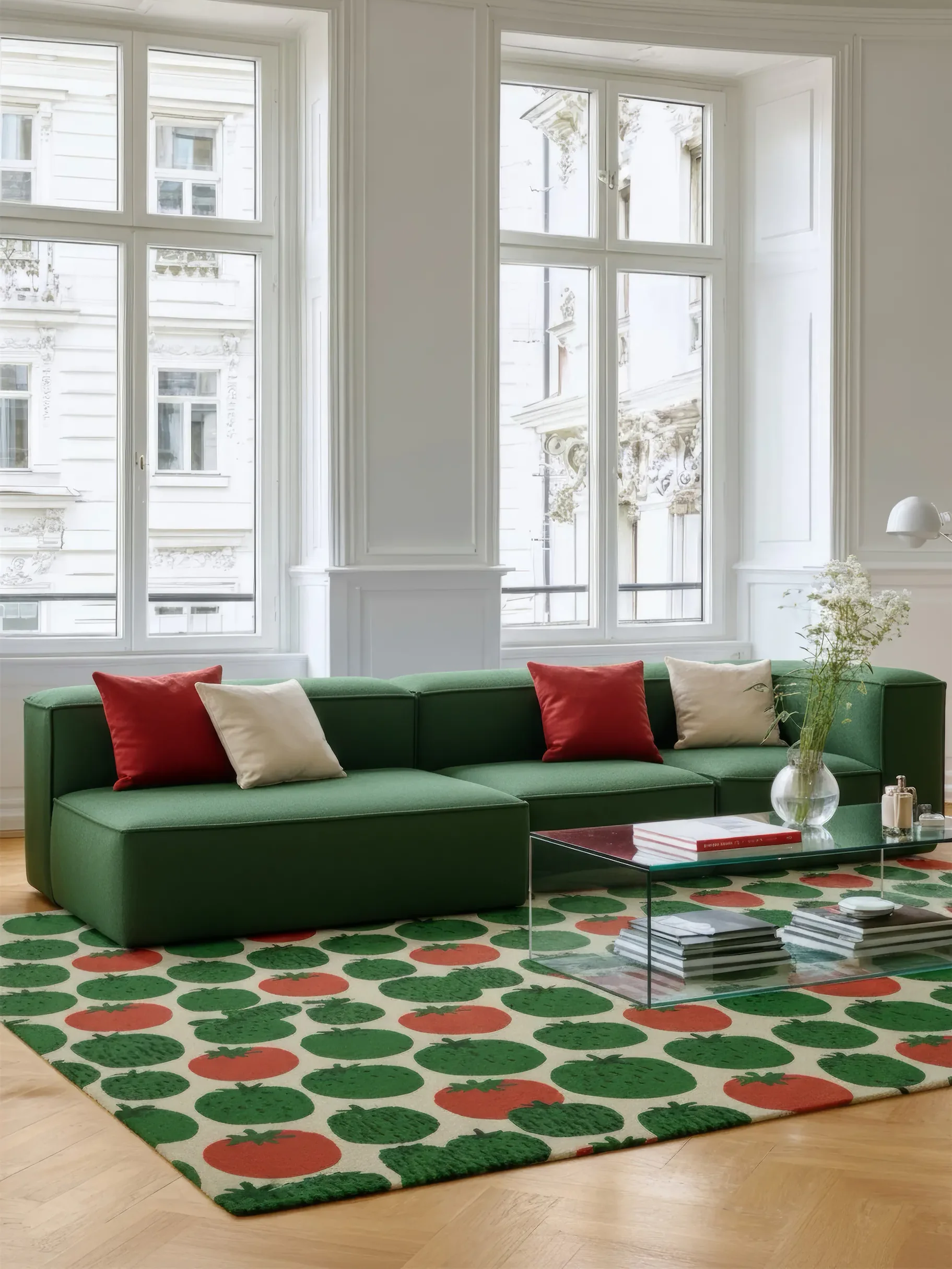
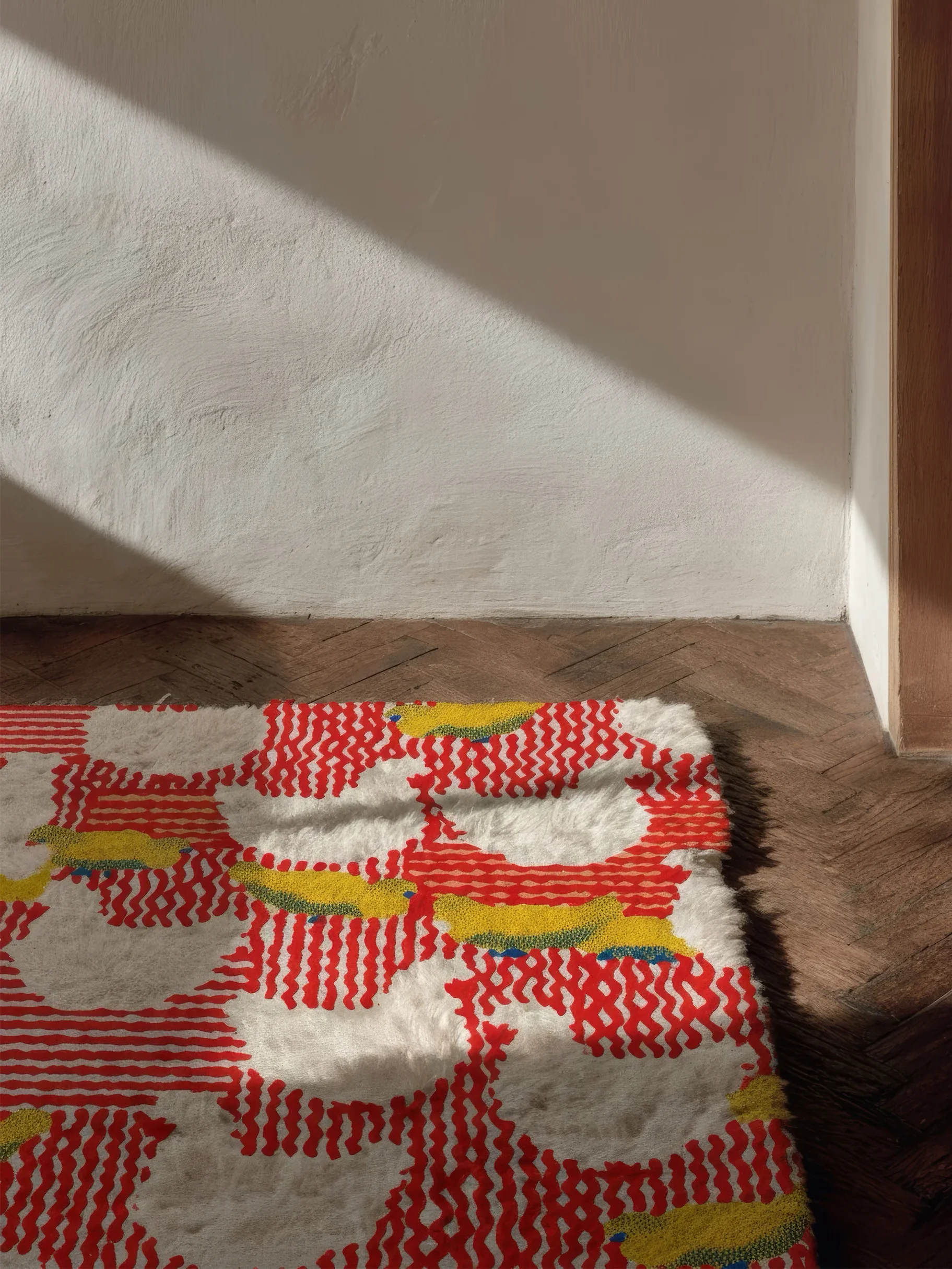
Thirteen hand-woven rugs in which the pattern is not ornament but structured memory: a grandfather's chickens, the field beyond the fence, jars of preserves, television static at the dacha.
Gallery
Description
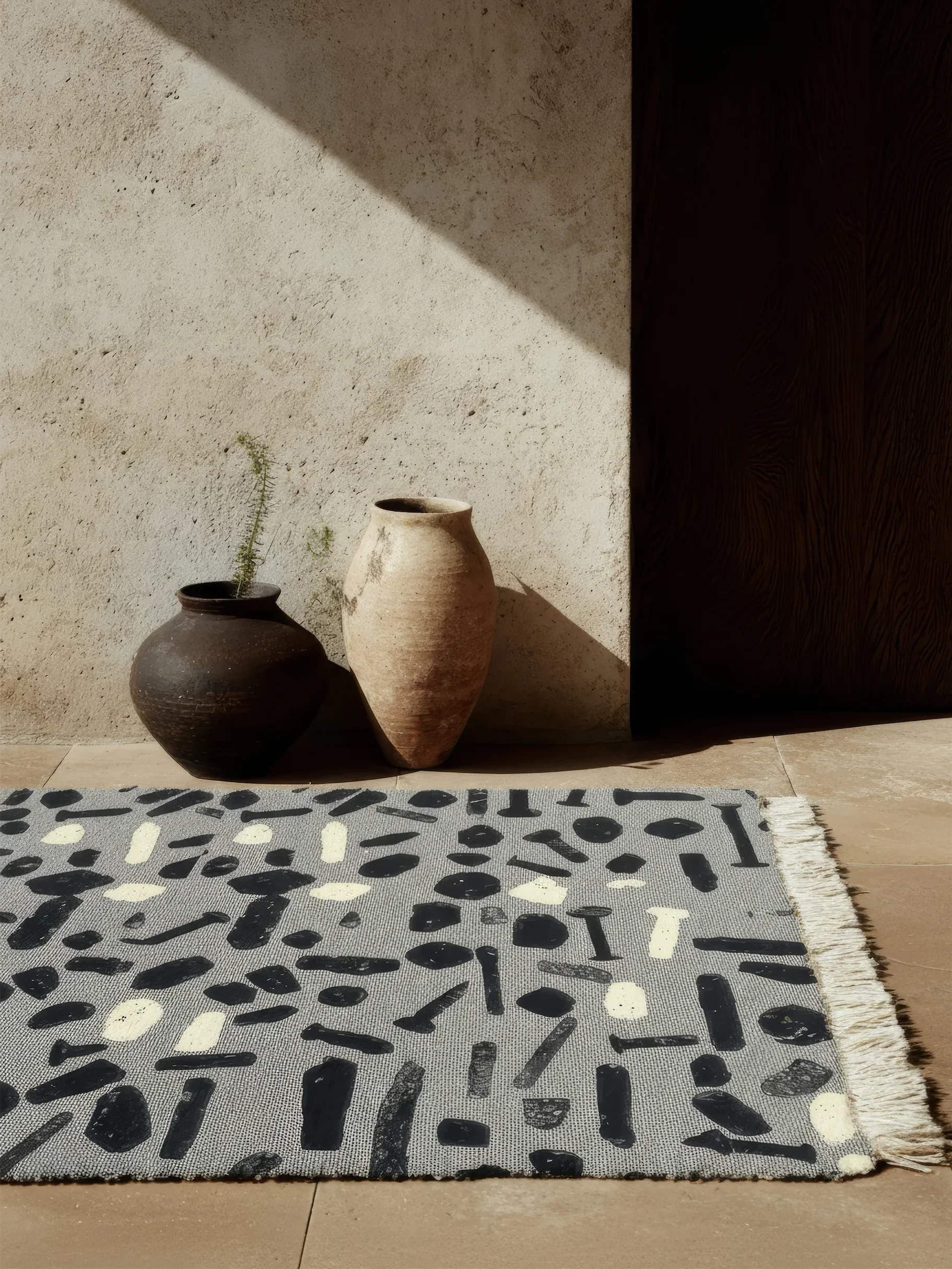
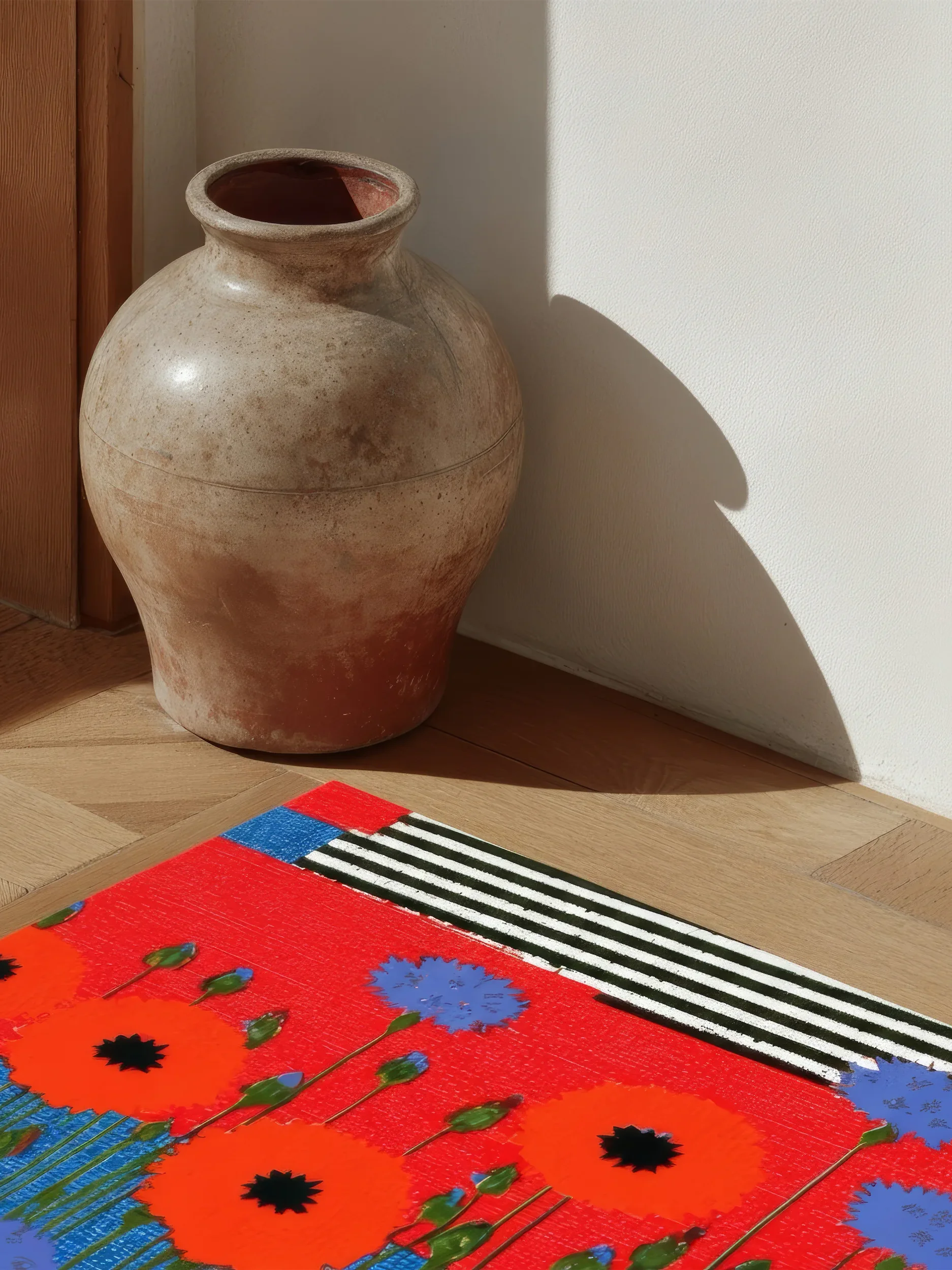
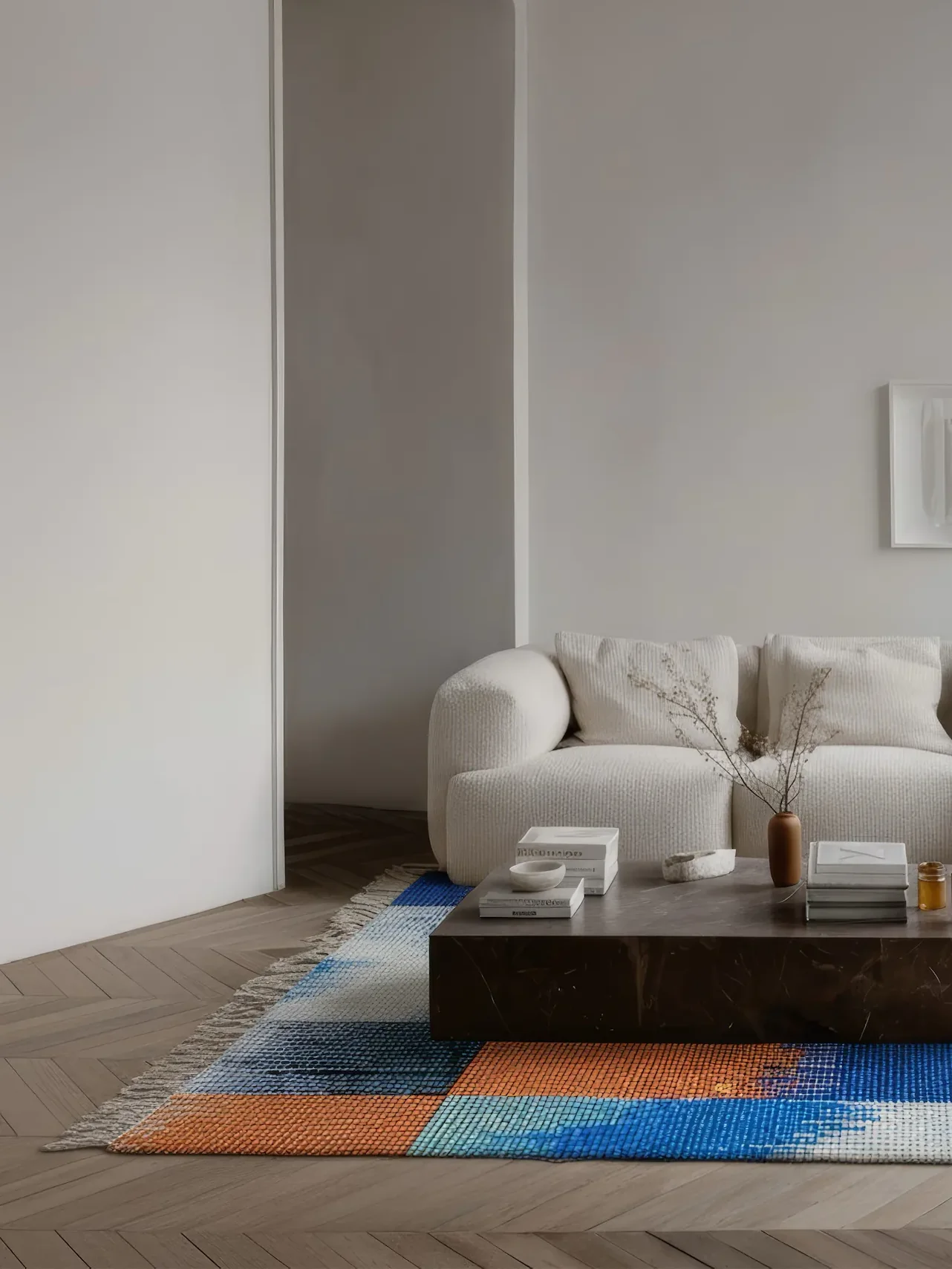
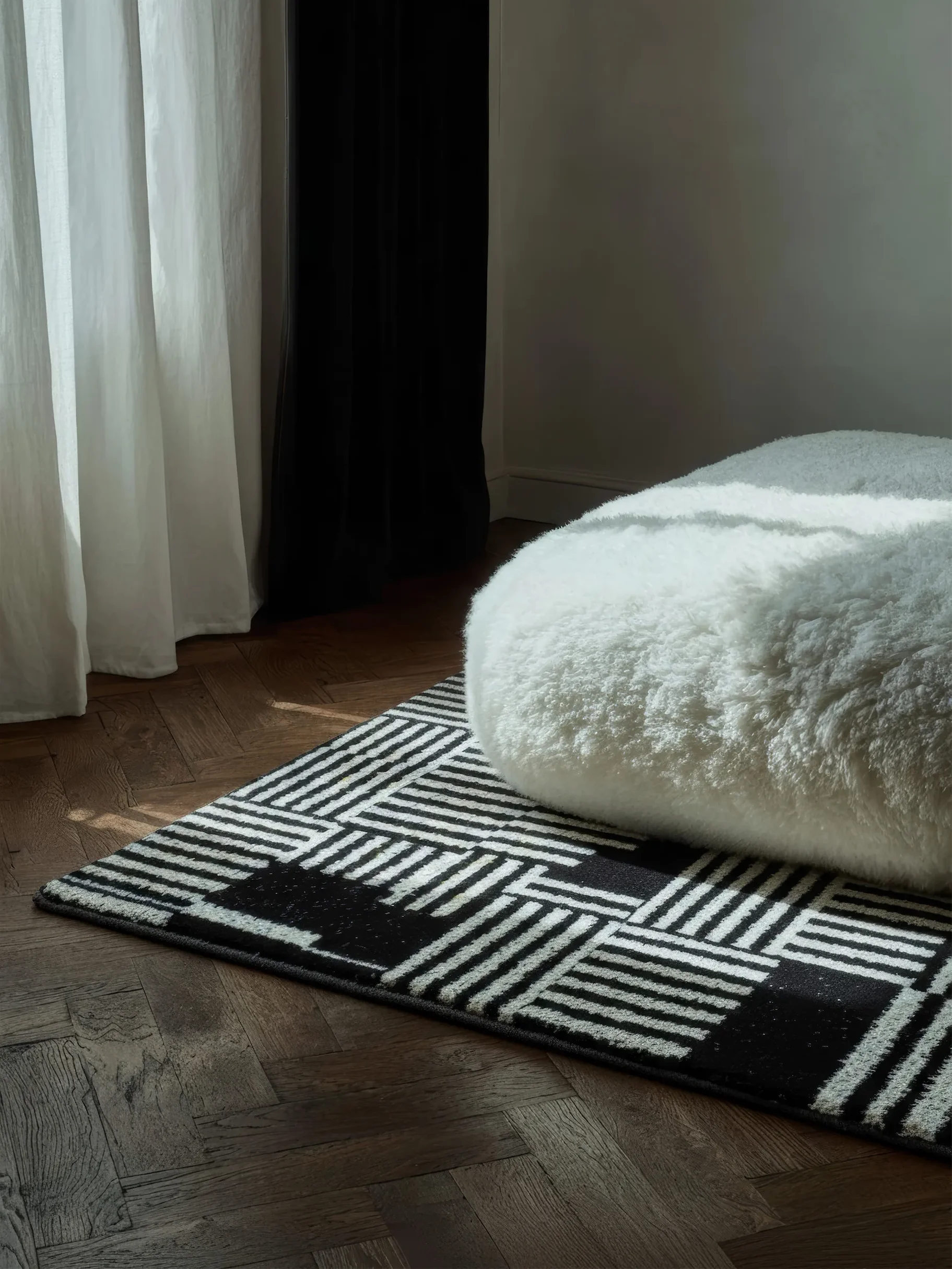
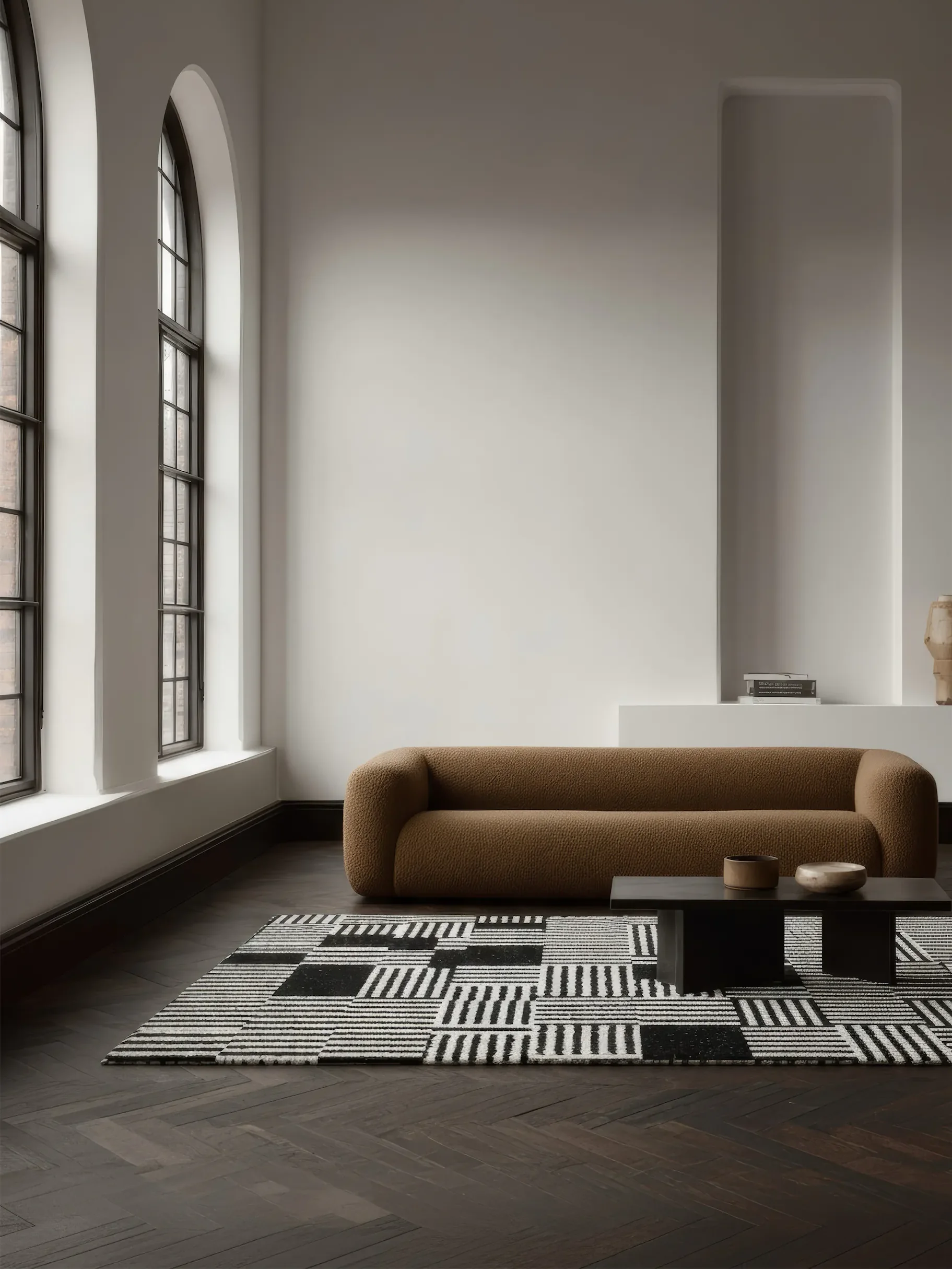
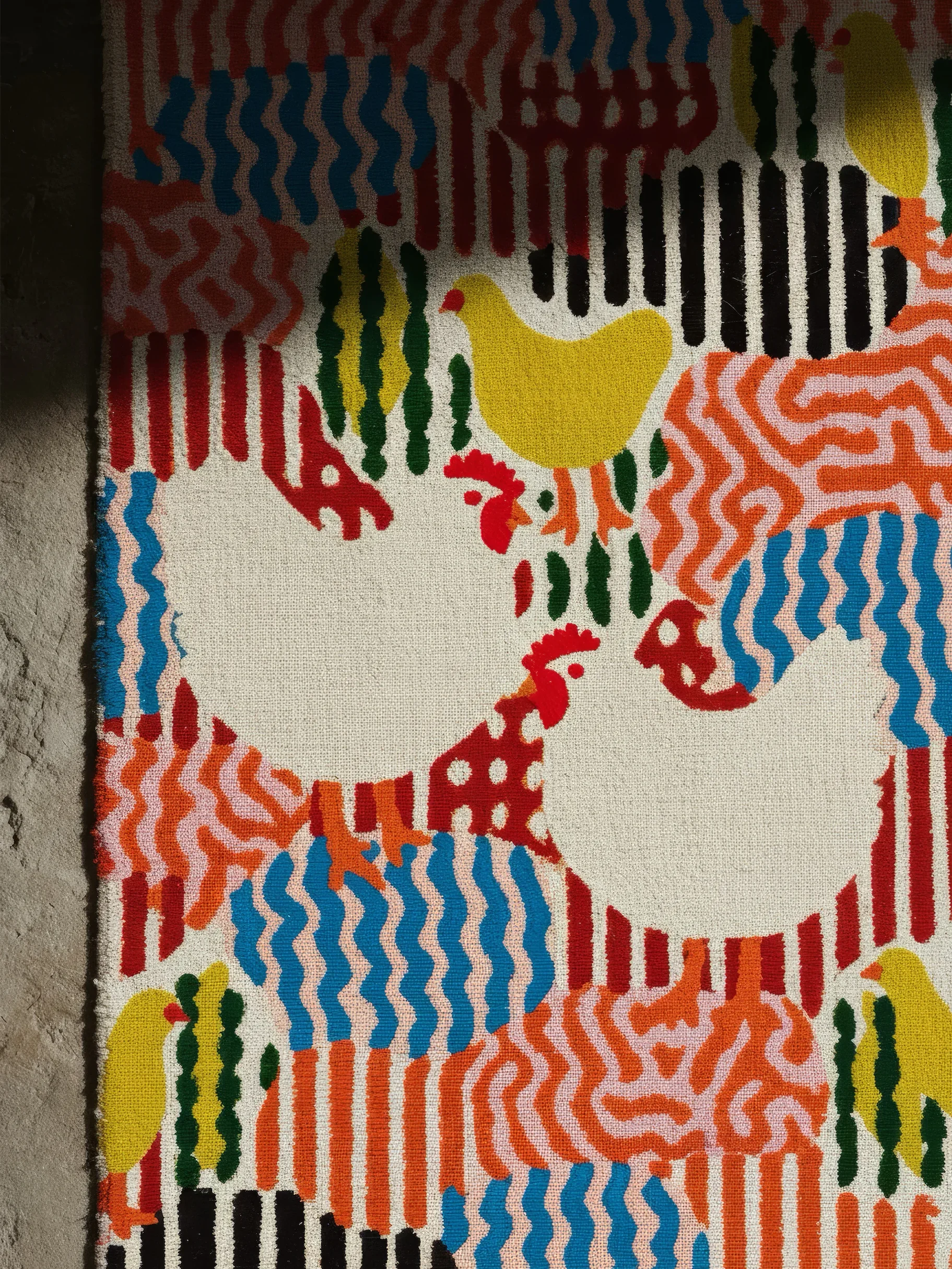
Image and Resolution
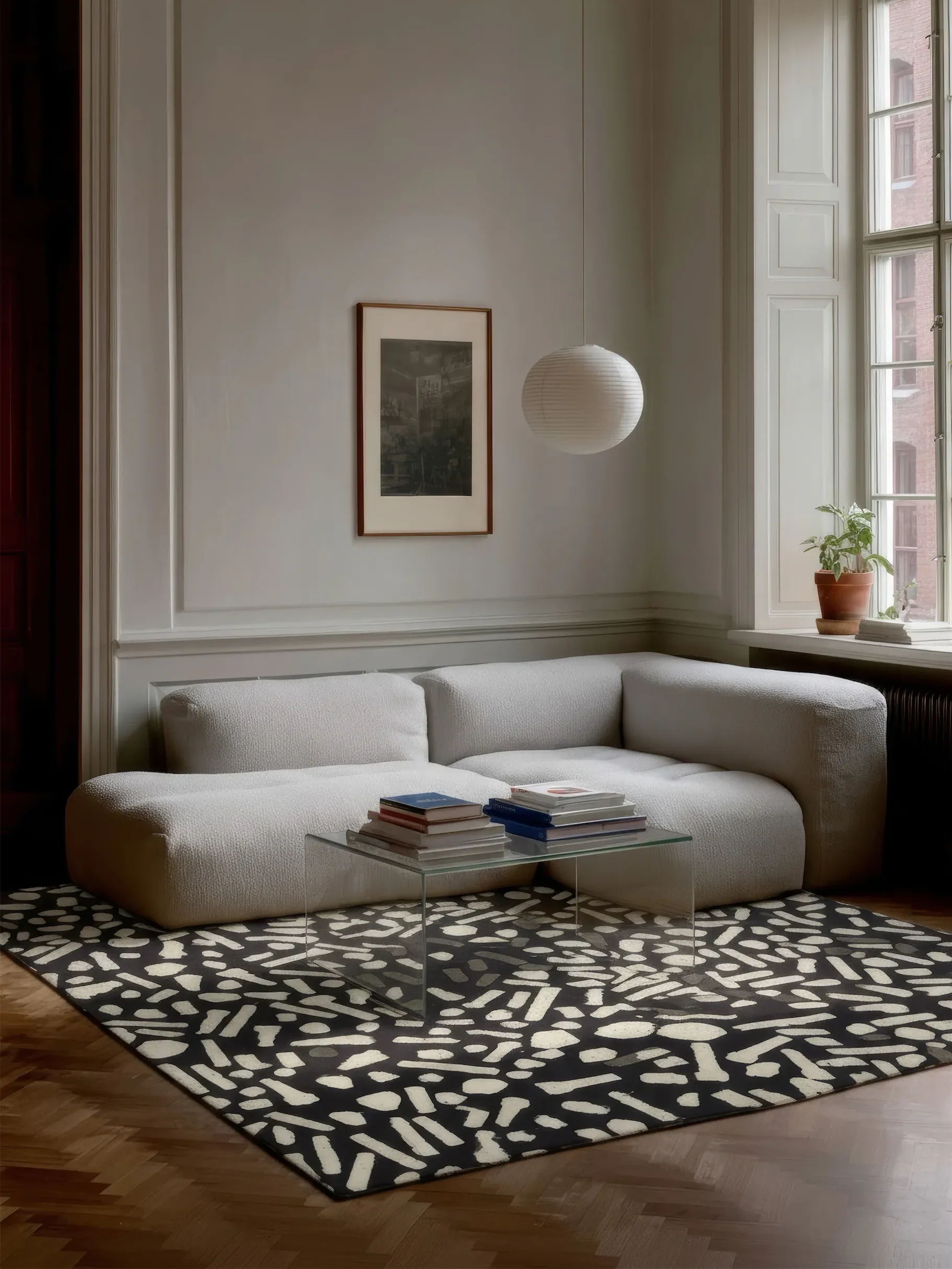
The motifs of the collection are drawn from Soviet and post-Soviet dacha life: domestic details that are not usually recorded as cultural facts but that form a recognisable visual system. Chickens in the yard, rows of jars, the texture of a field, bands of interference on a screen. All of this is translated into geometry suitable for weaving.
The rug as a carrier for this kind of content is not a decorative choice. It is tactile: contact with it happens not through looking but through the pressure of a foot, the temperature of the pile, the resistance underfoot. This makes the image bodily rather than contemplative. A painting or a graphic work with the same motifs operates differently — it stays on the wall, at a distance.
The format of the rug also determines the durability of meaning. An object that passes between generations outlives any specific biography and accumulates a history of use on top of its original image.
The Object Over Time
A wool pile rug undergoes predictable changes in use. In the first years the pile settles slightly under load and the colour becomes a little less saturated. The process then stabilises. Natural dyes based on plant extracts — sumac, indigo, pomegranate — produce what is known as 1anticking: a gradual ennobling of tone that synthetic dyes cannot replicate. After twenty to thirty years of use, the rug acquires a patina that shifts its legibility without destroying its structure.
A kilim ages differently: the flat weave produces no pile settlement, but over time it develops a characteristic softness at the folds. Its reversibility is preserved throughout its working life.
Context and Precedents
Working with domestic memory through an applied object has precedents in contemporary design. The2 Swedish brand Kasthall has produced rugs since 1889, translating rural Scandinavian ornament into industrial production without losing its handmade character. Kasthall works with a generalised cultural identity — the regional pattern as such.
Once Upon a Summer addresses a specific layer of visual experience shared across several generations who grew up at the post-Soviet dacha. This is neither an ethnographic reconstruction nor a folk ornament but a precise topography of private memory.
Material and Technique
Wool behaves differently in weaving from synthetics or cotton. Lanolin in the fibre repels dirt and moisture. Under load, wool compacts rather than abrades: pile rugs woven from it, with proper care, last3 between 80 and 150 years. This is why Afghan and Persian pile rugs from the nineteenth and early twentieth centuries regularly appear at auction in working condition.
The pile technique used by weavers in Afghanistan is built on the symmetrical (Turkish) or asymmetrical (Persian) knot. Each knot is tied by hand around the warp and weft, then the row is beaten down with a comb. The density of the knotting determines the resolution of the pattern: the finer the knot interval, the more precisely the graphic is reproduced. A soft pile that can be walked on barefoot is a direct consequence of this density and the height of the cut loop.
The kilim is constructed differently. The weft is passed horizontally and covers the warp entirely, creating a flat surface without pile. This produces its characteristic properties: reversibility — both sides are visually equivalent — lower weight, and a graphic pattern with sharp contours. Indian weavers specialising in kilim work within a technical tradition traceable to Deccani4 textiles of the seventeenth and eighteenth centuries.
An object that holds someone’s specific biography on the inside while looking like a rug on the outside works with the tension between the intimacy of the content and the neutrality of the form. This tension is not resolved at first glance. It is resolved at the first step.
Footnotes
-
Böhmer H. Koekboya: Natural Dyes and Old Carpets. REMHÖB-Verlag, 2002. The mechanism of change in natural dyes under the effects of light and load. ↩
-
Kasthall AB official website. Company history. kasthall.com ↩
-
Eiland M., Eiland M.R. Oriental Rugs: A Complete Guide. Bullfinch Press, 1998. pp. 34–41. Data on the service life of hand-knotted wool pile rugs under standard conditions of use. ↩
-
Irwin J. Shawls: A Study in Indo-European Influences. Victoria and Albert Museum, 1955. The tradition of flat weaving in central and southern India. ↩