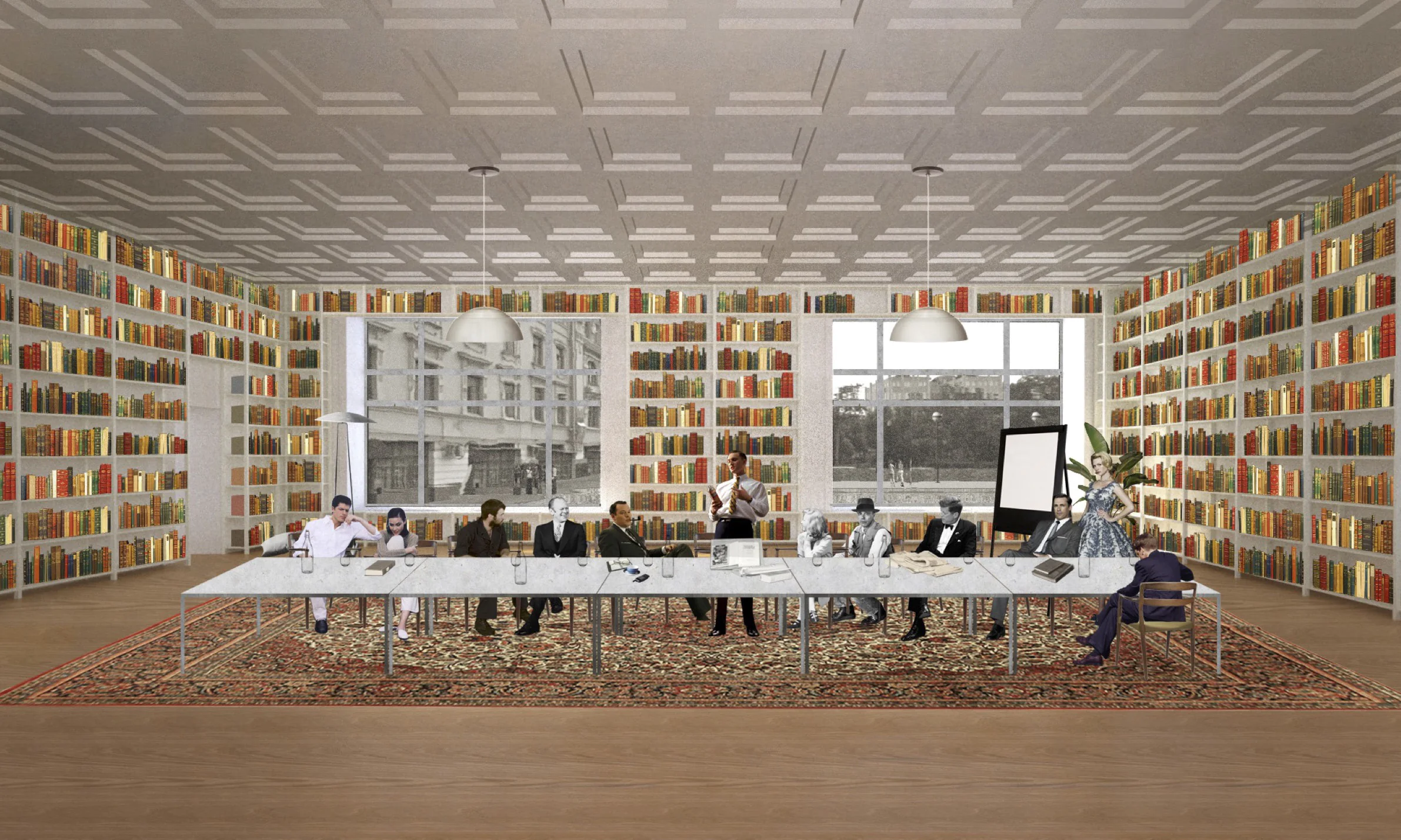
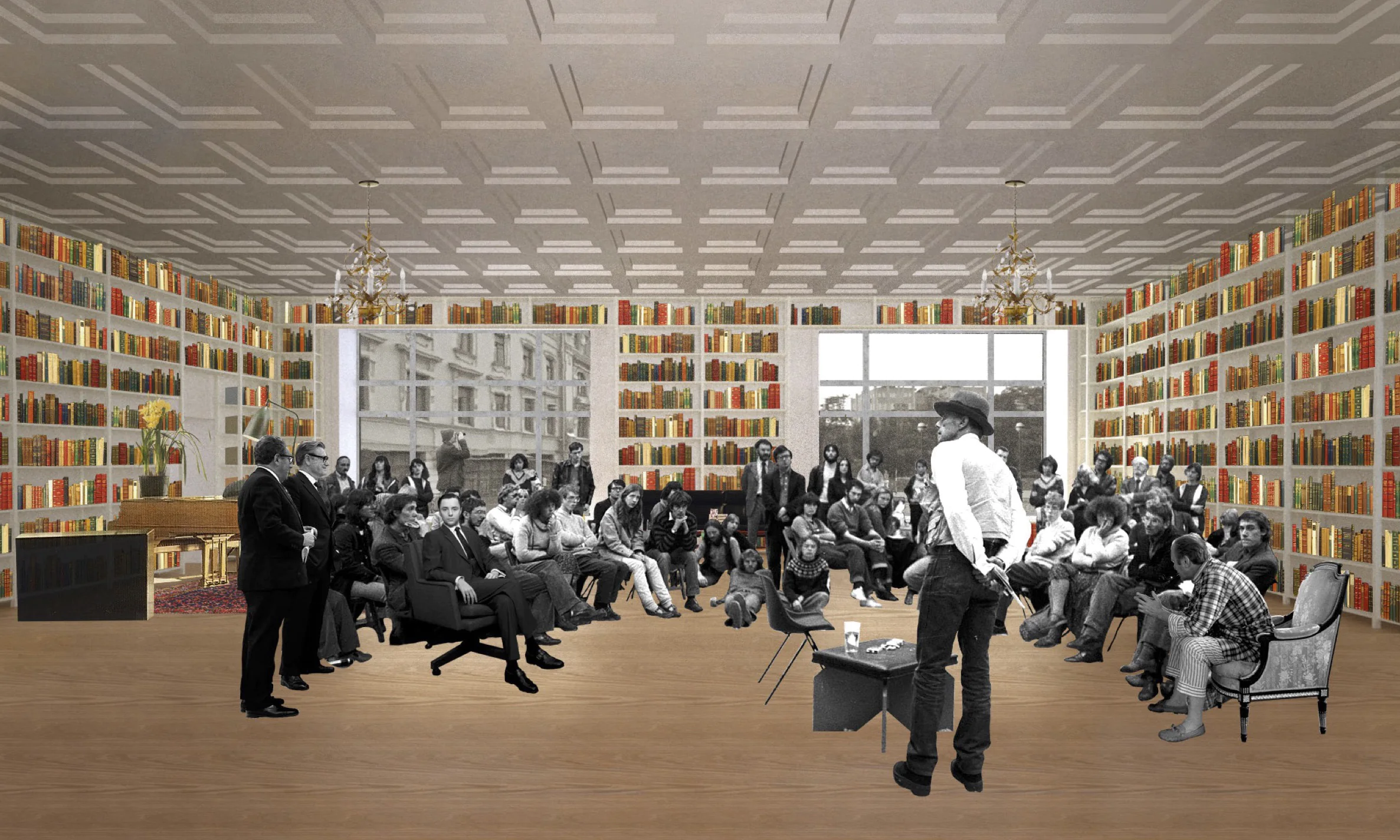
Dostoevsky Library
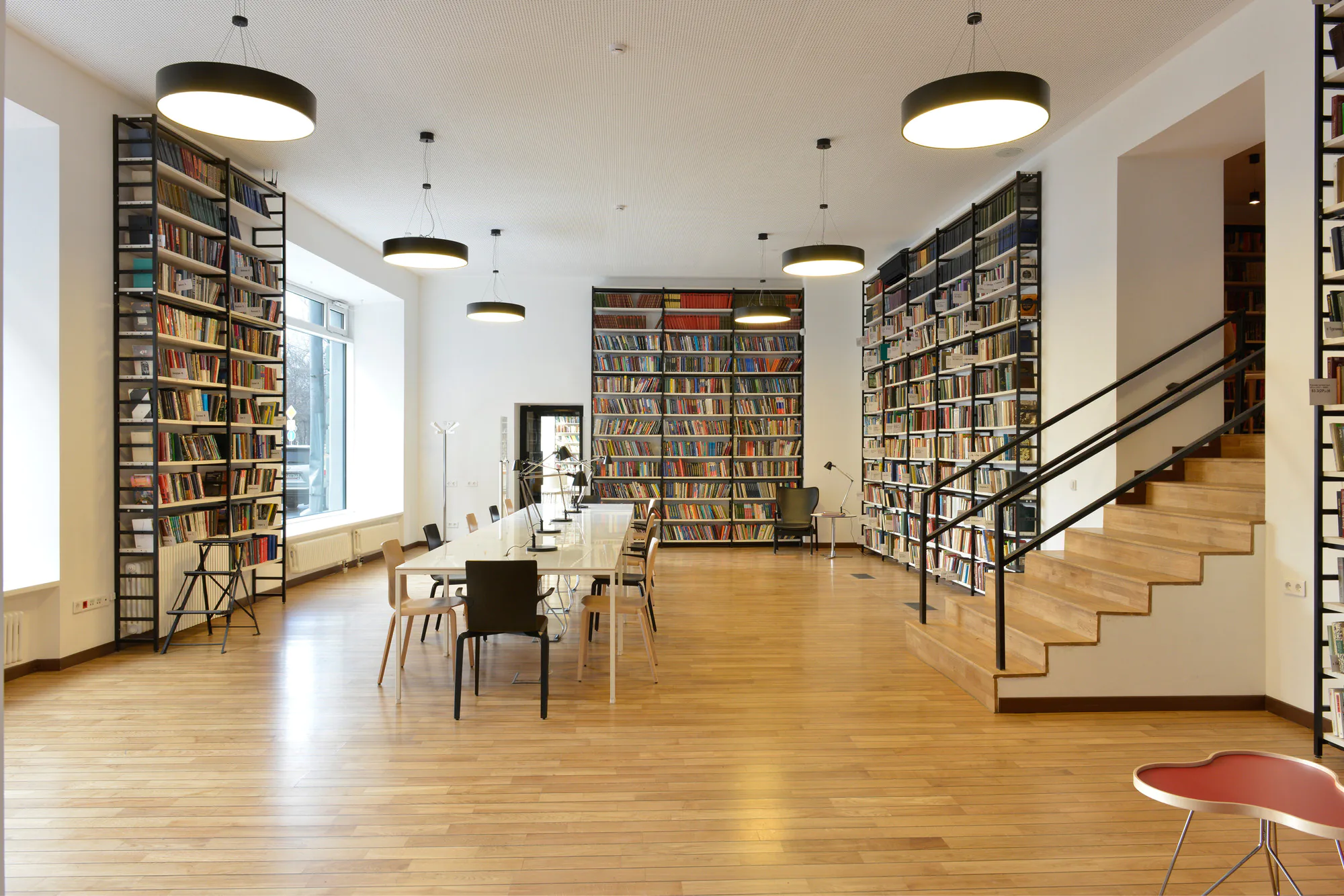
A library on Chistoprudny Boulevard, housed in a 1913 rental building — reopened to the city without losing its quiet character.
Gallery
Drawings
Description
The Building and Its Layers
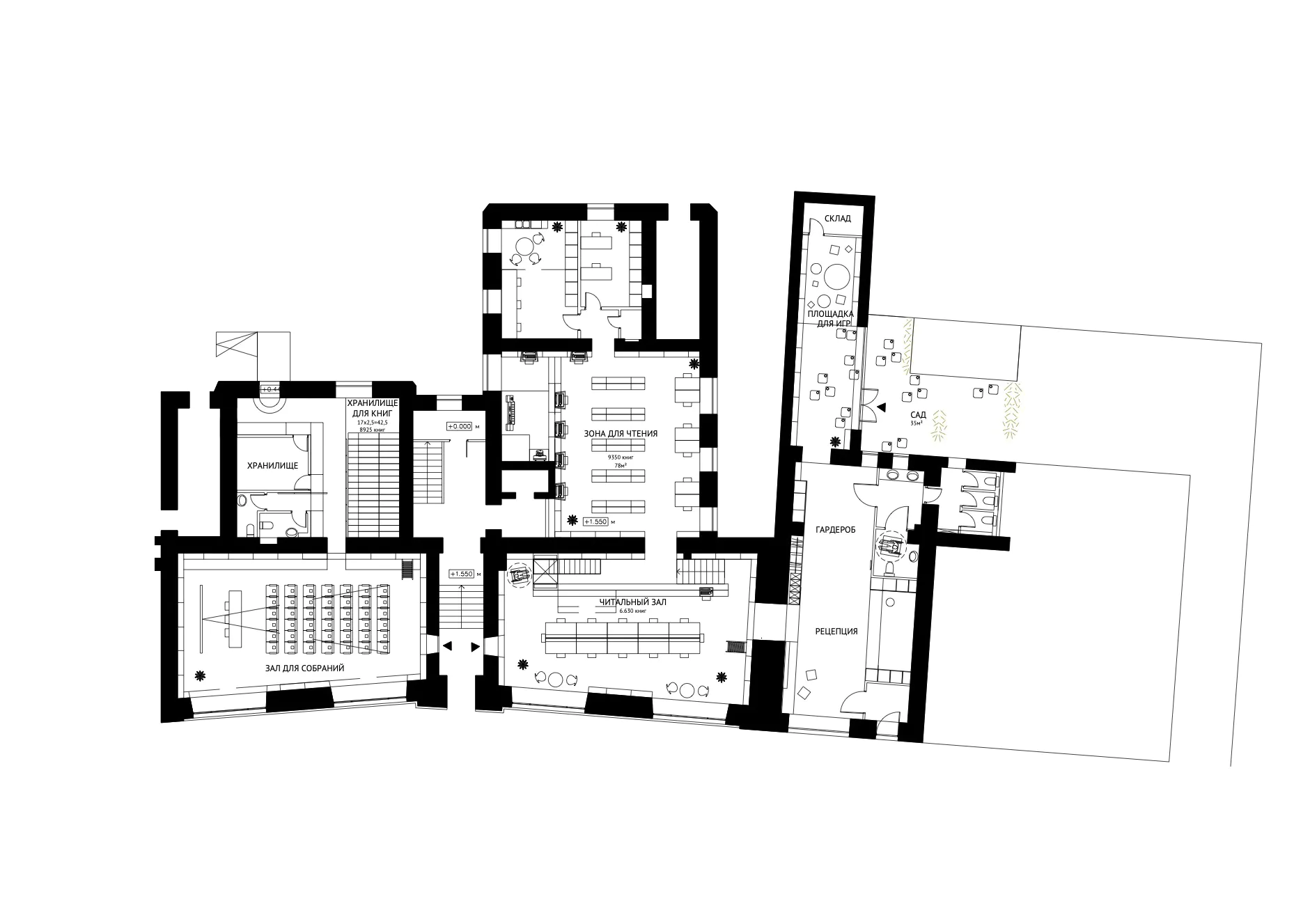
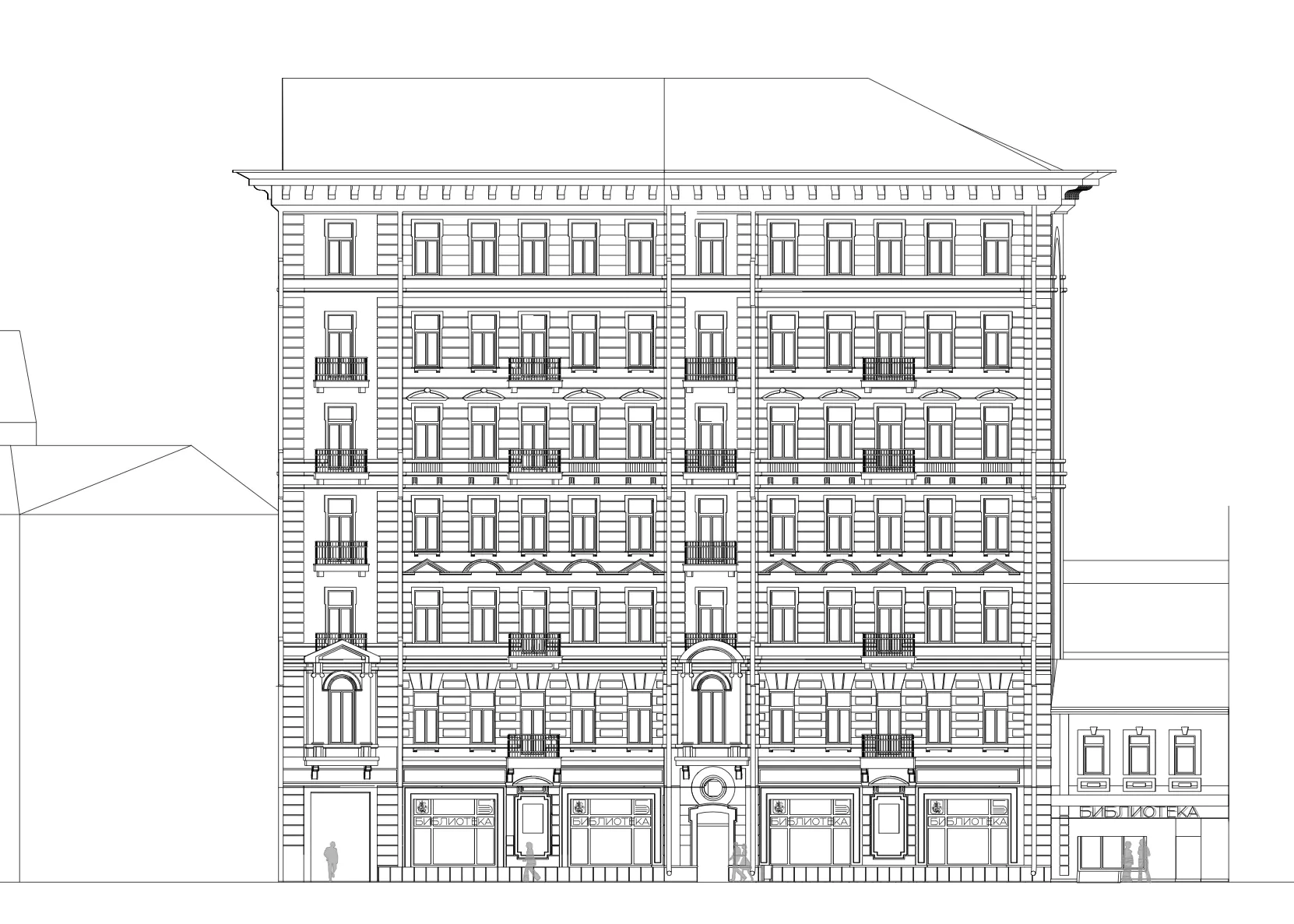
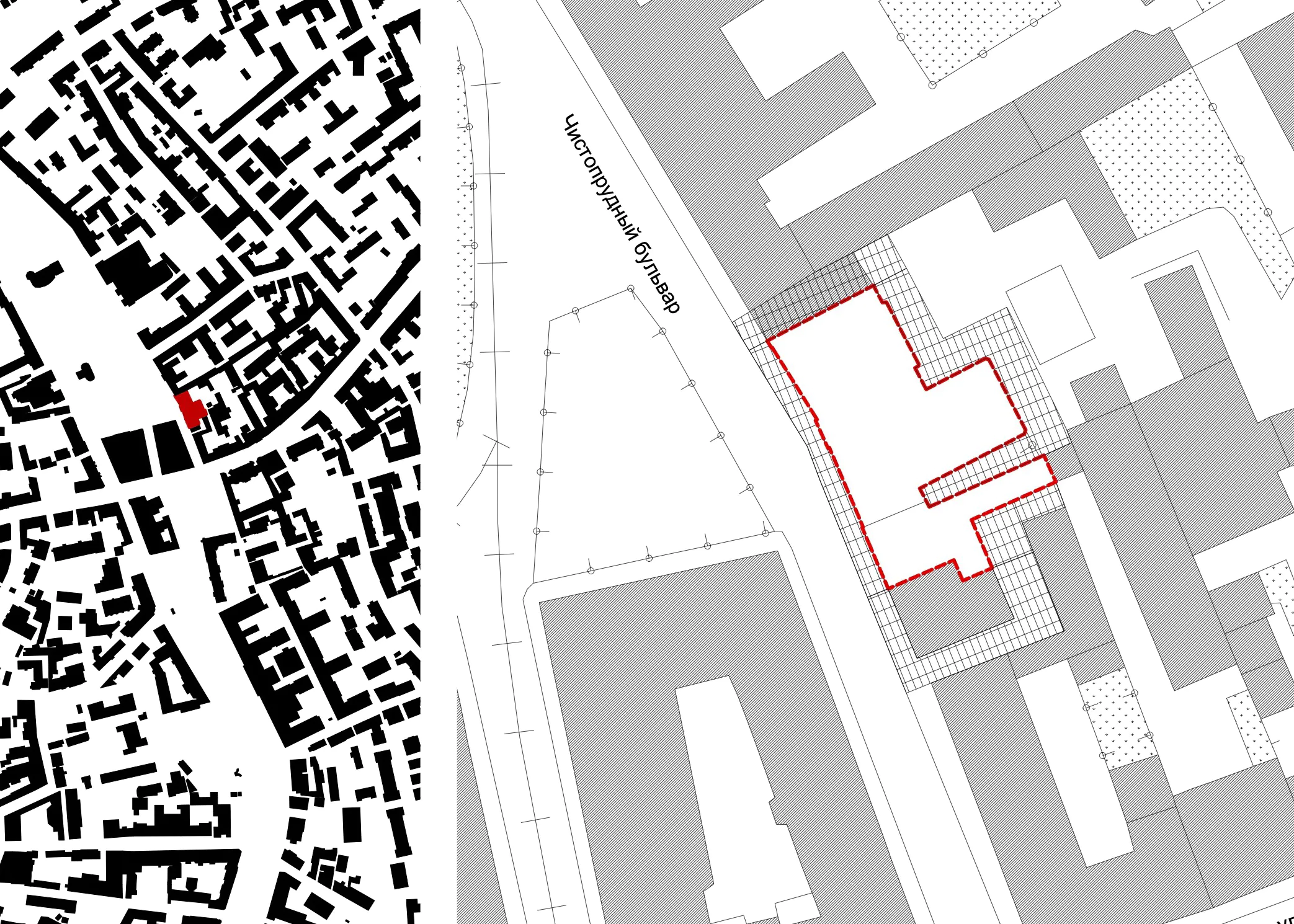
The building on Chistoprudny Boulevard belongs to the standard development type of the turn of the nineteenth and twentieth centuries: a rental building with a richly finished street façade and utilitarian interior spaces. The ground floor of such buildings traditionally housed commercial or civic functions. The library had long occupied this space, but it remained closed off. Its programme did not extend beyond a lending desk and a reading room, and the layout made no use of the window height or the relationship with the boulevard.
Visual and Spatial Contact With the Boulevard
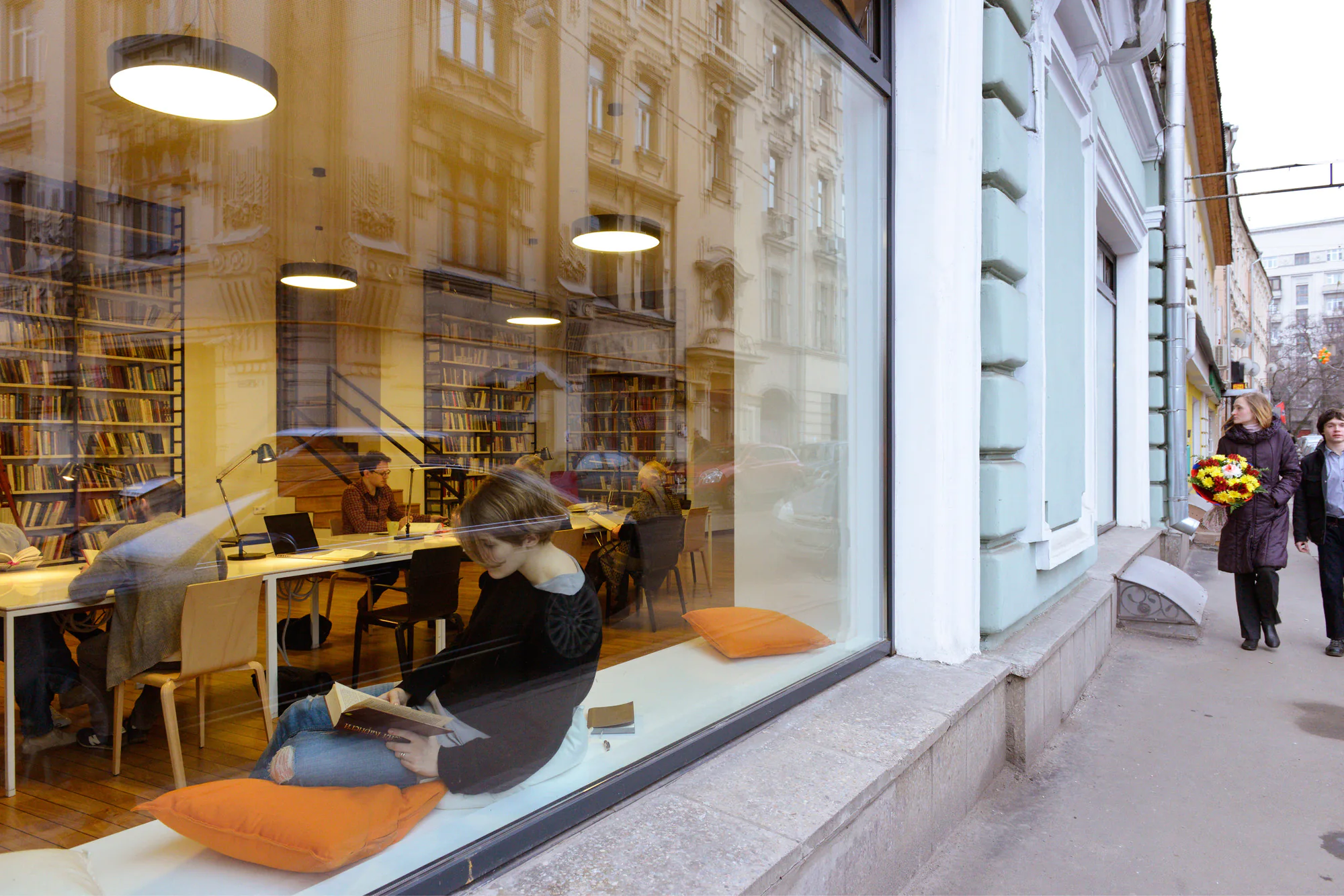
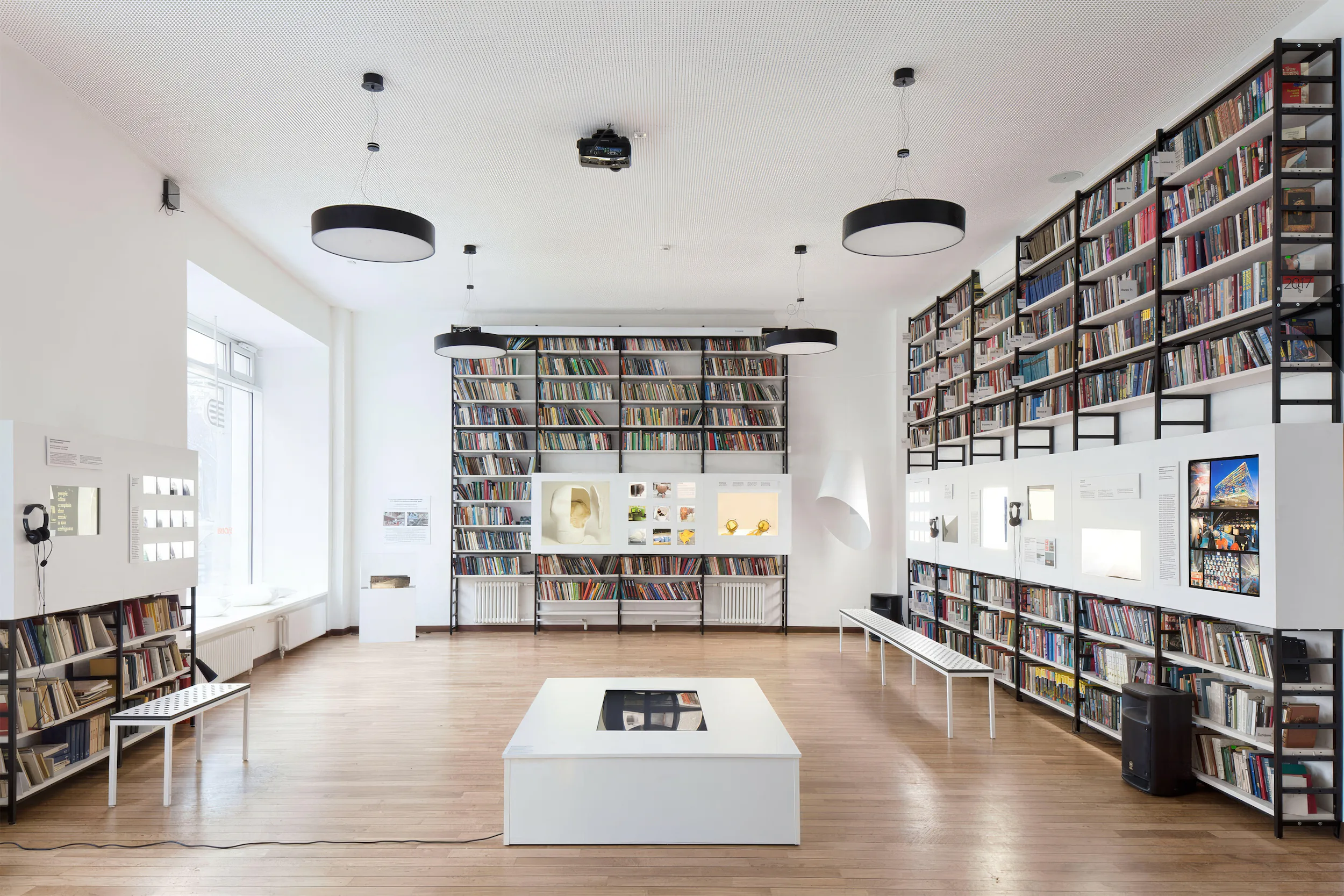
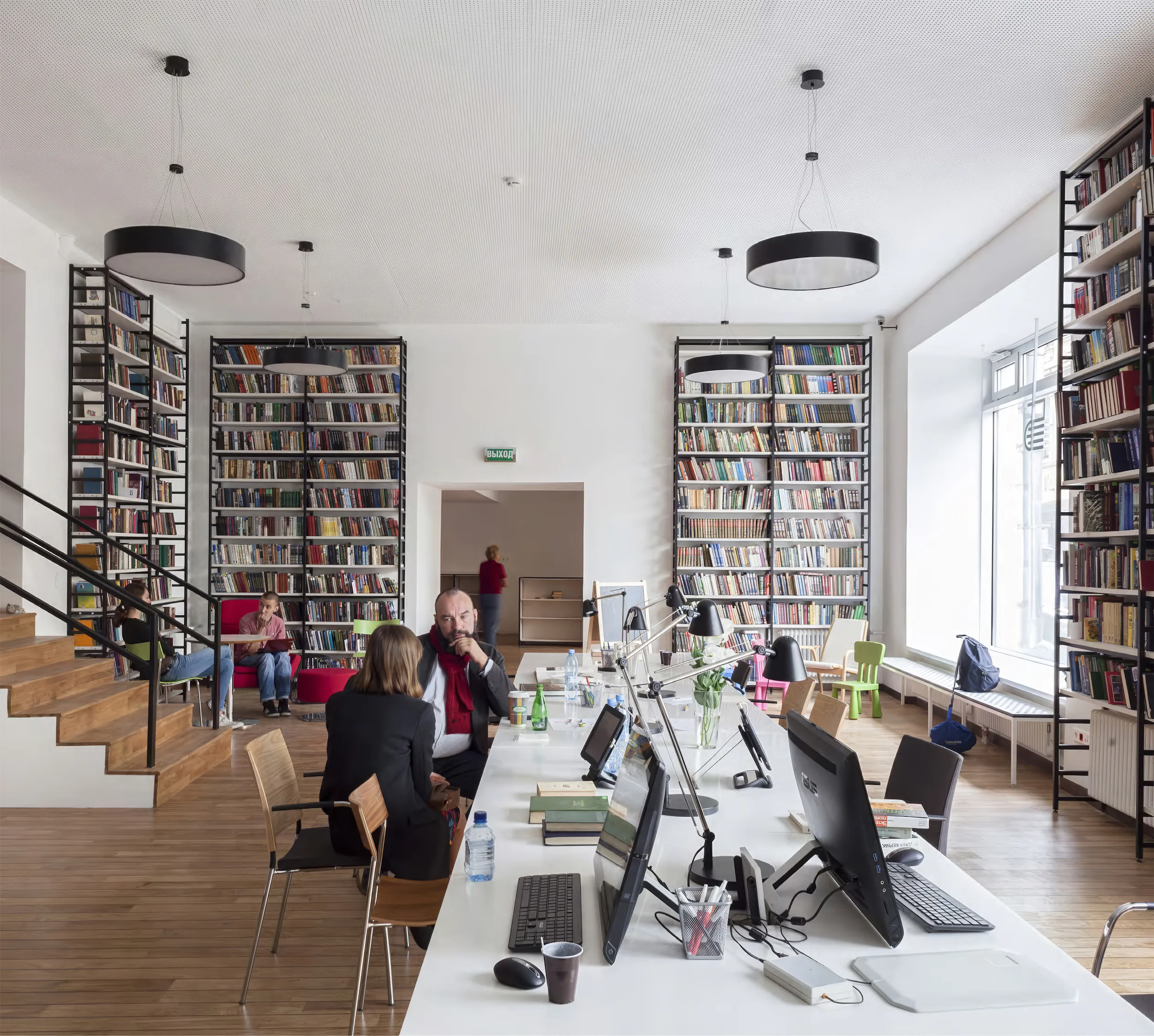
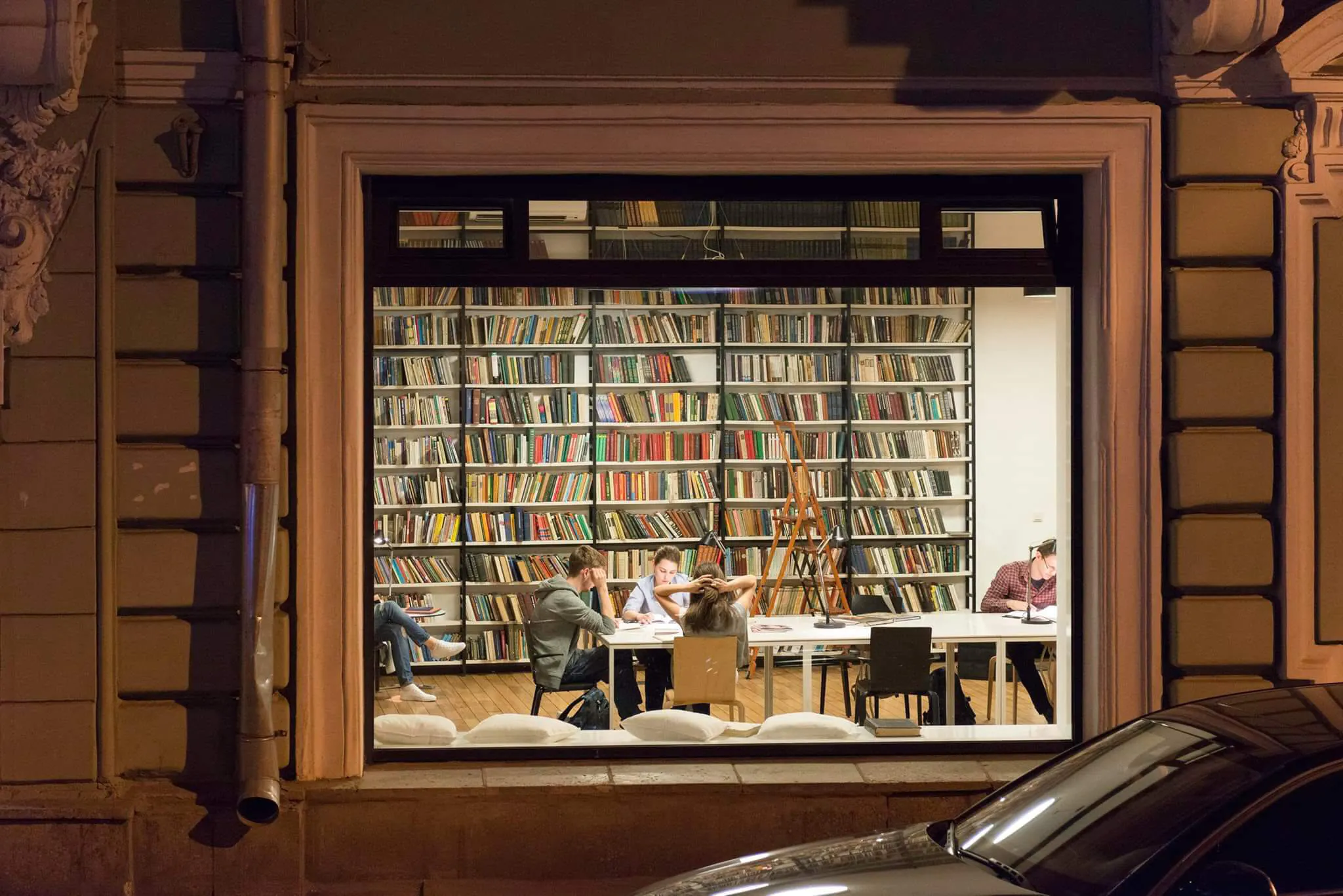
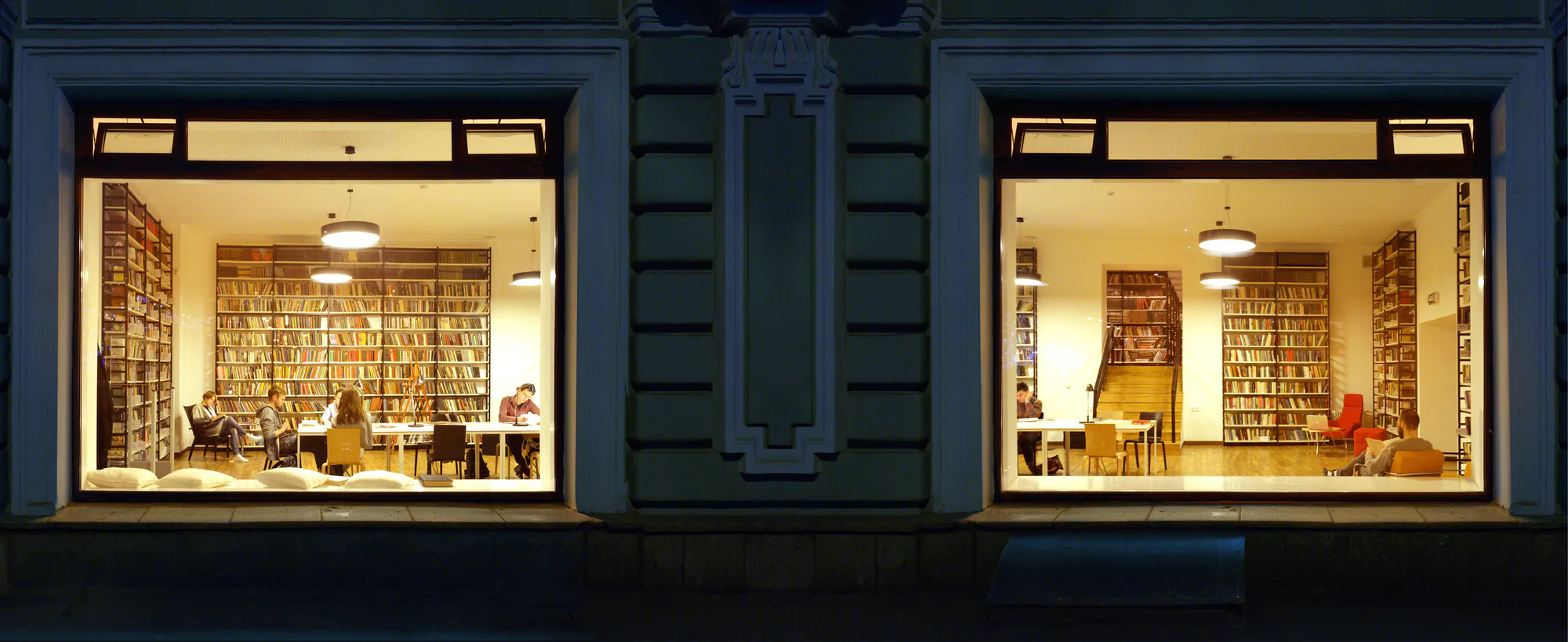
The key geometric decision concerns the street façade glazing. The ground-floor windows of a rental building of this period have considerable height, typical of the grand commercial premises of the era. The zone along the windows is cleared of shelving and given over to reading and working positions.
This decision works in two directions. From inside, the reader receives natural light and a view onto the boulevard, reducing the sense of enclosure typical of basement and semi-basement library spaces. From outside, a passerby sees people at work: the library becomes visible from the street. This mutual visibility is precisely the mechanism that transforms a closed institution into an urban literary salon — not a declaration but an optical and functional solution.
The Boulevard Ring as a type of urban space implies slow movement, pauses, seasonal use. A library oriented toward this rhythm fits naturally into it, not competing with the cafés and theatres of the district but complementing them with a different mode of presence.
Materials and Atmosphere
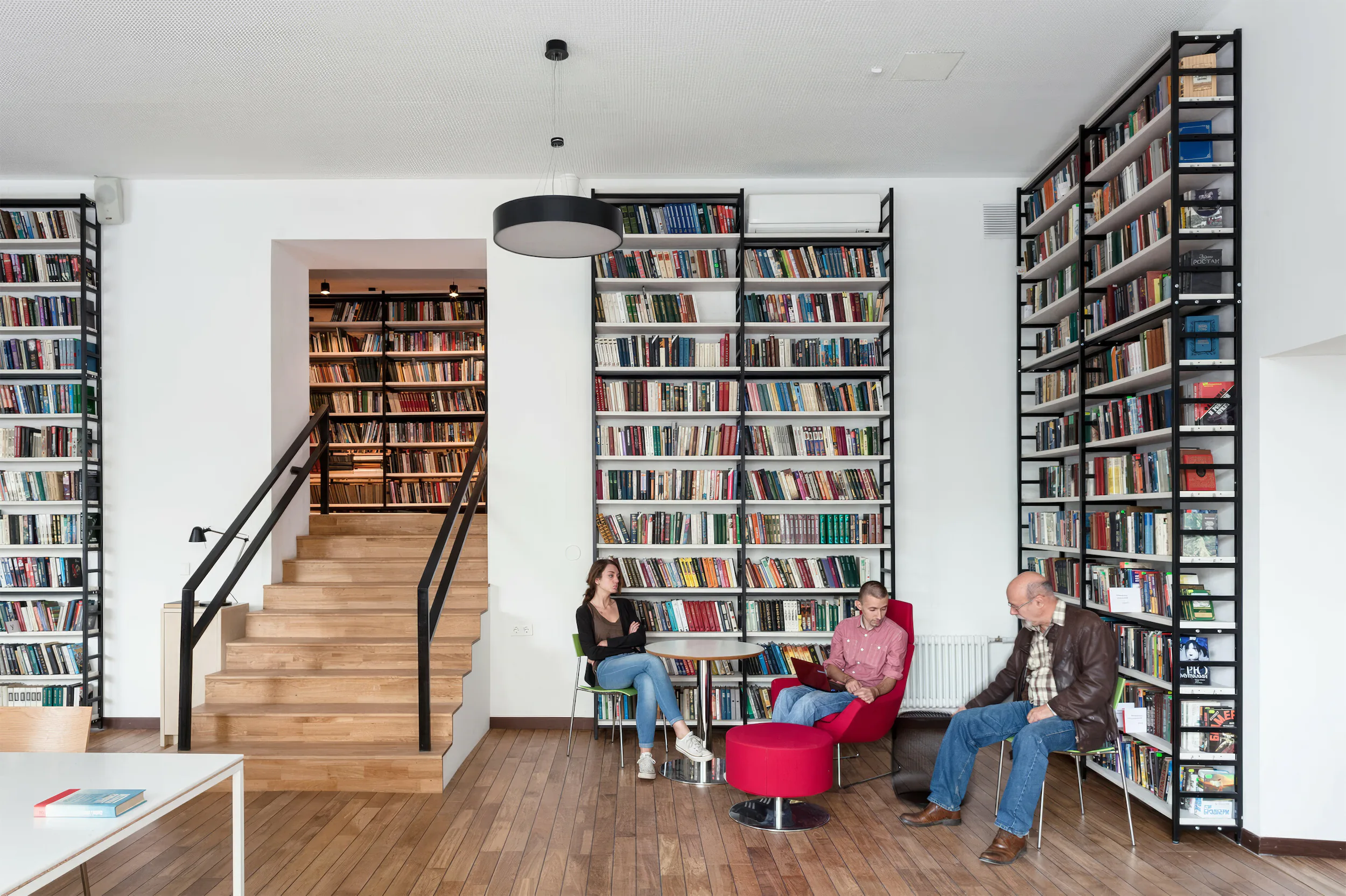
The project names a warm atmosphere as the target quality of the space. In architectural terms this is achieved through materials with a neutral warmth of tone and high light reflectance in the absence of glossy surfaces. Wooden furniture and shelving accumulate the warmth of natural light, shifting the perception of the space across the course of the day. Walls are levelled and painted white. A white matte surface acts as a diffuser: it amplifies natural light without glare and reduces the acoustic echo typical of spaces with concrete or tiled planes.
High-traffic libraries place specific demands on finish materials: floor coverings must withstand intensive use without visible wear, and furniture must hold its geometry over years of operation. Choosing durable, low-maintenance materials is an engineering position, not an aesthetic one. The British Standard BS 8300 for public buildings notes that the1 durability of finishes directly affects the accessibility of a space: worn surfaces create physical and visual barriers.
Programme and Urban Voids
The term “programmatic voids” in the project text points to a specific observation: within walking distance of the library there were no quiet public spaces for work and reading. The neighbourhood’s cafés presuppose consumption, theatres presuppose a schedule, the park presupposes season and weather. A library with a digitised collection, Wi-Fi, and a range of working positions fills a demand that is otherwise unmet.
Digitisation changes the logic of shelving layout. When part of the collection exists in digital form, the physical storage requirement shrinks and the freed area is redistributed in favour of working positions. This is a structural change, not a decorative one: the ratio of storage area to use area shifts toward the latter. A comparable transformation occurred at the Seattle Central Library (OMA / Rem Koolhaas, 2004), where the2 separation of the physical and digital collection was embedded in the volumetric and planning logic of the building itself.
Quiet Space as Programme
The reconstruction of the Dostoevsky Library addresses a problem that most public space projects in busy urban districts leave unsolved: creating a place for silence and concentration alongside intense urban activity. Not despite the proximity of cafés and theatres, but precisely because of it. The space operates as a counterpoint rather than a competitor. And that counterpoint turns out to be a function that no other type of public building can replace.
Footnotes
-
British Standards Institution. BS 8300
Design of an accessible and inclusive built environment. London: BSI, 2018. ↩ -
OMA / Rem Koolhaas. Seattle Central Library, 2004. Programmatic concept of physical and digital collection separation. oma.com/projects/seattle-central-library ↩
Analysis