Temporary Faсade, K7/11
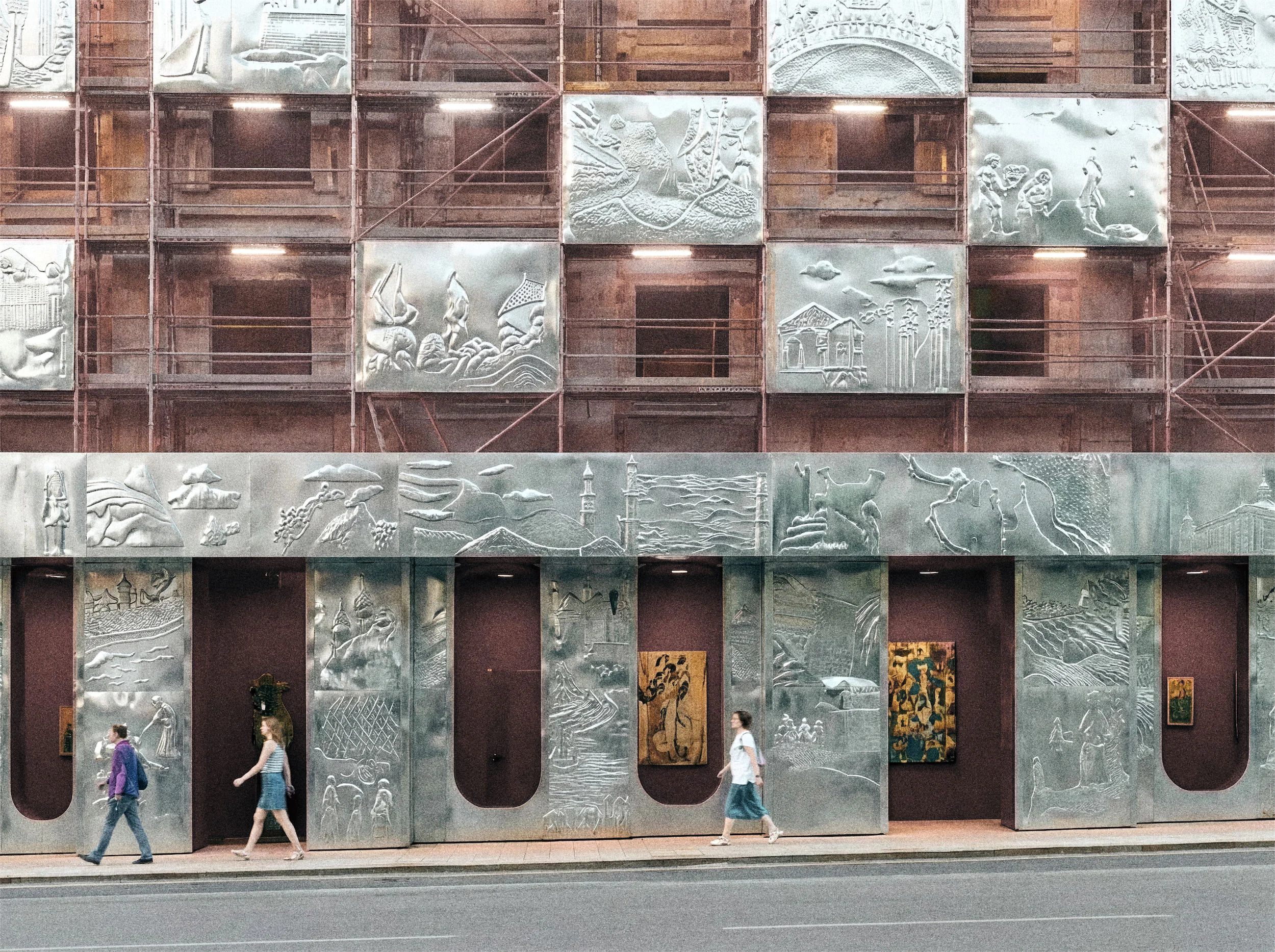
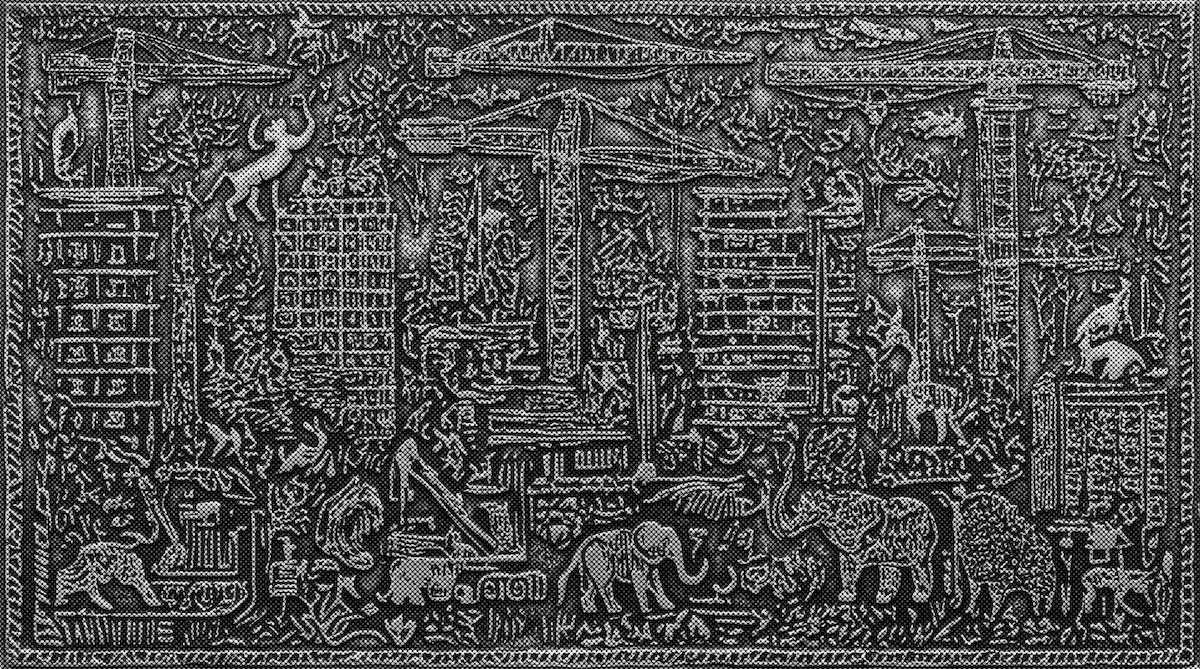
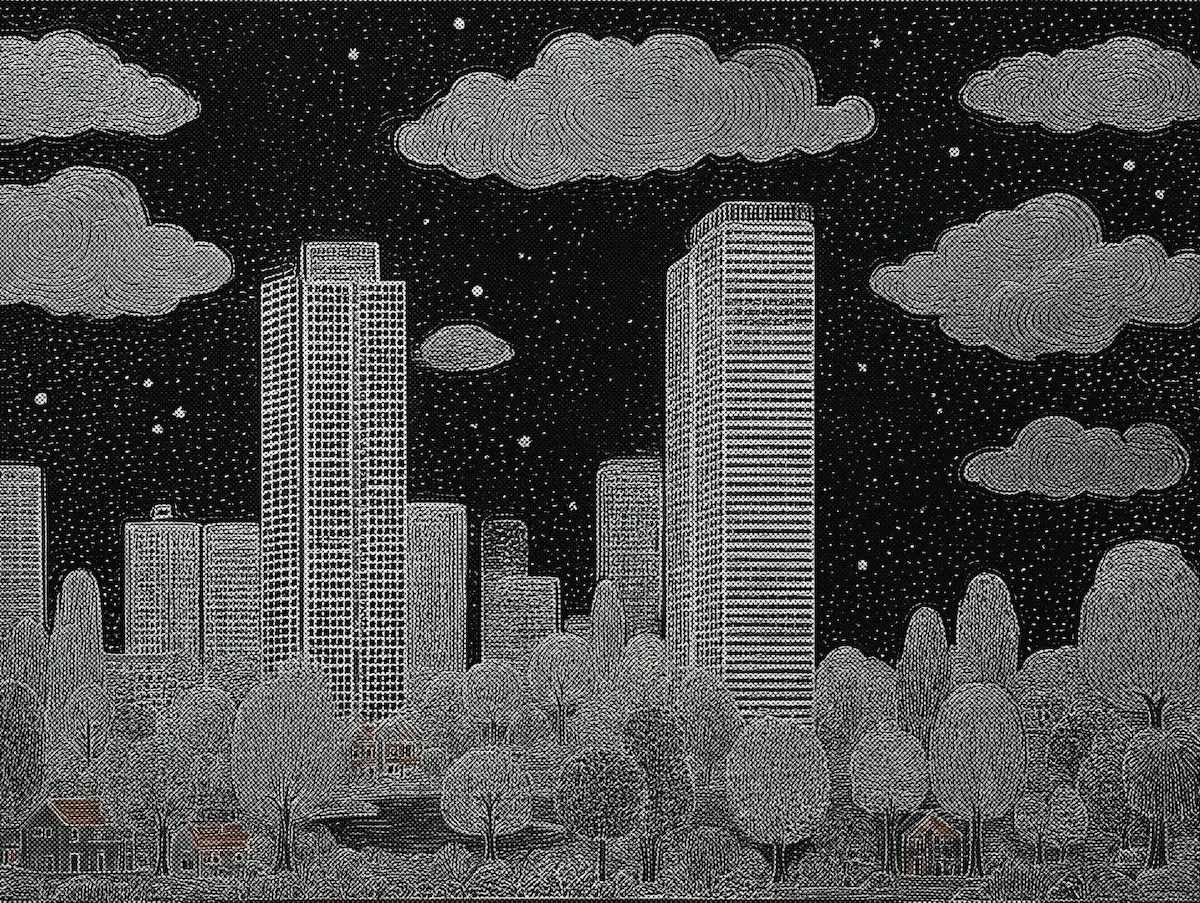
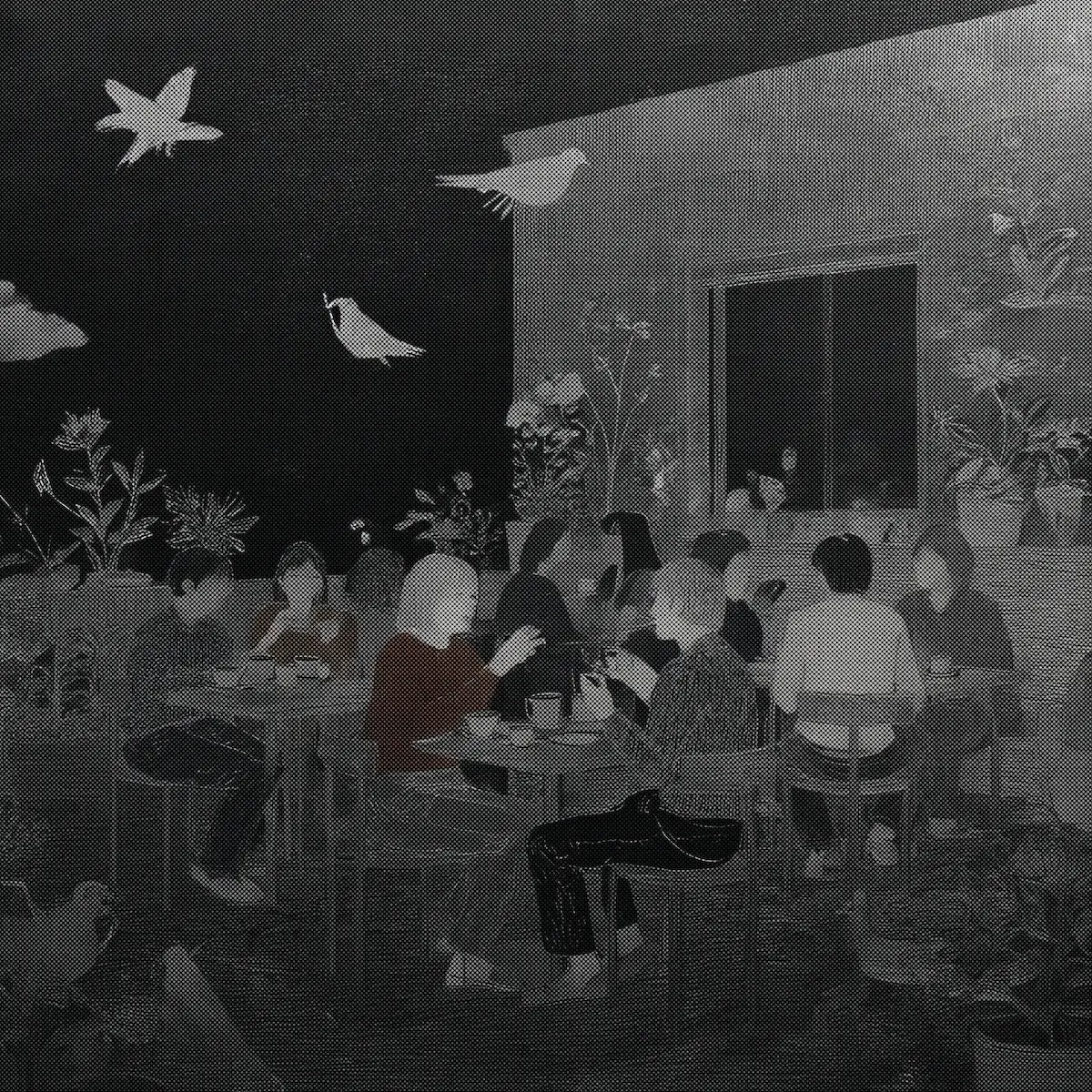
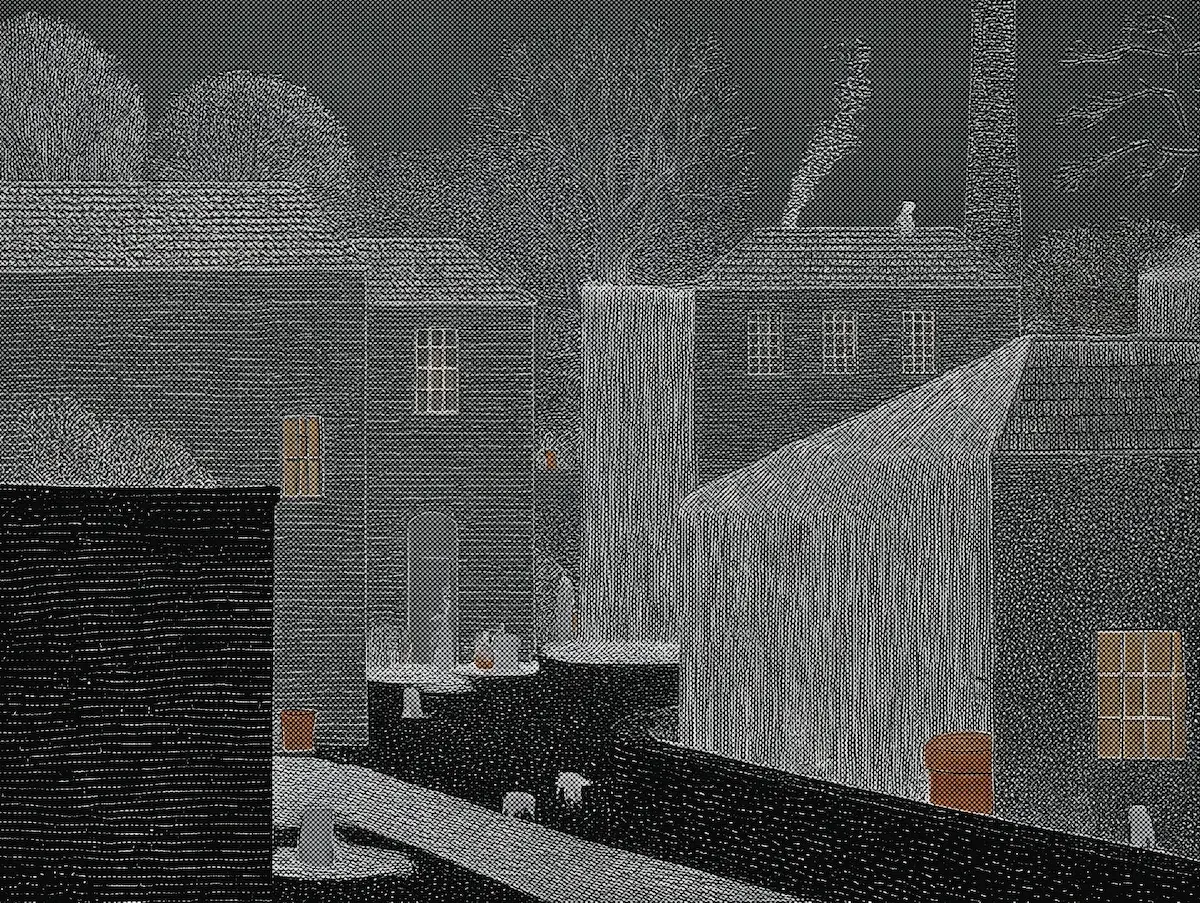
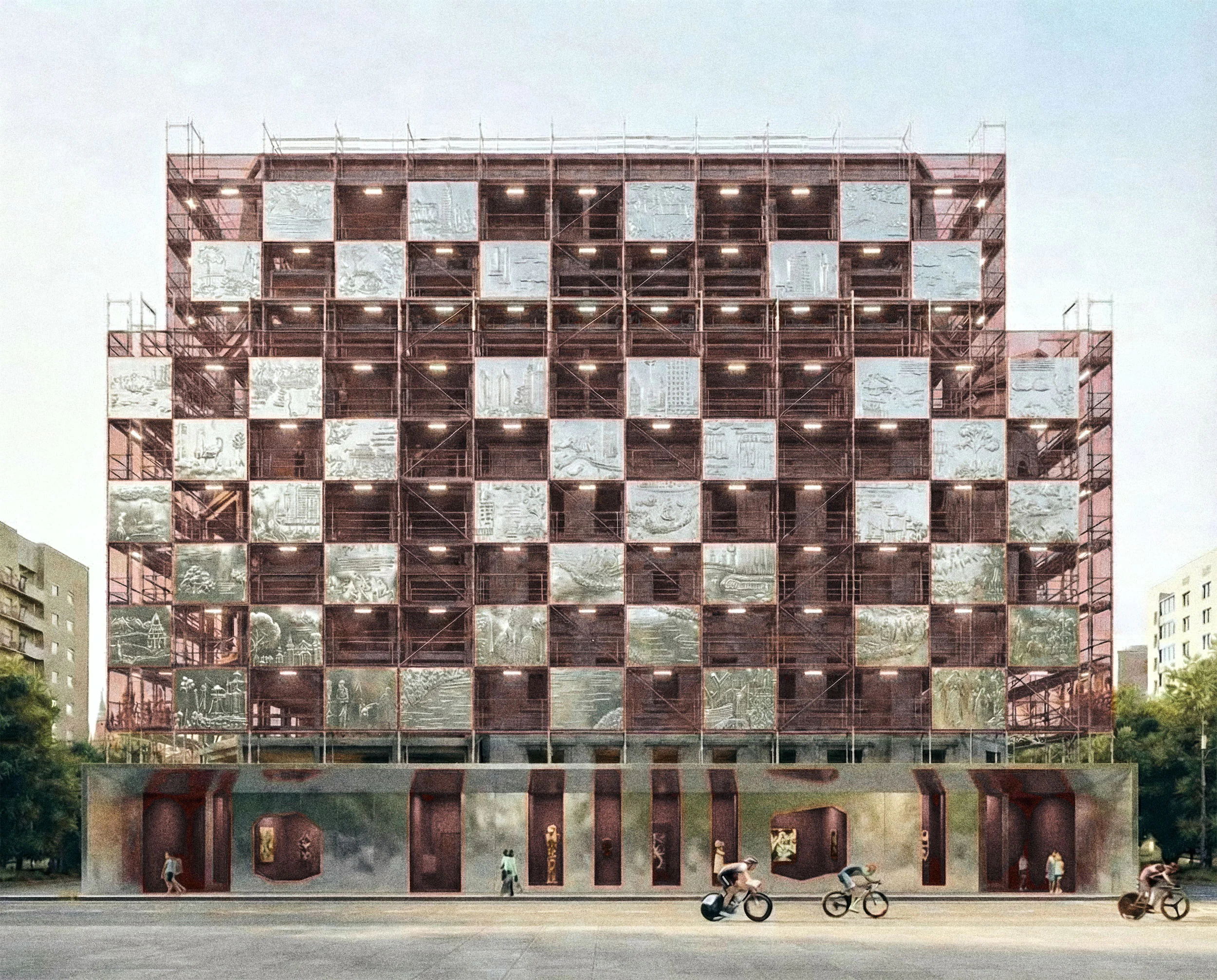
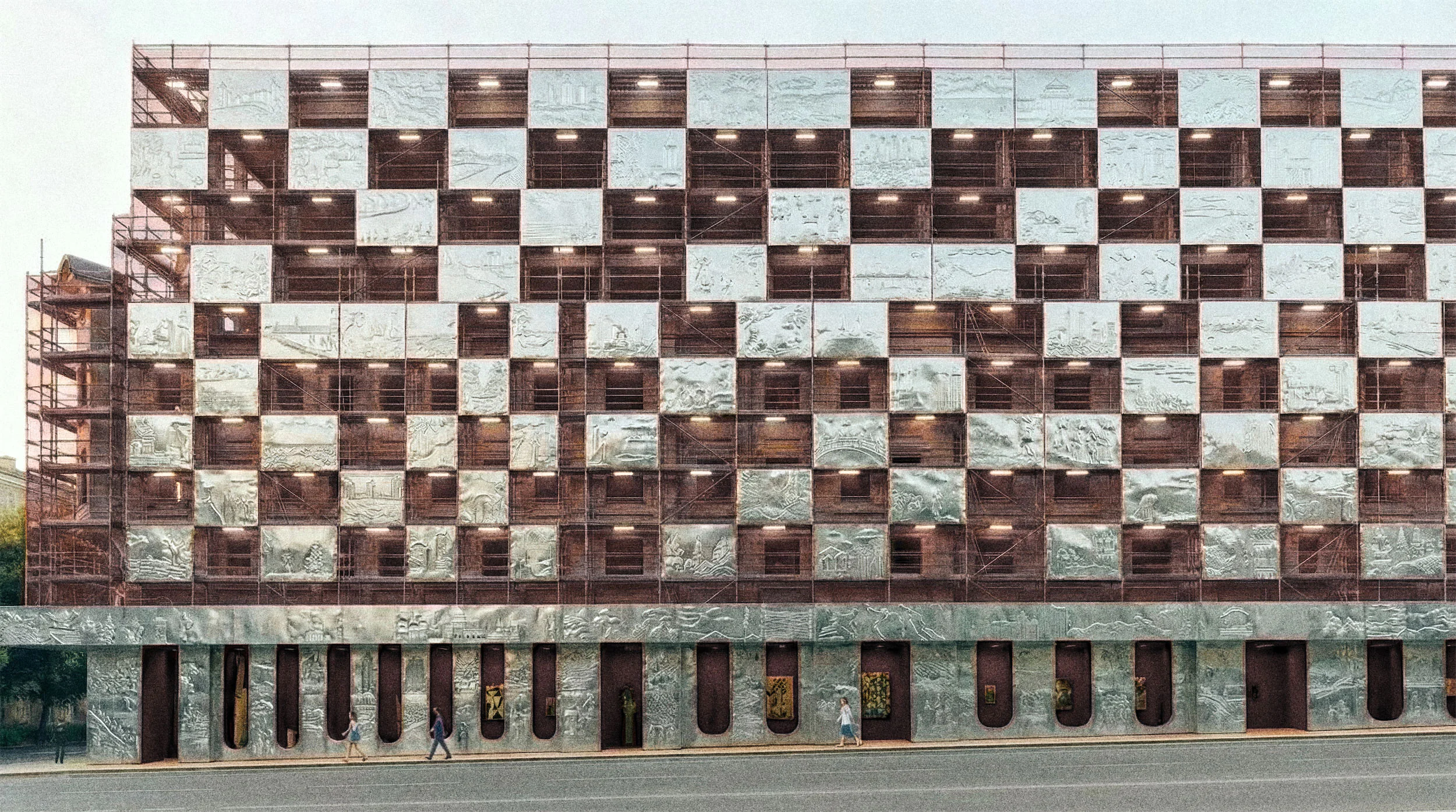
A construction hoarding reimagined as an urban gallery: chased stainless steel panels record the disappearing layers of the district while a new building rises behind them.
Gallery
Description
Extraction and Return
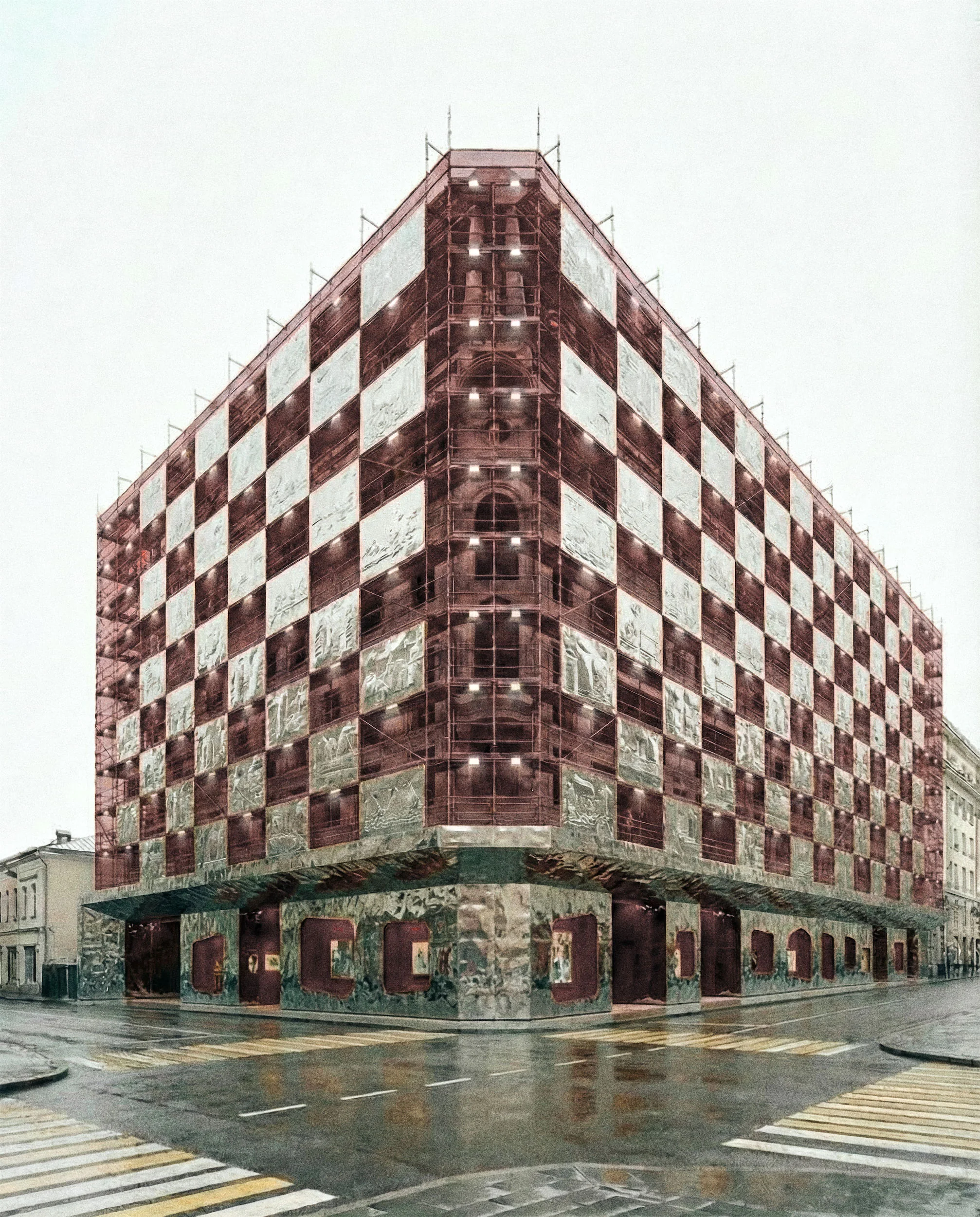
Construction hoardings in Moscow follow one of two schemes: solid corrugated metal with the developer’s logo, or a mesh banner showing a render of the future façade. Both produce the same result: the construction site becomes an extraction of territory from urban life for the duration of the build. The concept for K7/11 on Krasnaya Presnya is built on the opposite logic.
The hoarding is organised in two tiers. The upper tier alternates metal panels with chased relief and semi-transparent textile. The lower tier has gallery niches with contemporary art objects at pedestrian eye level. Both tiers face the street, not the construction site. The perimeter functions as a façade, even though the building behind it does not yet have one.
Subjects: Not Documentation but Topography
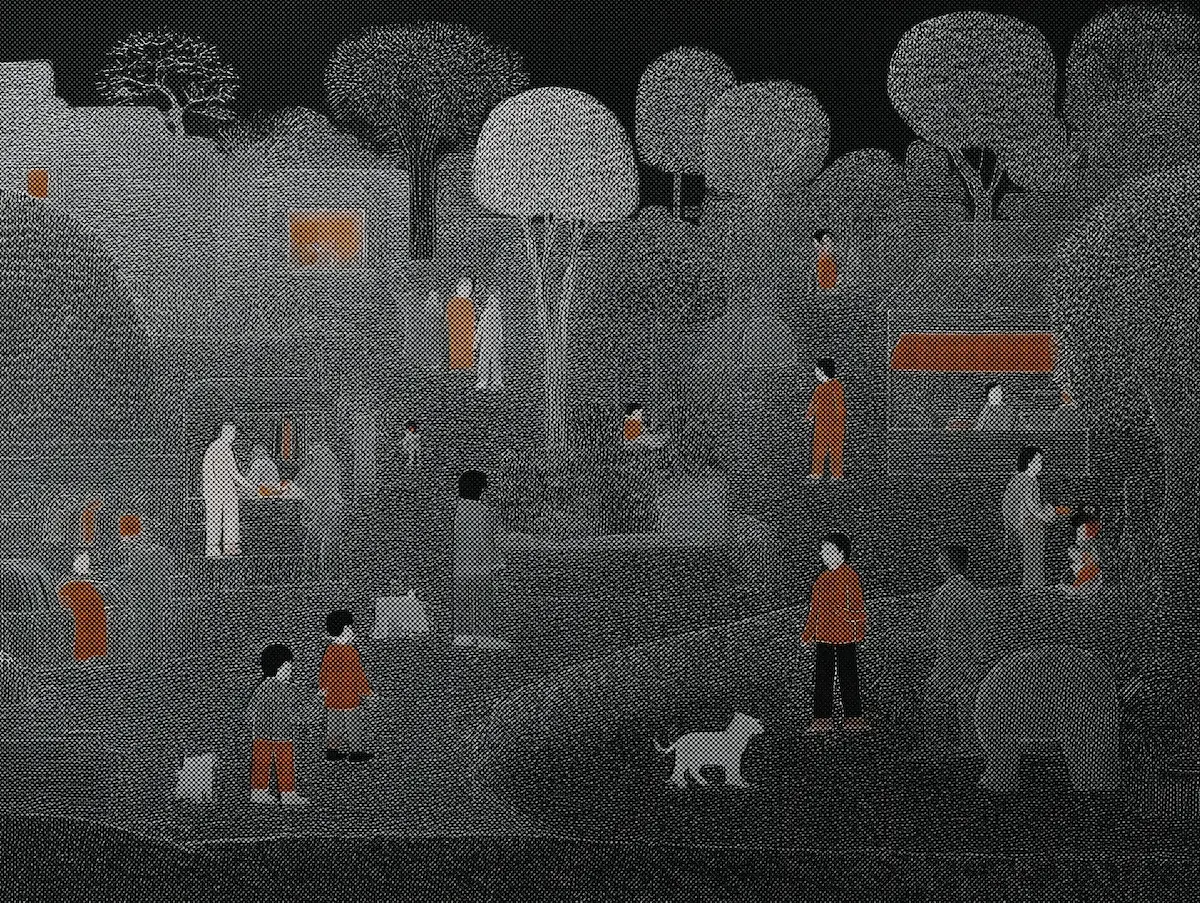
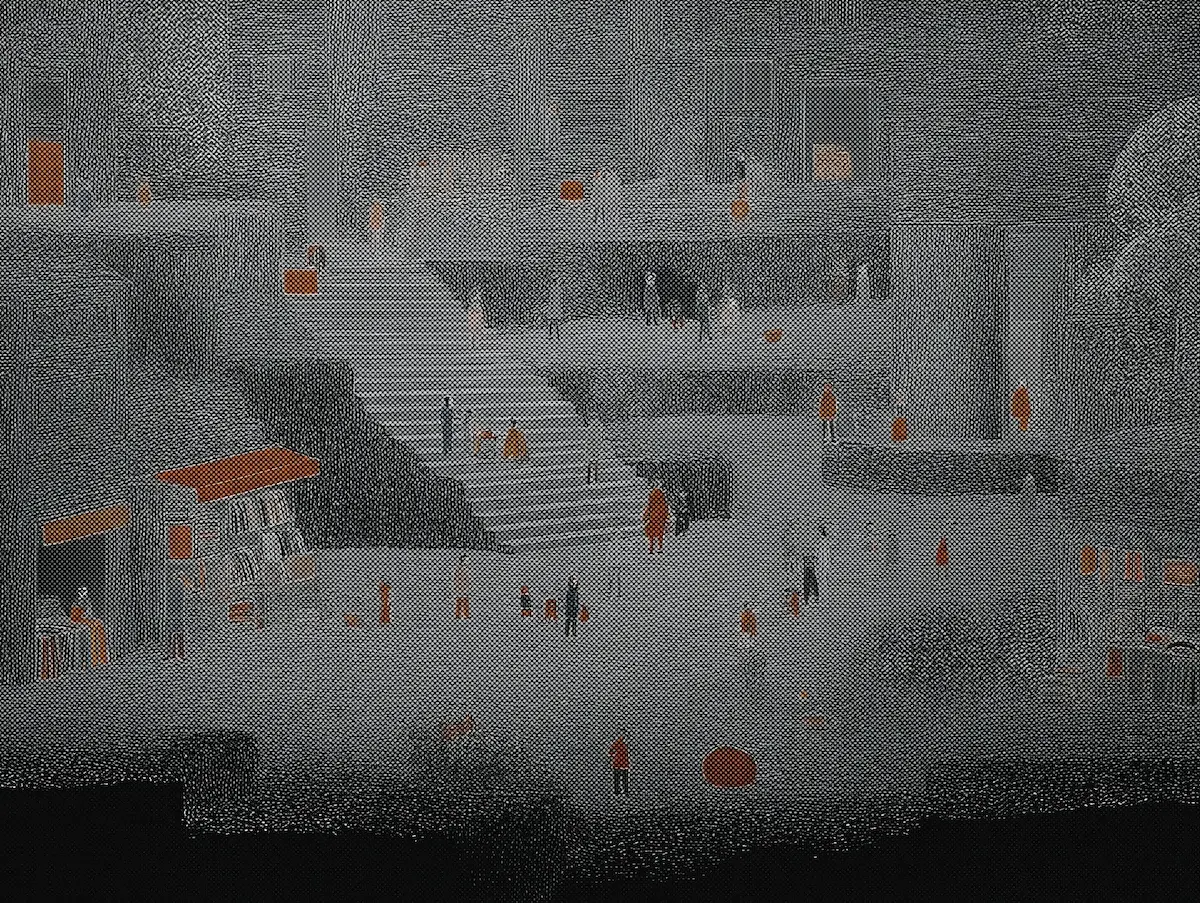
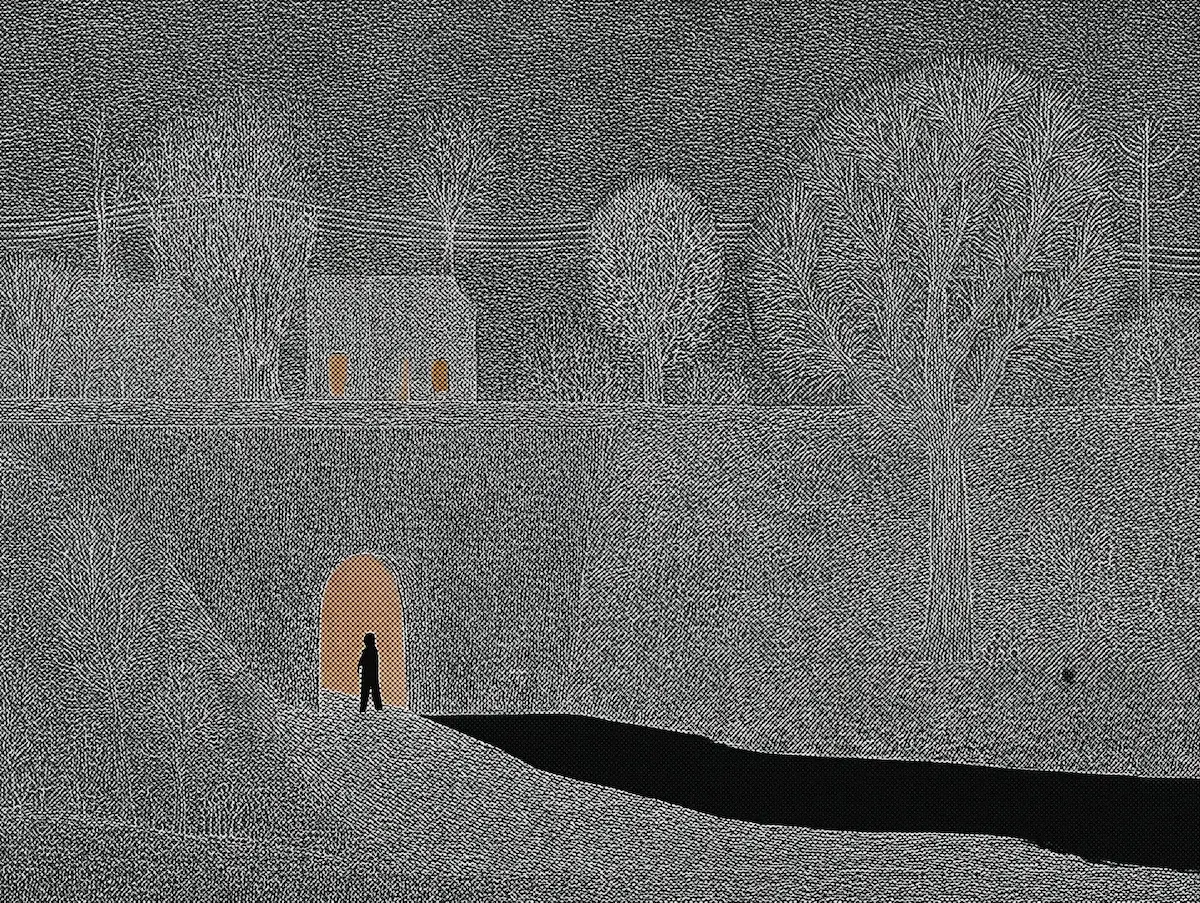
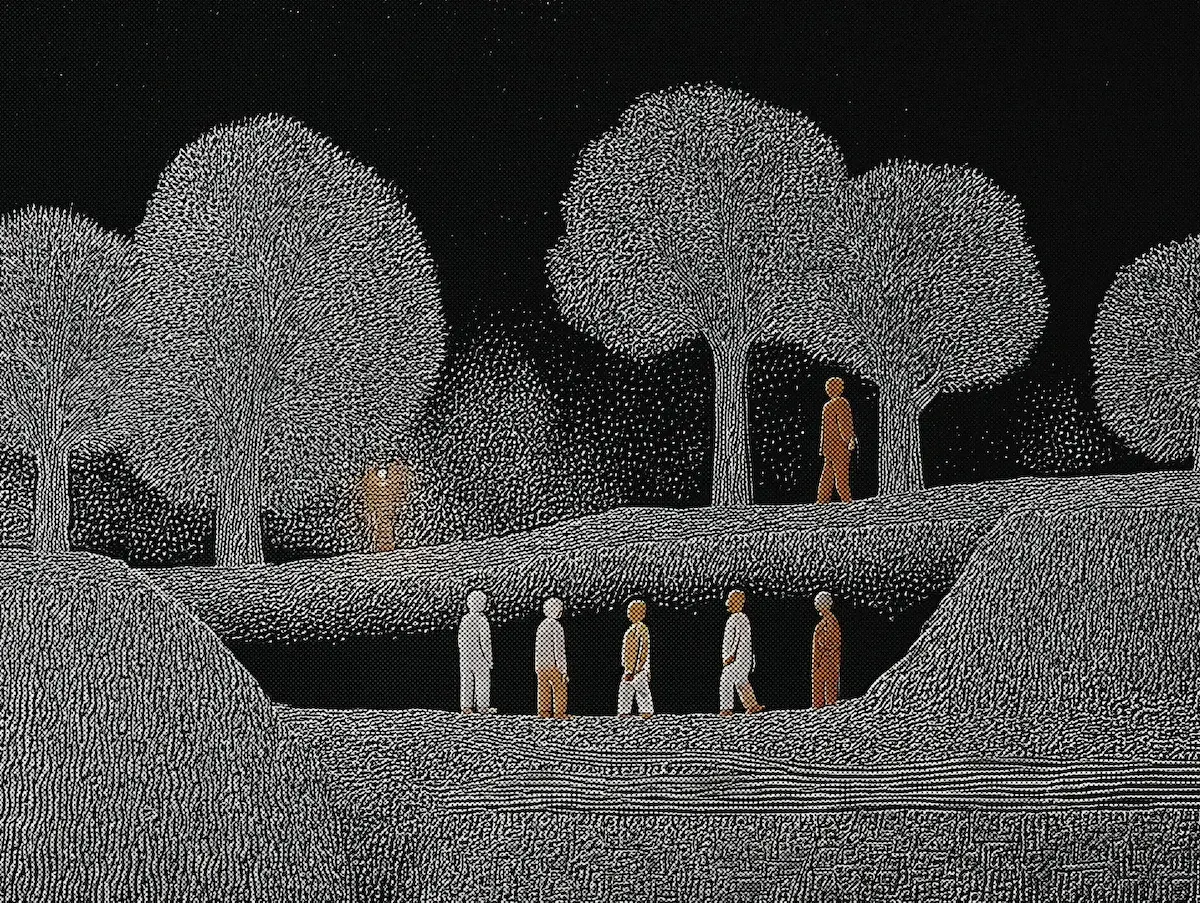
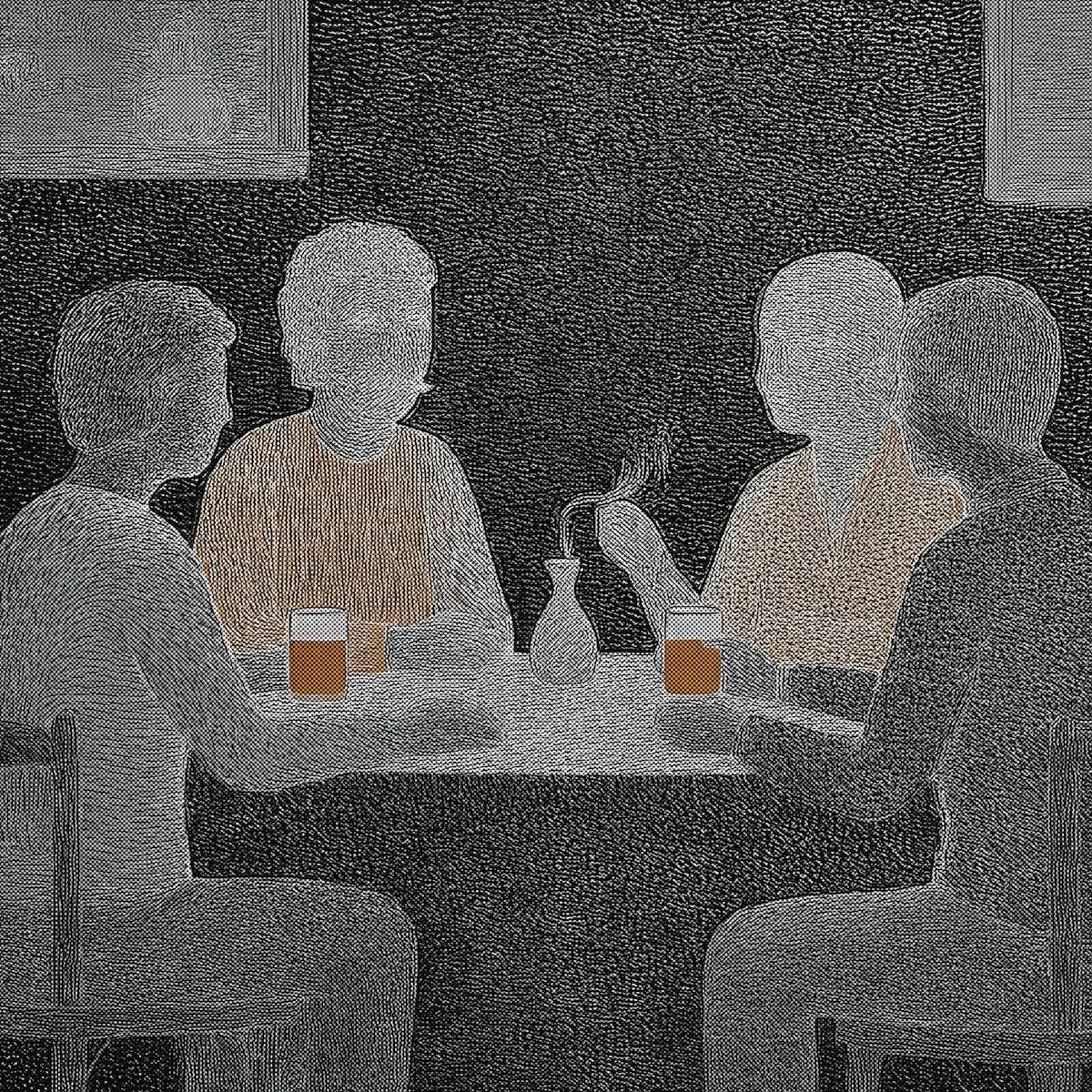
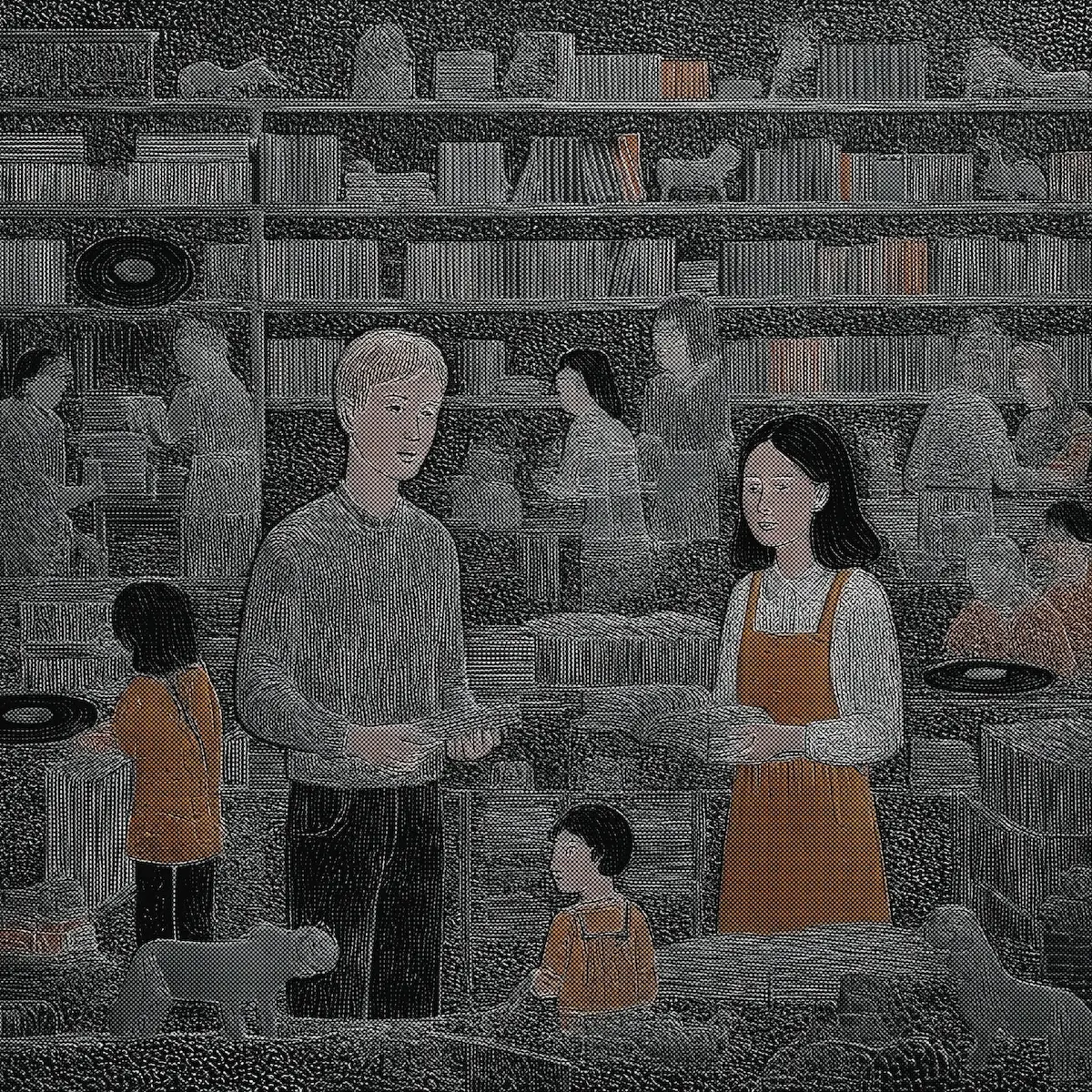
The chased panels carry scenes connected to Presnya: closed stolovye and shot bars, the Tishinskiy market with its antique rows, an audience outside the Solovey cinema, animals from the zoo on Bolshaya Gruzinskaya. This is not a chronicle and not nostalgic illustration. The chasing does not reproduce documentary images — it builds new forms from familiar elements. The relief selects from visual memory the contours that are recognised but not precisely identified.
The1 Tishinskiy market closed in 2006. The2 Solovey cinema was demolished in 2016. Both disappeared from the physical fabric of the district within the last twenty years. Their inscription in metal that does not corrode creates an inversion of the usual urban process: a temporary hoarding preserves what permanent structures can no longer hold.
Textile as Filter
The background between the panels is semi-transparent recycled polyester in colour B0725F, stretched flat on a modular scaffold frame. A weight of 150–200 g/m² allows light transmission: the scaffolding and the façade of the building under construction are visible through the fabric. The degree of transparency depends on lighting conditions. In backlight the building behind the hoarding is clearly legible; in frontal daylight the textile reads as a continuous colour plane.
The rhythmic alternation of opaque metal and translucent fabric creates a depth that a homogeneous material cannot produce. Heavy and light elements in alternation give the façade plane a variable optical density. The same polyester is used as a background in the niches of the lower tier, where it creates a neutral field for objects from the Sample Art catalogue.
Metal and Light
Stainless steel of 1–3 mm thickness is worked by chasing — a technique in which relief is formed by pressure without removing material. The surface carries the literal trace of the tool: every projection and depression is fixed in the structure of the sheet. Under atmospheric moisture and UV exposure stainless steel does not corrode, but its reflective character changes: over time the mirror finish shifts toward matte and the relief begins to read more distinctly.
Square panels of 3×3 m are installed in a staggered arrangement with a 2–3 cm gap from the textile background. The gap casts a shadow that shifts across the day. In the morning under raking light the relief reads at its sharpest; at midday the depth of the image almost disappears. The hoarding behaves differently at different times of day without any active optics.
Lower Tier: A Gallery on Street Terms
The ground level of the hoarding follows its own structural logic. The base is moisture-resistant plywood finished with chased metal panels. Niches are cut into the panels and closed with anti-vandal PMMA. Inside, objects from the Sample Art catalogue are displayed against the B0725F background; lighting activates at dusk.
The anti-vandal PMMA protects the objects without museum distance: the piece is visible at close range, at pedestrian eye level. The lighting keeps the niches active in the evening hours when the upper tier’s metal panels no longer read. The gallery operates without an entrance, without a schedule, without supervision.
The practice of using construction hoardings as gallery space exists in the European context but remains an exception in Moscow. Construction enclosures here are resolved primarily as developer branding tools rather than curatorial programmes.
The Temporary as Permanent
The hoarding’s lifespan is limited to the duration of construction. After dismantling, the chased panels will either disappear or move into another context. But stainless steel with anti-corrosion treatment carries no trace of use: the hoarding at the end of construction looks as it did at the beginning. Metal capable of patination through special treatment, wood that registers scratches, untreated concrete that absorbs moisture — each of these materials makes time in the city visible. This one does not.
The hoarding records someone else’s time — the memory of the district — and does not record its own. This is a constructive choice that precisely matches the stated idea: metal as permanent witness. But the permanent witness looks in only one direction.
Footnotes
Process