The Amsterdam, Zilart
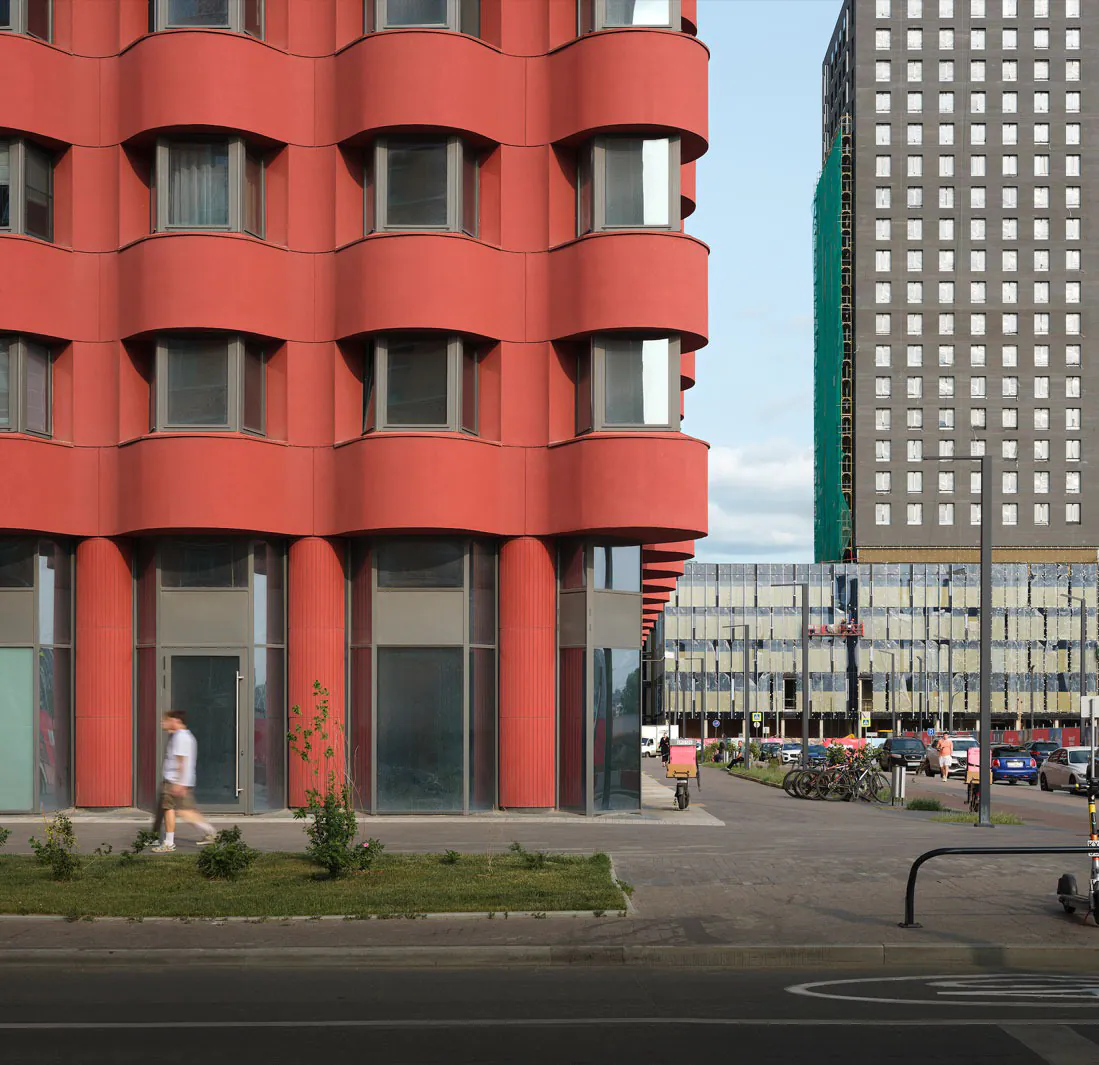
A housing project on the former ZIL factory site, designed as affordable residential development and as a study in the expressive potential of the brick faсade.
Gallery
Drawings
Description
Plot Grid and the Corner Accent
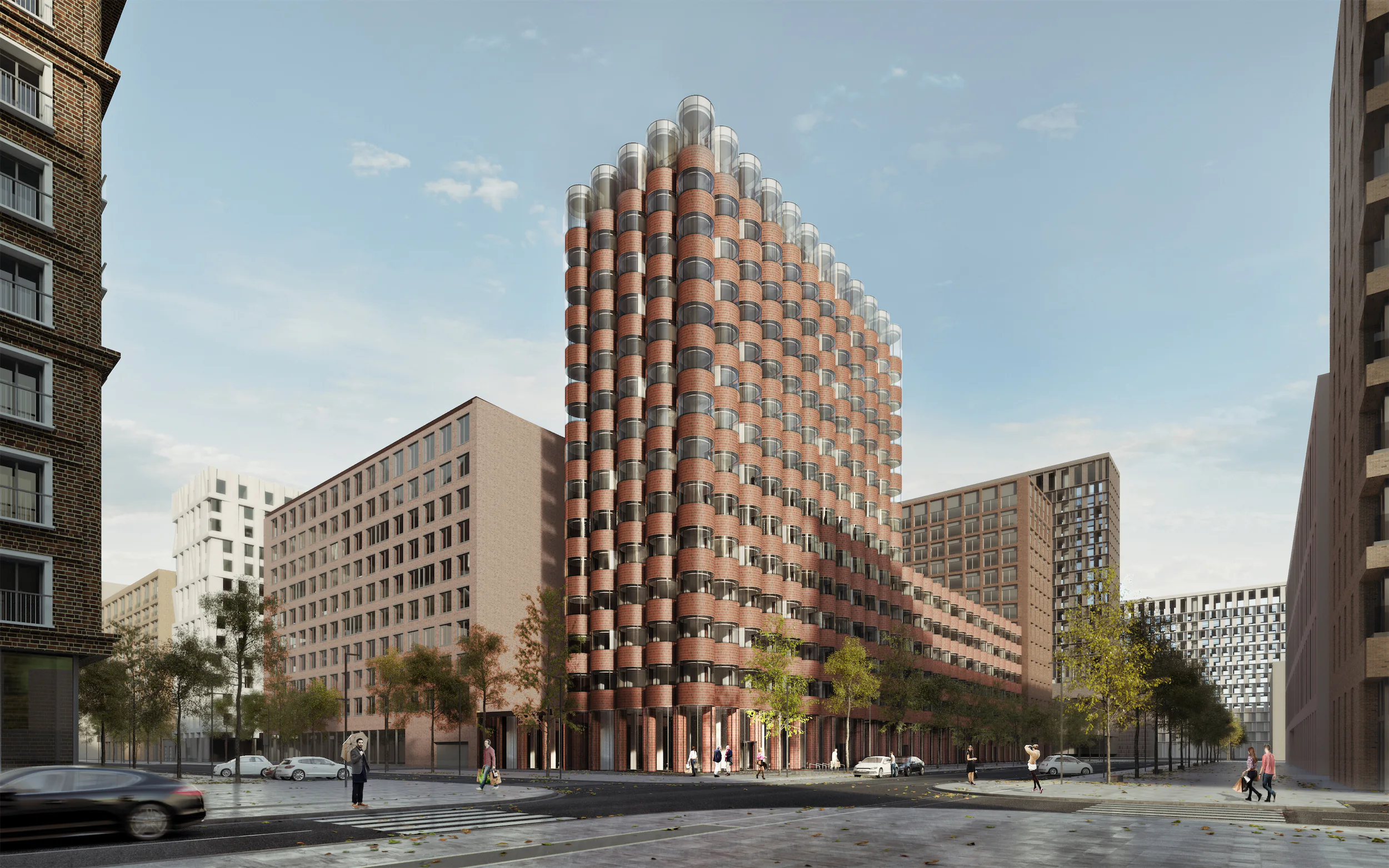
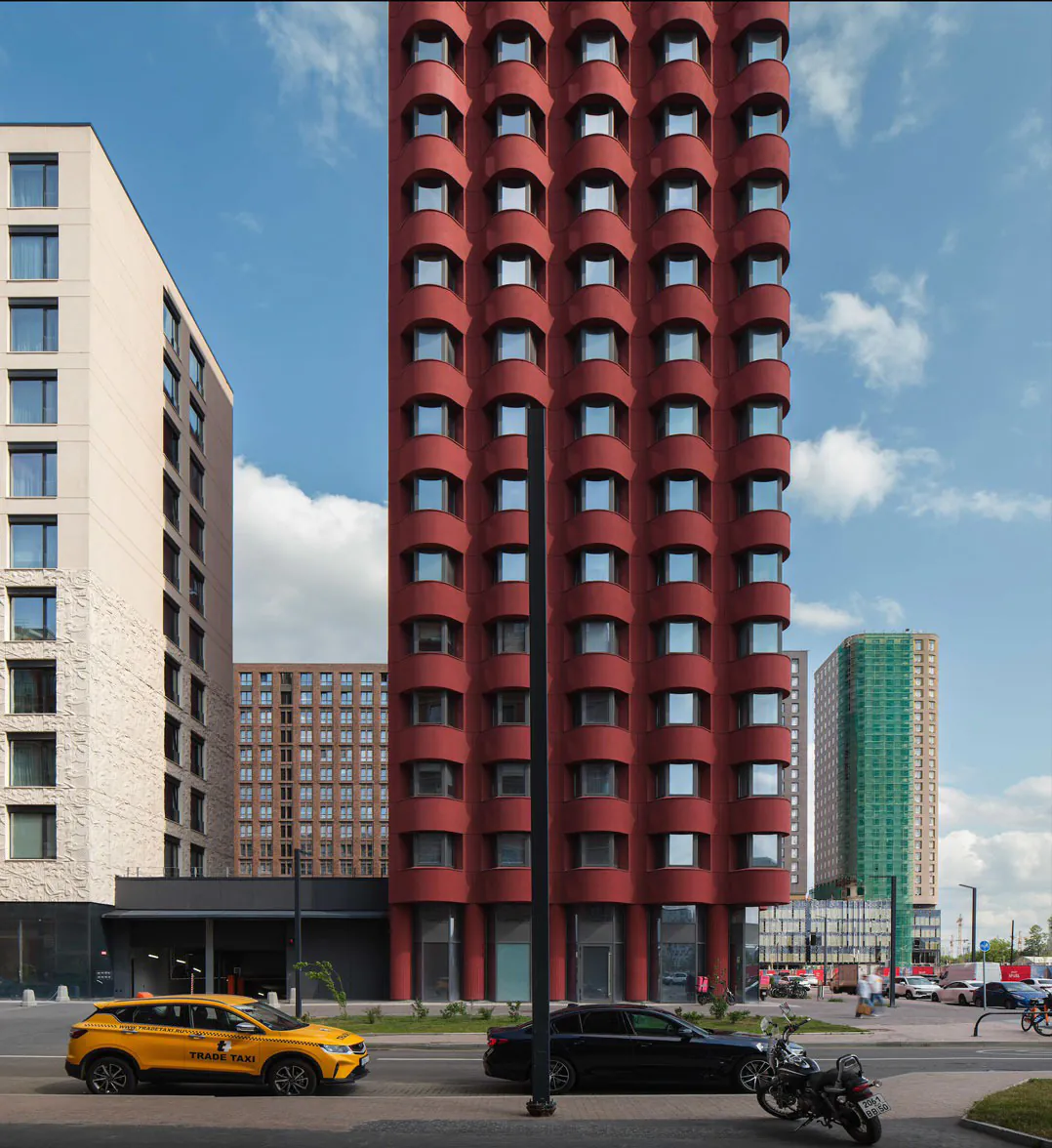
The ZIL territory — roughly 400 hectares in Moscow’s Danilovsky district — has been under development since 2015, following a masterplan by Meganom bureau under Yuri Grigoryan. The masterplan divides the site into rectangular blocks. In each block, corner buildings serve as visual anchors: more massive and distinctive in silhouette, they fix the boundaries of the block while the perimeter infill remains tonally neutral. The Amsterdam occupies a corner plot and operates in exactly this role. The building was meant to read as a dominant element at the street intersection rather than as a standard residential block.
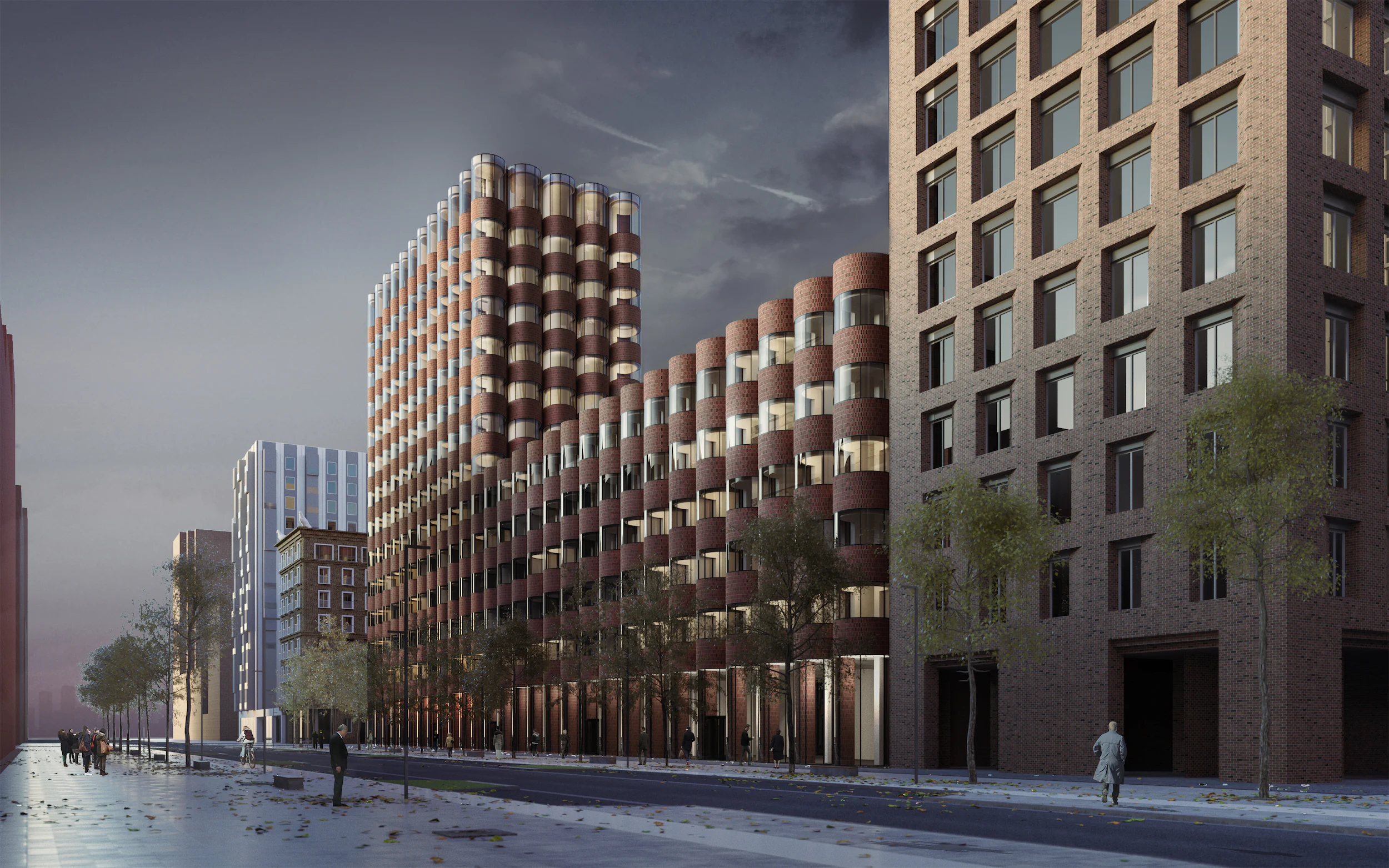
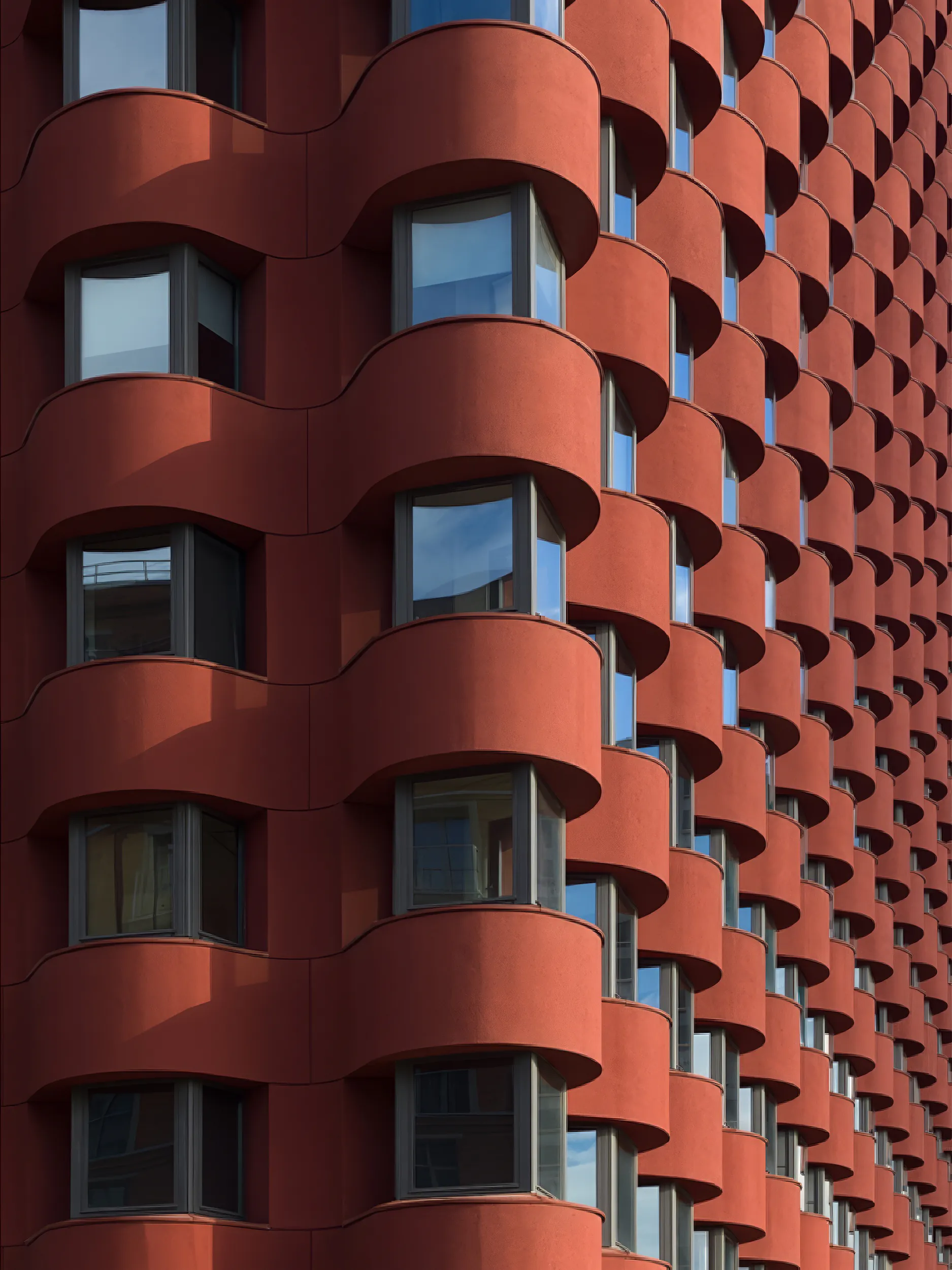
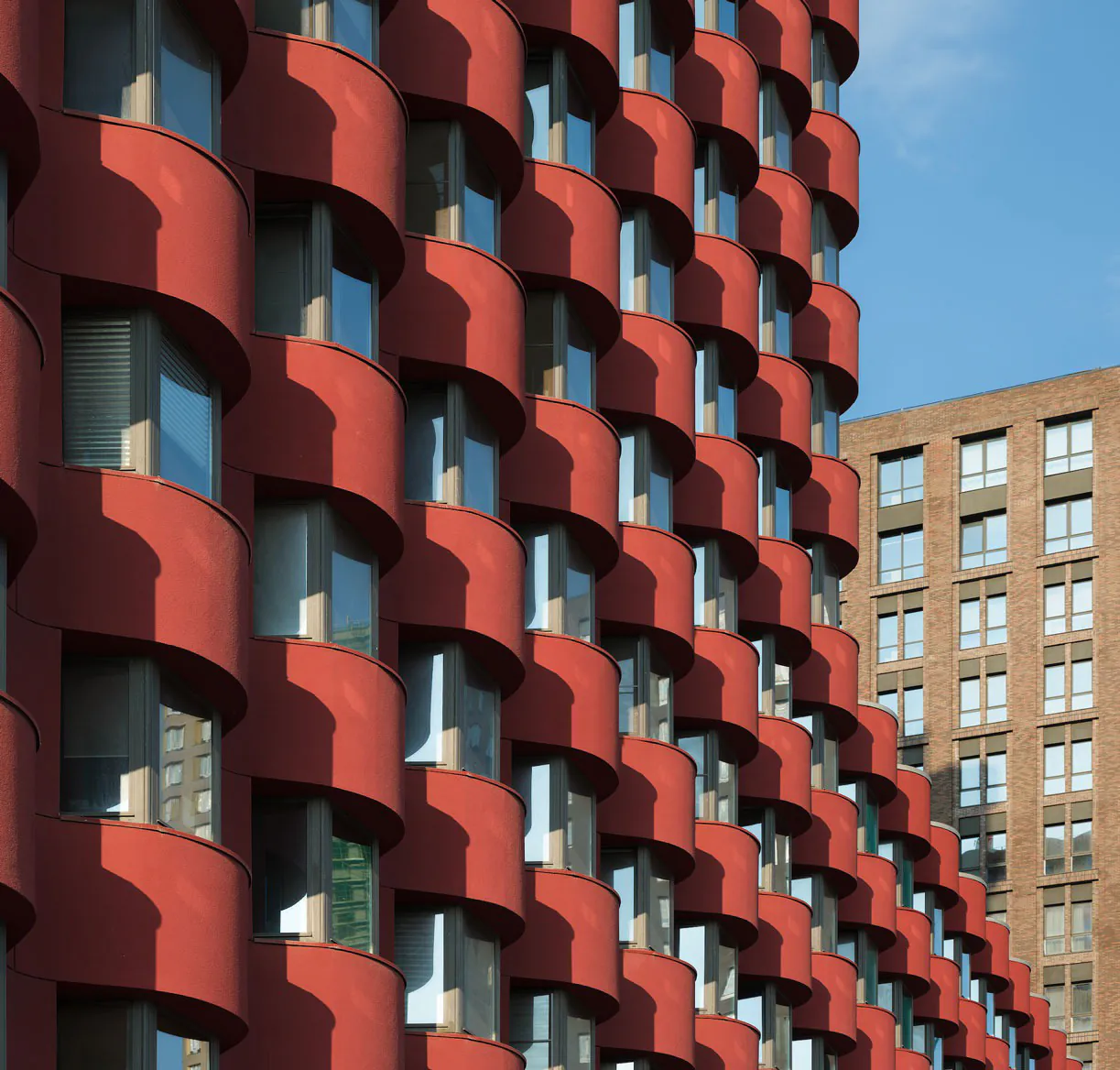
Most neighboring buildings in the quarter are resolved in neutral articulation — flat façade planes, standard openings, calm silhouettes. Against this background, the Amsterdam is formed differently. Its façade is not flat but volumetric, composed of projecting bay windows that create a surface relief with pronounced shadow.
The Amsterdam School and Its Brick Logic
The building’s name refers to the Amsterdam architectural school — Dutch expressionism of the 1910s–1930s, represented by Michel de Klerk, Piet Kramer, and Johan van der Mey. Their buildings were constructed on concrete frames clad in brick, which was used to form free sculptural shapes: curved parapets, towers without structural function, bay windows as plastic rhythm. De1 Klerk’s Het Schip (1919, Amsterdam) is the key precedent. There, brick was laid vertically and at angles, roof tiles were applied to vertical surfaces, and the interior layout answered to the exterior form rather than the other way around.
In the Moscow Amsterdam, this principle is adapted without literal quotation. The building does not reproduce the ornamental detailing of de Klerk’s school — sculpture, stained glass, wrought ironwork. It works with its structural device: the projecting bay window as a unit of façade rhythm, multiplied across the surface and creating depth through geometry rather than decoration.
From Semicircle to Faceted Cylinder
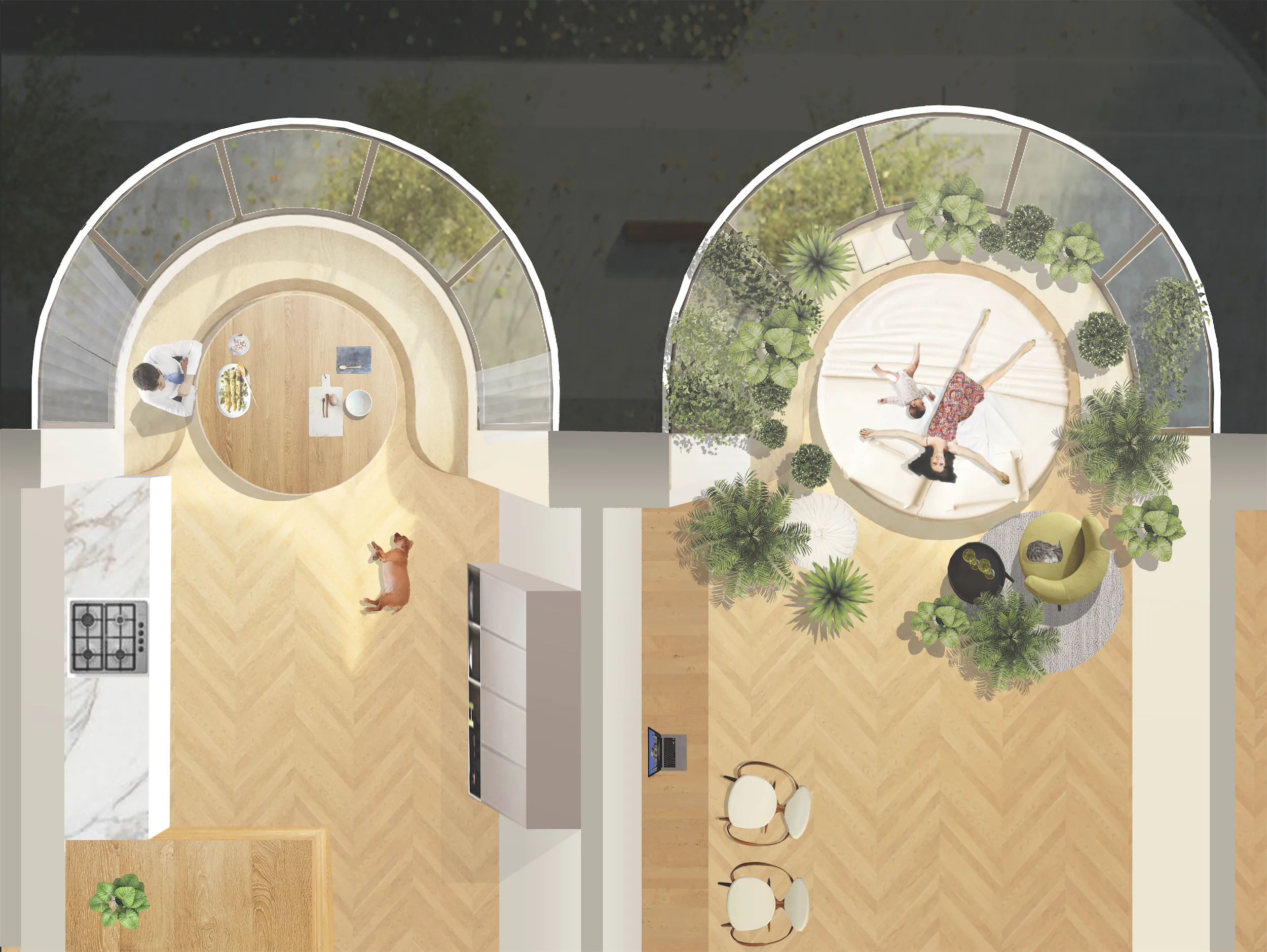
The project went through several iterations on the form of the bay windows. The initial version proposed semicircular projections — geometrically simple and relatively predictable in construction. The structural contractor identified difficulties: a curved concrete monolith on a high-rise façade requires additional formwork, slows the construction cycle, and complicates the junction of window units to a curved surface.
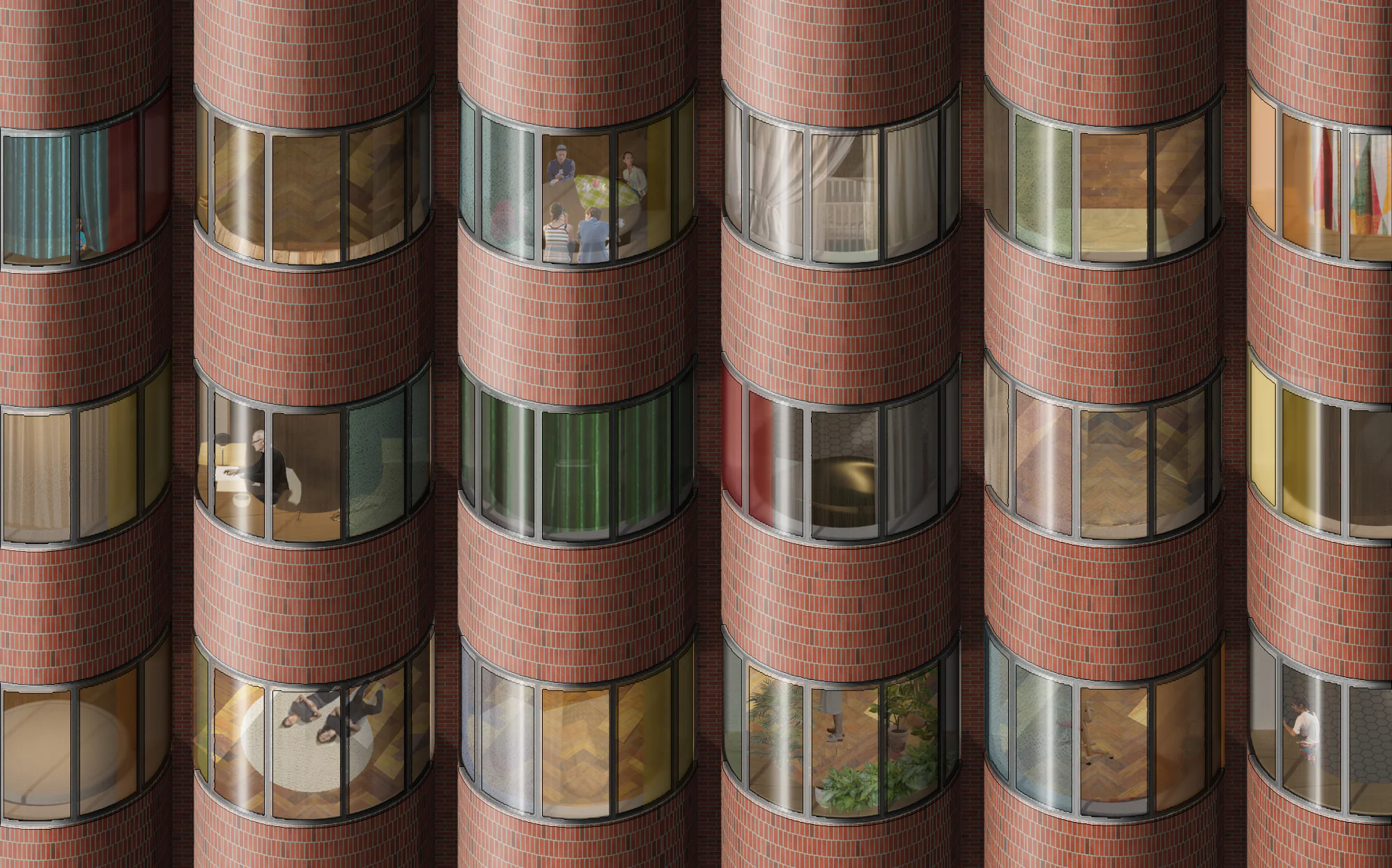
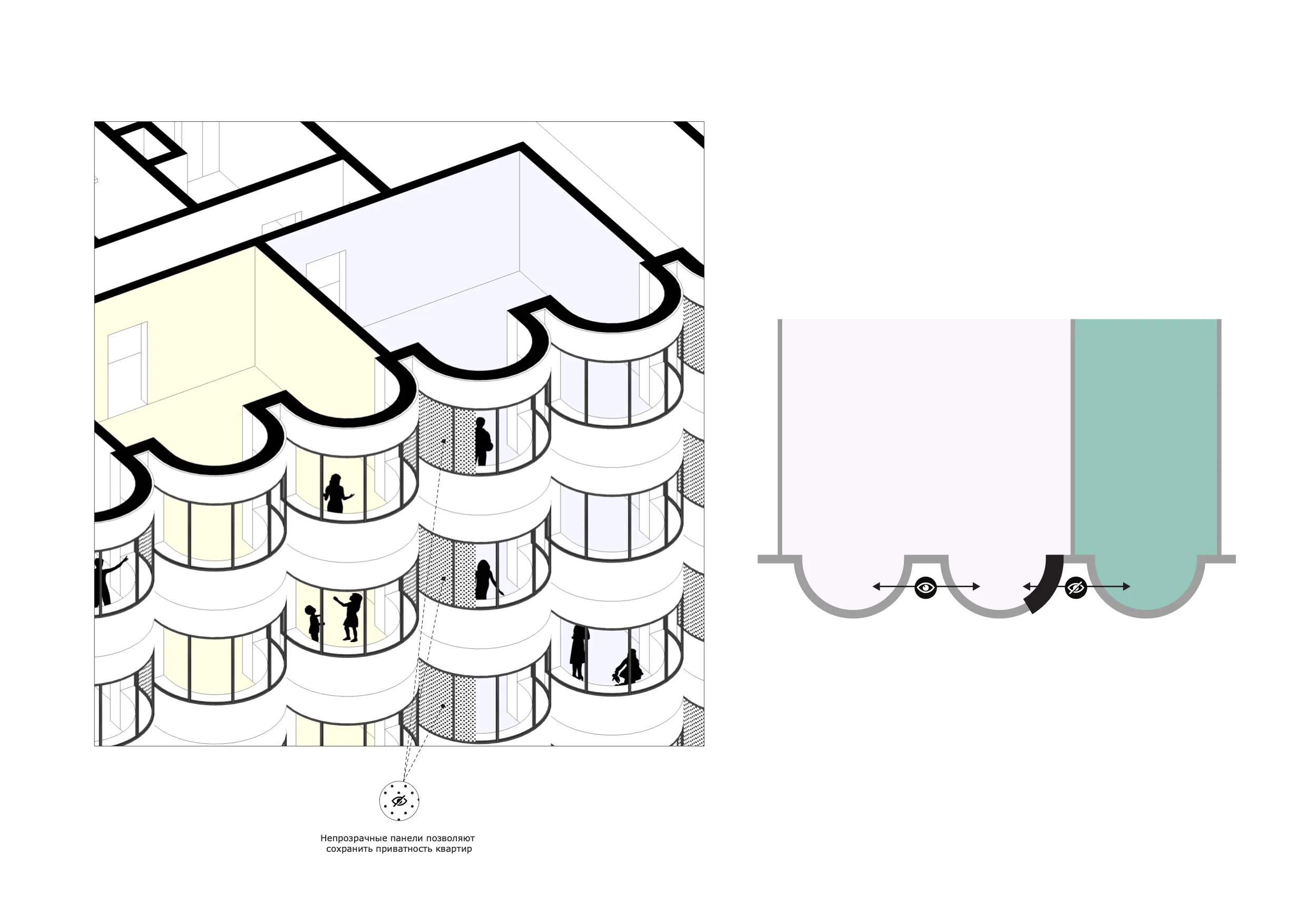
The semicircle was replaced with a faceted cylinder: a form that geometrically approximates a curve through a set of flat faces. The solution preserves the plastic effect of a rounded projection while translating it into the language of rectilinear geometry compatible with standard construction methods. Each face of the polyhedron is a flat surface with a straight window opening; together they produce the impression of roundness.
The change in geometry made the façade more nuanced. A faceted form reflects light differently from a semicircle. A smooth curve produces a single continuous highlight; a set of faces produces a series of distinct light planes with sharp edges between them. As the viewing angle shifts, the shadow pattern across the façade changes — an effect that reinforces the sculptural quality across different lighting conditions.
The Lobby and the Production of Urban Status
The ground floor is resolved as a lounge lobby with representative finishes. The materials and spatial scale send a signal that is read before a visitor examines apartment areas. This is a well-documented device in the typology of affordable luxury housing: apartment prices remain within an accessible range, but the entry zone projects a hierarchy typically associated with a higher price bracket.
The mechanism works through concentrating the budget at the point of first contact. The lobby is the space a resident passes through daily and receives guests in. The apartment’s floor area is the space whose compromise a buyer is prepared to accept when the emphasis is placed correctly.
The Building in the Quarter’s Fabric
Zilart is built on land that belonged to automobile manufacturing from 1916 onward. Meganom’s2 original masterplan envisioned the partial preservation of factory buildings from the 1920s–1930s, but chemical soil contamination made restoration economically unfeasible. The structures were demolished in 2015 — a fact documented by architectural historian Anna Bronovitskaya in a comment to The Art Newspaper (2025). The adopted masterplan retained the planning structure, restoring the boulevard grid laid out by the Vesnin brothers, but physical memory of the factory is almost entirely absent from the development. Streets bear the names of avant-garde artists — Kandinsky, Lissitzky, Rodchenko — and Constructivist architects, but the toponymy has no architectural continuation.
Against this background, the Amsterdam turns not to Constructivism — the style associated with ZIL’s history — but to Dutch brick Expressionism of the same period. The two are not geographically linked, but are comparable in chronology and in social program: the Amsterdam School built housing for workers, seeking to give them a quality environment through architectural expression. The break with local context is structural, not incidental.
The Moscow Amsterdam returns the same question in a different set of coordinates: can a façade create a sense of urban dignity within a constrained floor area? The answer the building gives is material — not through ornament or scale, but through the geometry of projection that shifts the pattern of light across the wall.
Footnotes
Analysis