Glulam House in Pestovo
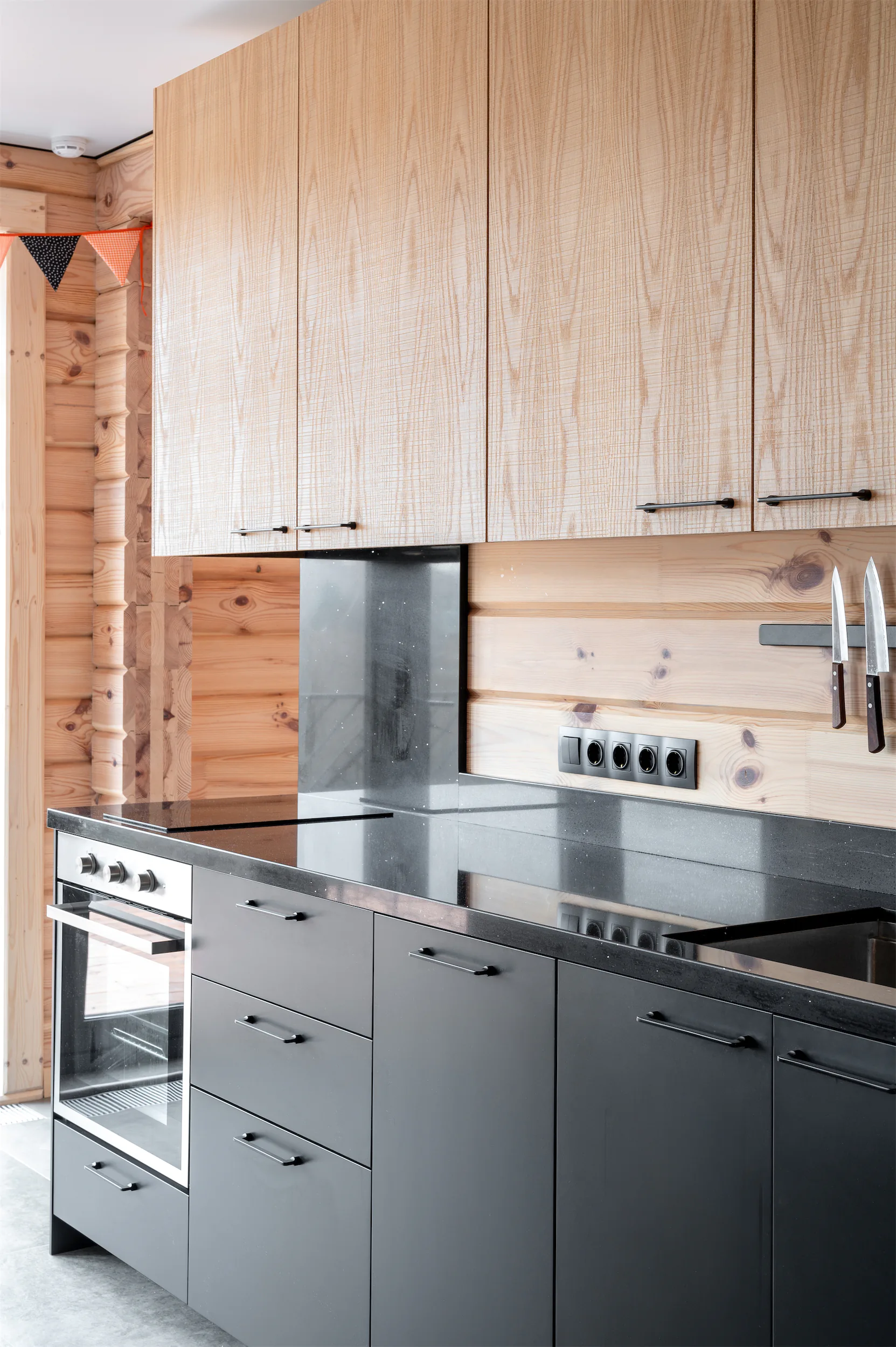
A glulam house delivered without interior finishes: the structure was given, the material was fixed — the project began not with a blank slate but with an existing physical reality.
Gallery


Description
Given Conditions Determined the Method
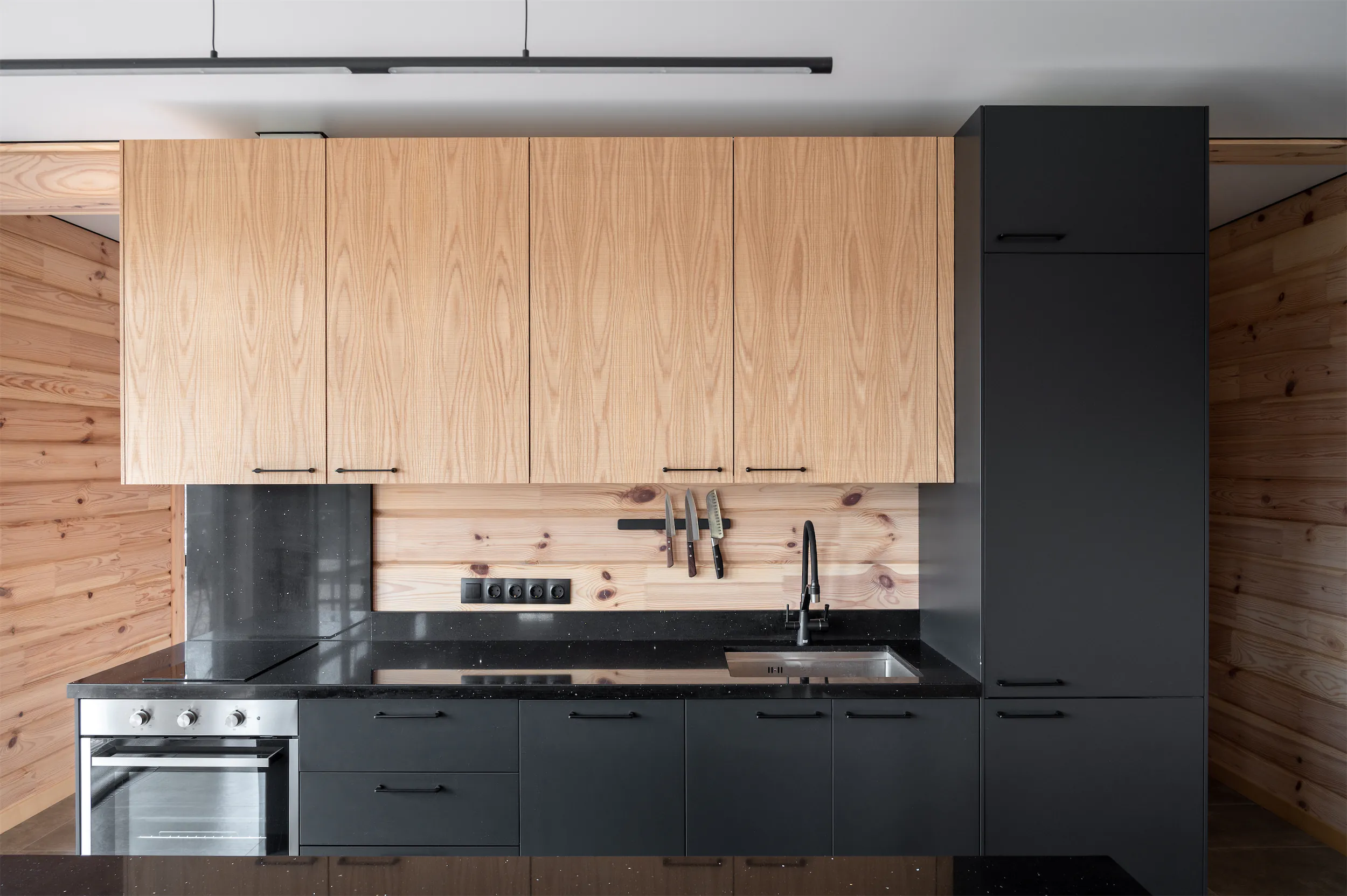
Glulam as a structural material was a fixed constraint. The walls were already assembled; their geometry, colour, and texture were not open to discussion. Timber treated with clear oil takes on a warm, light-honey tone while preserving its texture: knots, annual rings, a slight irregularity in the grain. In this state the material absorbs and diffuses natural light rather than reflecting it — the walls function as a diffuse source of warmth in the space.
The task was to find a system that neither competes with the timber nor attempts to neutralise it. Most glulam country houses take one of two paths: saturating the space with decoration, or softening the structure with cladding. Here the opposite direction was chosen.
Graphite as the Interior’s Load-Bearing Element
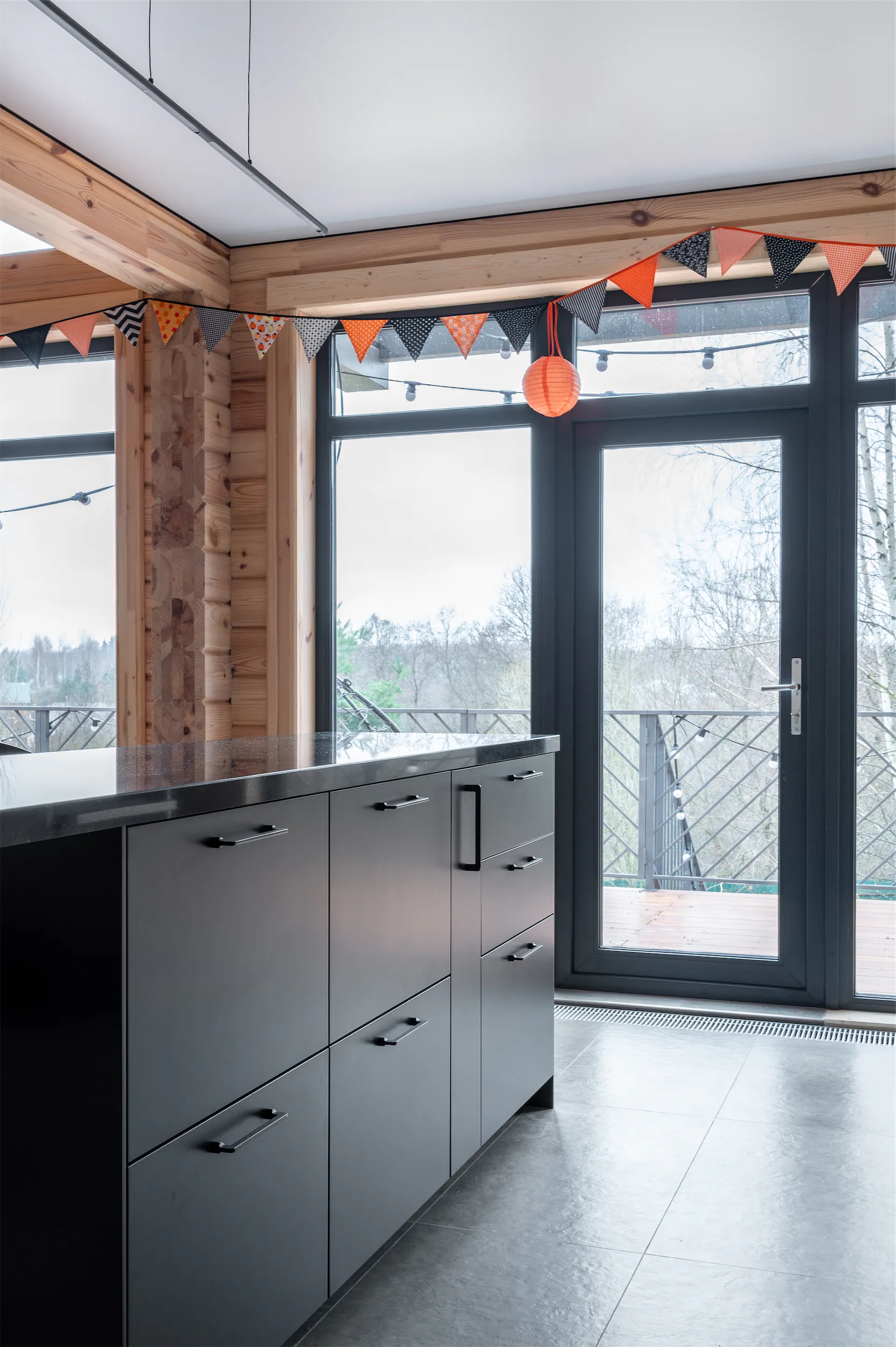
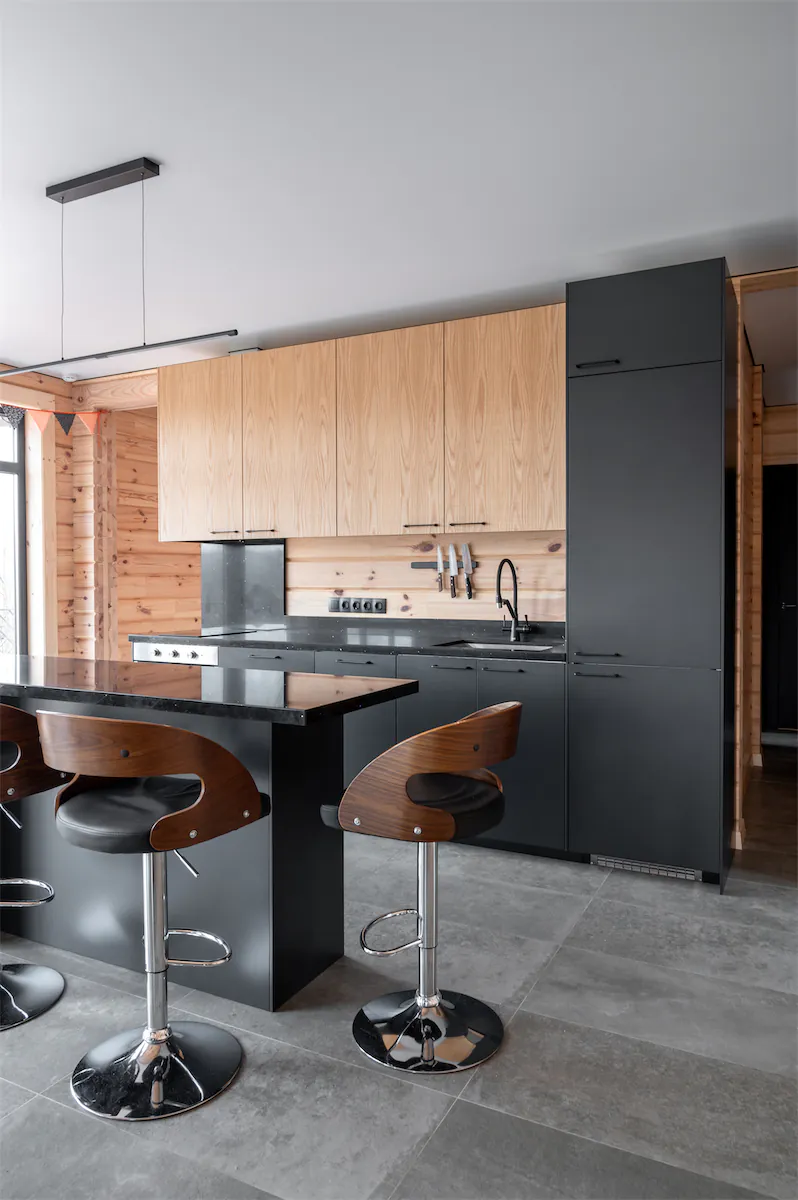
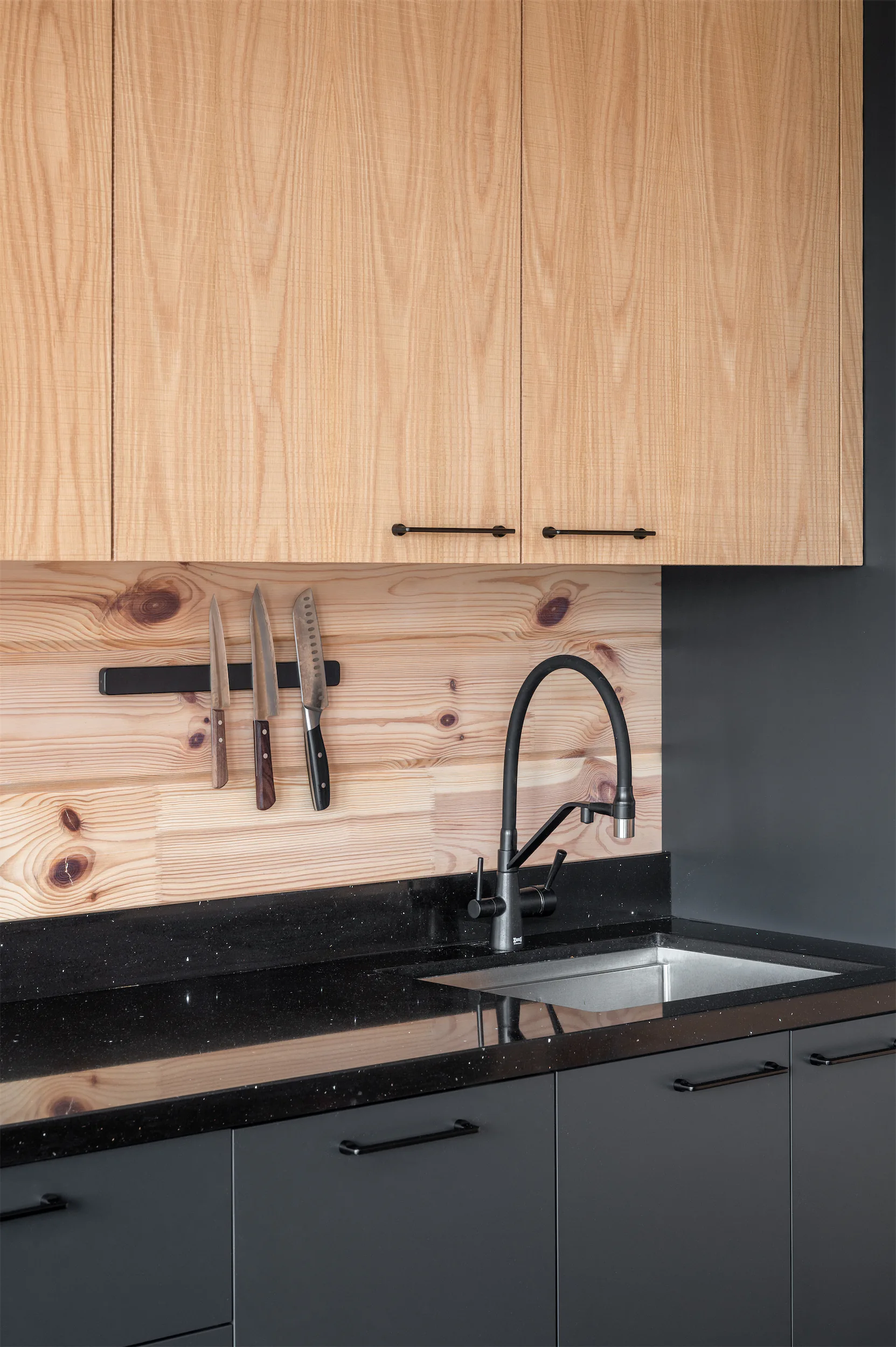
The second dominant material is a deep graphite-anthracite colour. It covers all functional planes and openings: interior doors without architraves or with thin dark profiles, matte kitchen cabinet fronts, large-format porcelain floor tiles on the ground floor, walls in the entry and bathrooms, and metal details — handles, taps, curtain rails, track lighting systems.
Physically this colour behaves differently from dark grey: it absorbs light rather than scattering it. Door openings in the timber walls read as cuts rather than inserted elements. This shifts the perception of depth: a black rectangle of a door against light wood is perceived not as a surface but as the absence of one. The optical effect is analogous to how niches and deep reveals work in Japanese architecture — shadow becomes a material.
This approach has been established in Scandinavian minimalist interiors since the 1990s, when Norwegian and Swedish practices began using deep1 dark accents in timber houses specifically to intensify, rather than suppress, the structure of the wood.
The Same Logic Across All Zones
The same principle operates throughout the house. Ground-floor finishes are large-format graphite porcelain tile; the upper floor uses wide brushed oak board — the change of material marks the boundary between public and private. Bathrooms and the entry hall have encaustic tiles in white with black inserts and grout; accent walls carry square black tile. On the upper floor, ceilings follow the roof pitch and are lined with timber battens with dark track lighting — light is controlled without disrupting the geometry of the plane.
Coherence Through System, Not Uniformity
The house is built from a single structural material, but within it a two-component system operates: the light organics of the timber and the dark graphic of the functional elements. Each component follows its own rule: timber wherever the surface defines atmosphere; dark colour wherever the surface defines function.
Where glulam country houses typically seek to dissolve the interior into the structural material, this project establishes a clear hierarchy within it. The result is a space that reads as architecture rather than as a wood-lined room.
Footnotes
-
The use of dark accents in Scandinavian timber interiors is documented in the work of practices such as Snøhetta and in the Norwegian svarthus tradition, where the use of charred or dark-stained timber originates in the practice of protective tar treatment of façades — and found its continuation in interior design. ↩