Apartment at Chistye Prudy
An apartment in an early twentieth-century building where Soviet-era renovation had stripped everything original — and a case for historicism without pastiche.
Gallery
Drawings
Description
The 1990s Renovation as Point of Departure
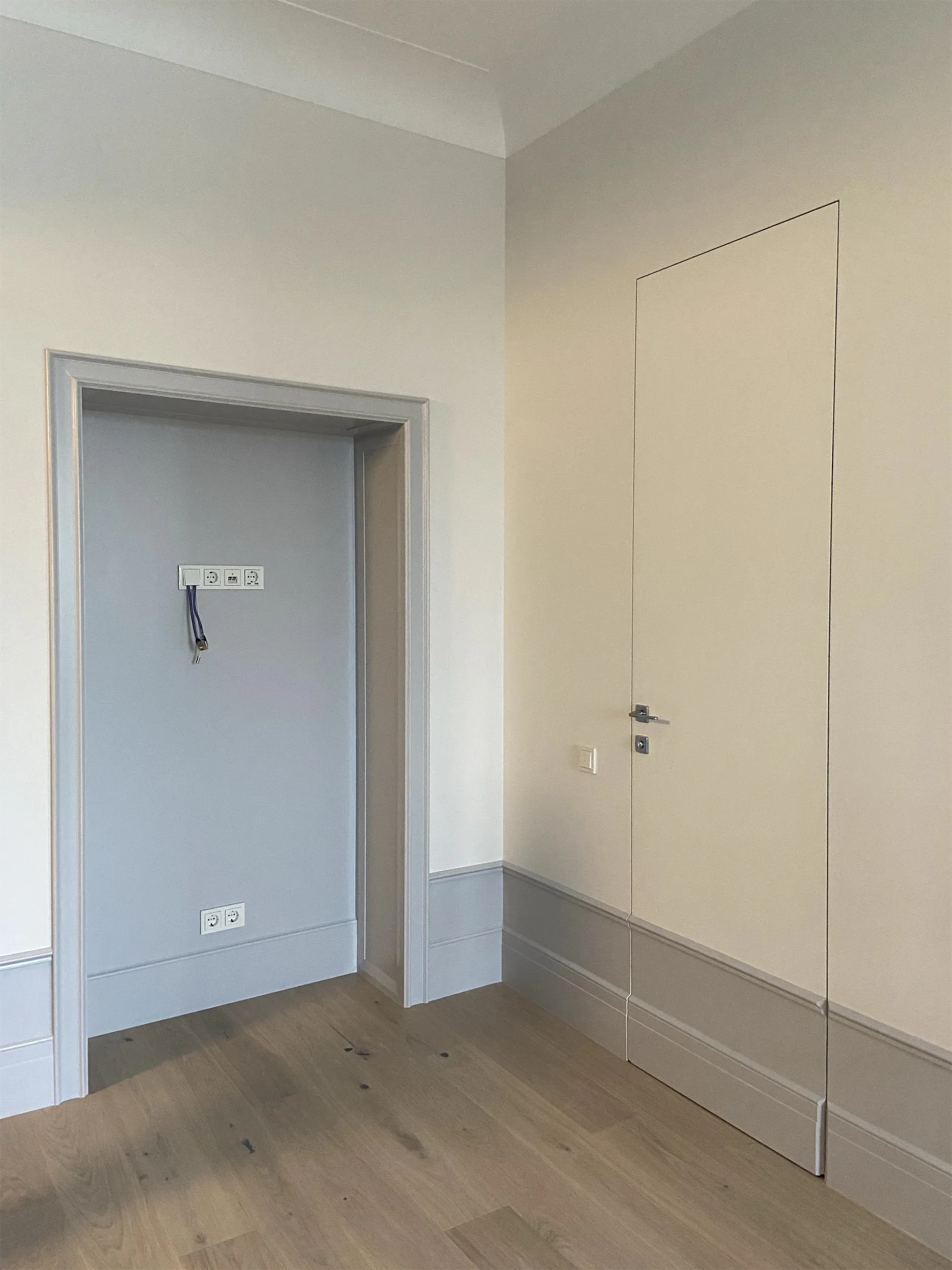
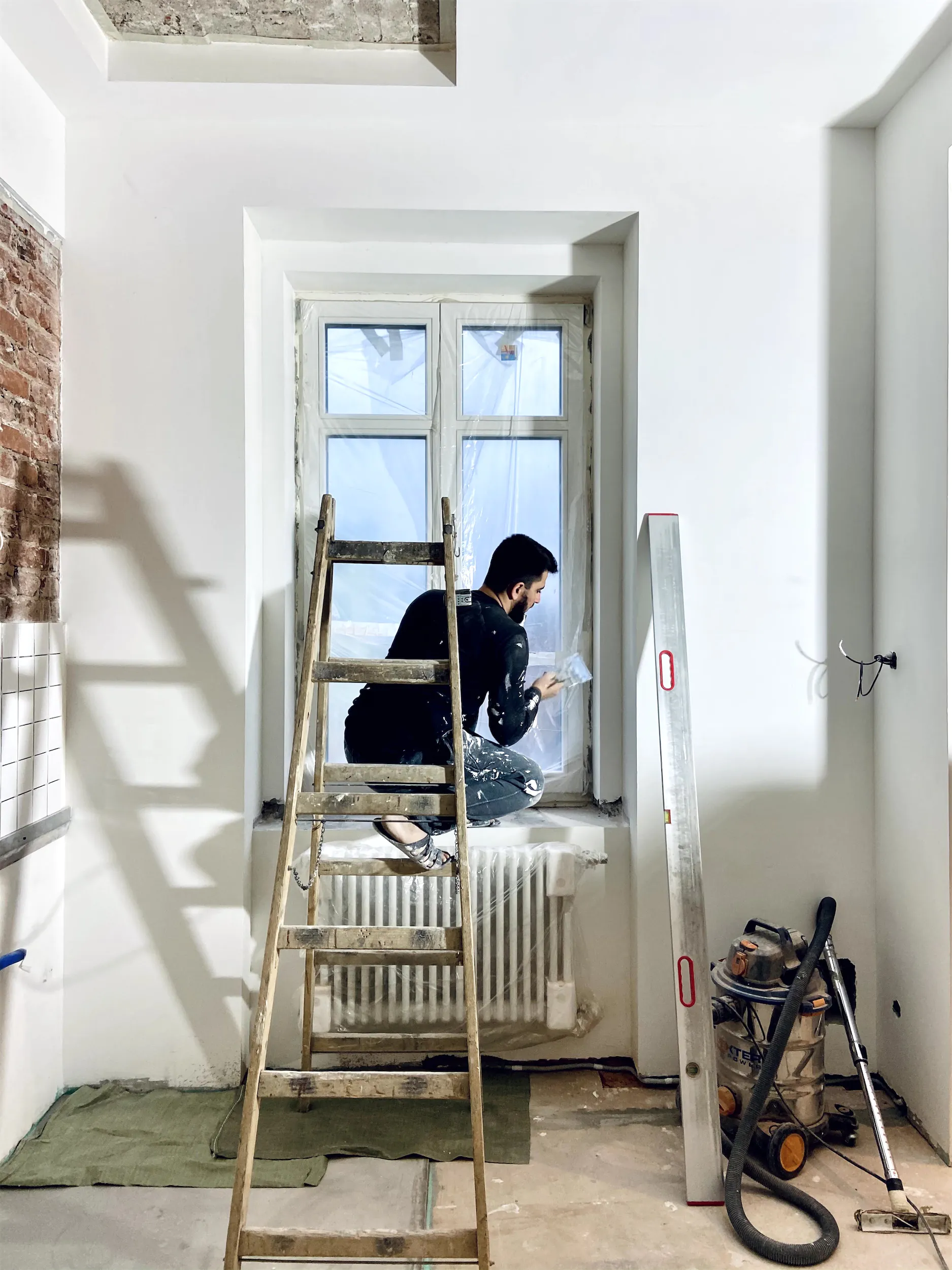
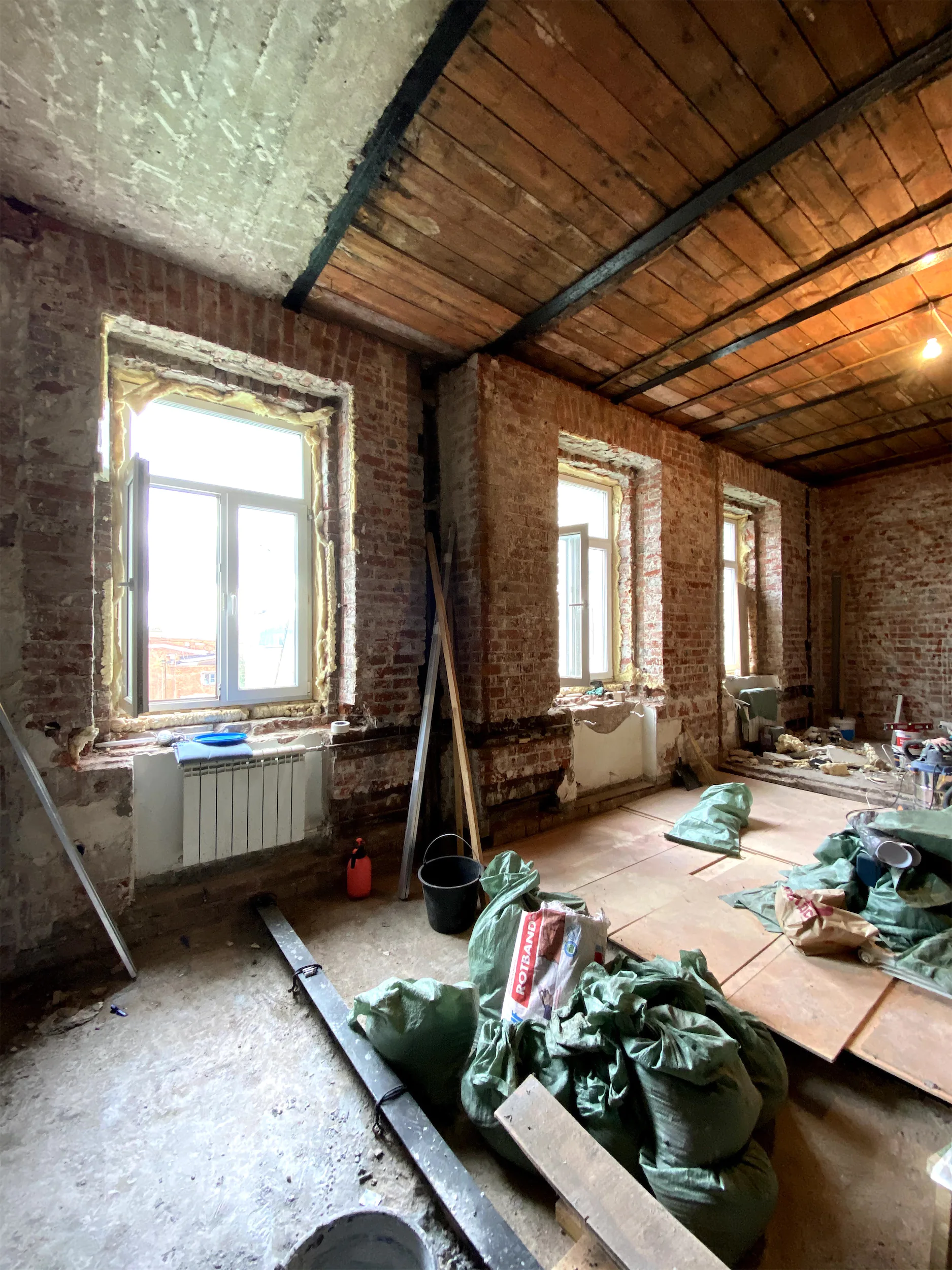
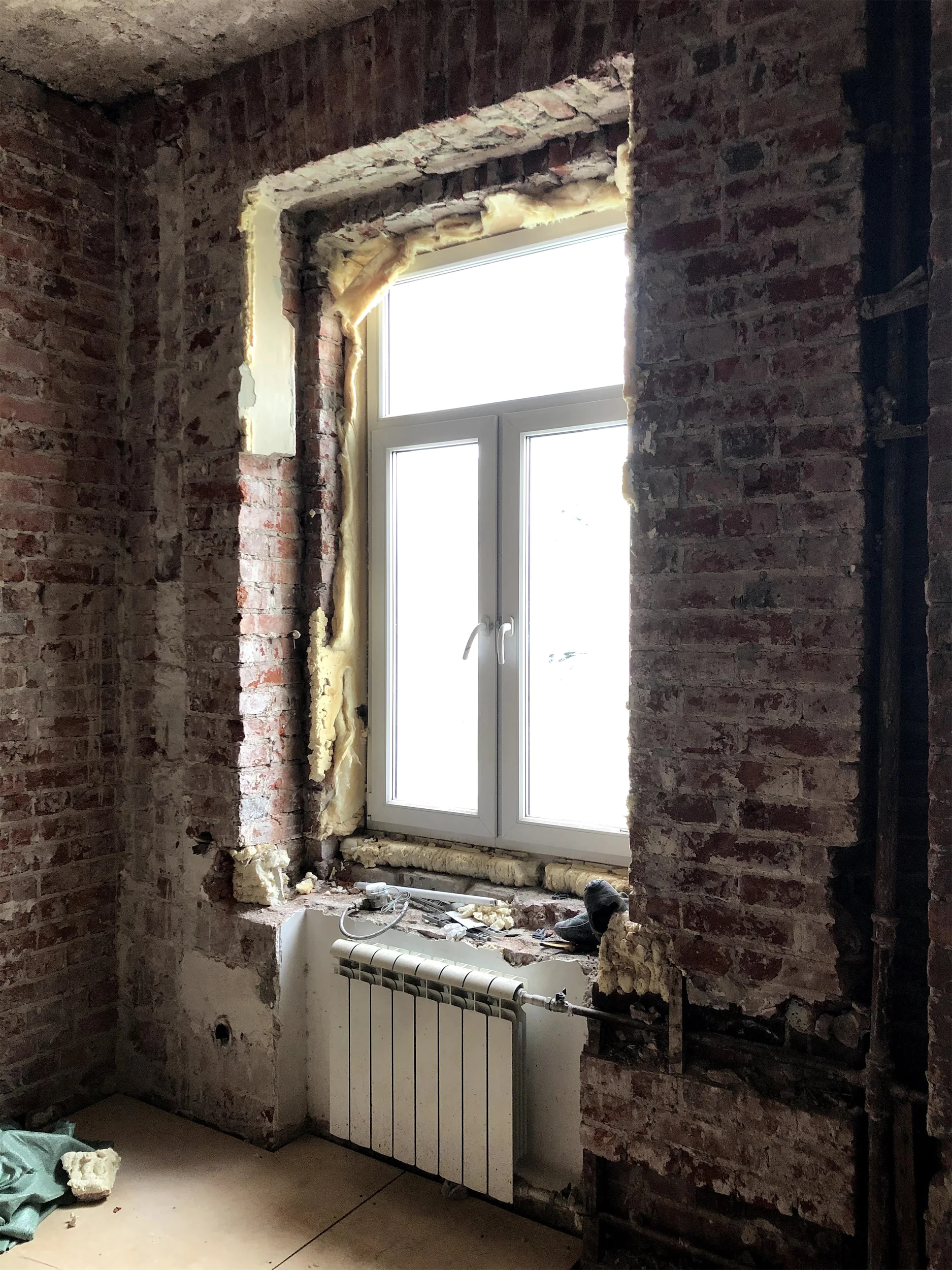
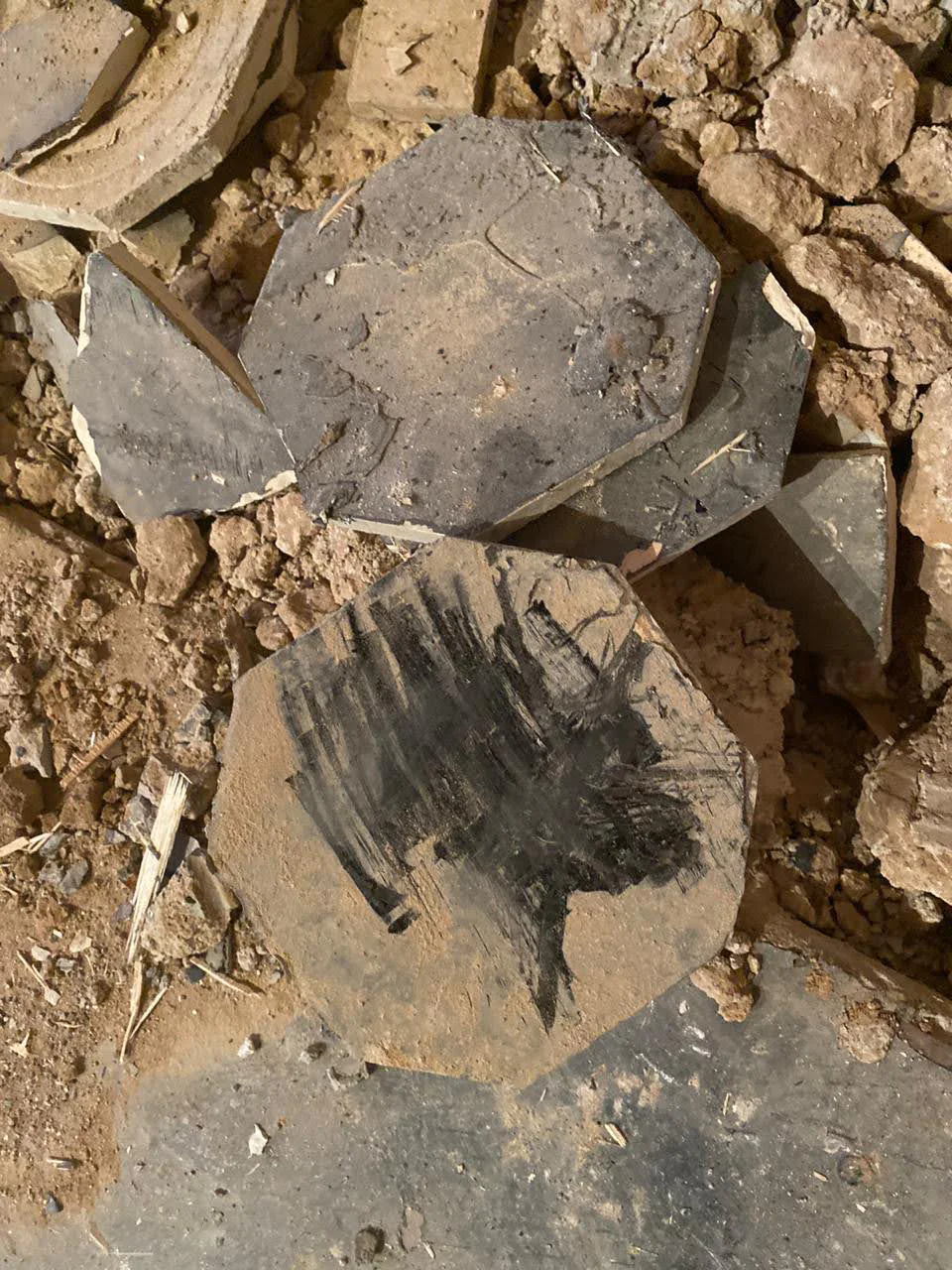
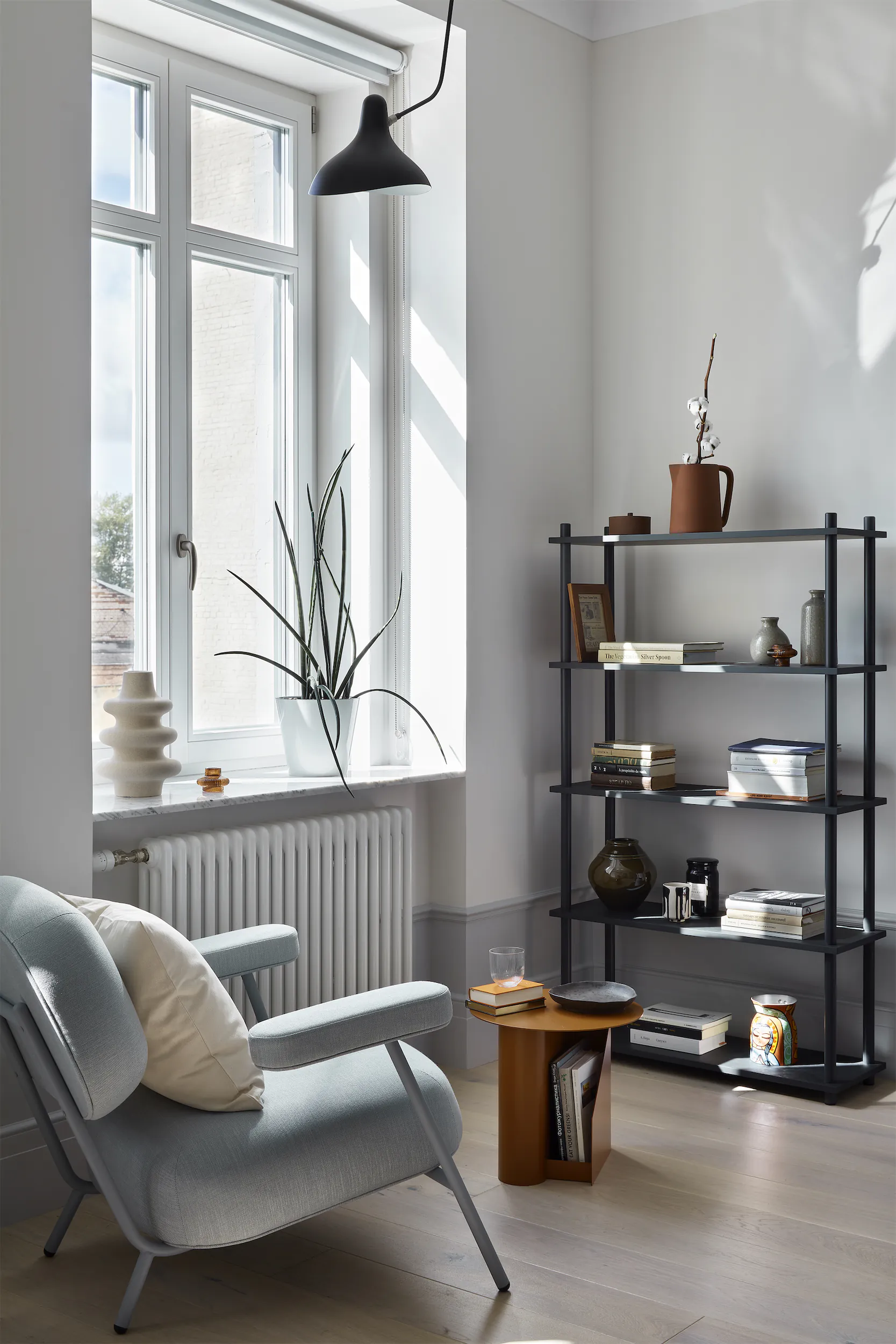
Moscow’s early twentieth-century rental buildings were constructed with timber floor structures, thick brick walls, and enfilade layouts. By the 1990s most apartments of this type had passed through several waves of alteration: Soviet-era replanning, window replacement, and later renovations that plastered or drywalled over everything. In this apartment, the 1990s renovation had destroyed the last remaining original details.
There are two ways to work with this situation: reconstruct what was lost by analogy, or build the interior anew — drawing not on the imagery of the period but on its constructive logic. The second path was chosen here. No detail imitates what is no longer there. Instead, each element refers to a specific technical or planning principle that genuinely existed in buildings of this type.
Brick, Concrete Slab, Timber Structure: Three Materials With Different Logics
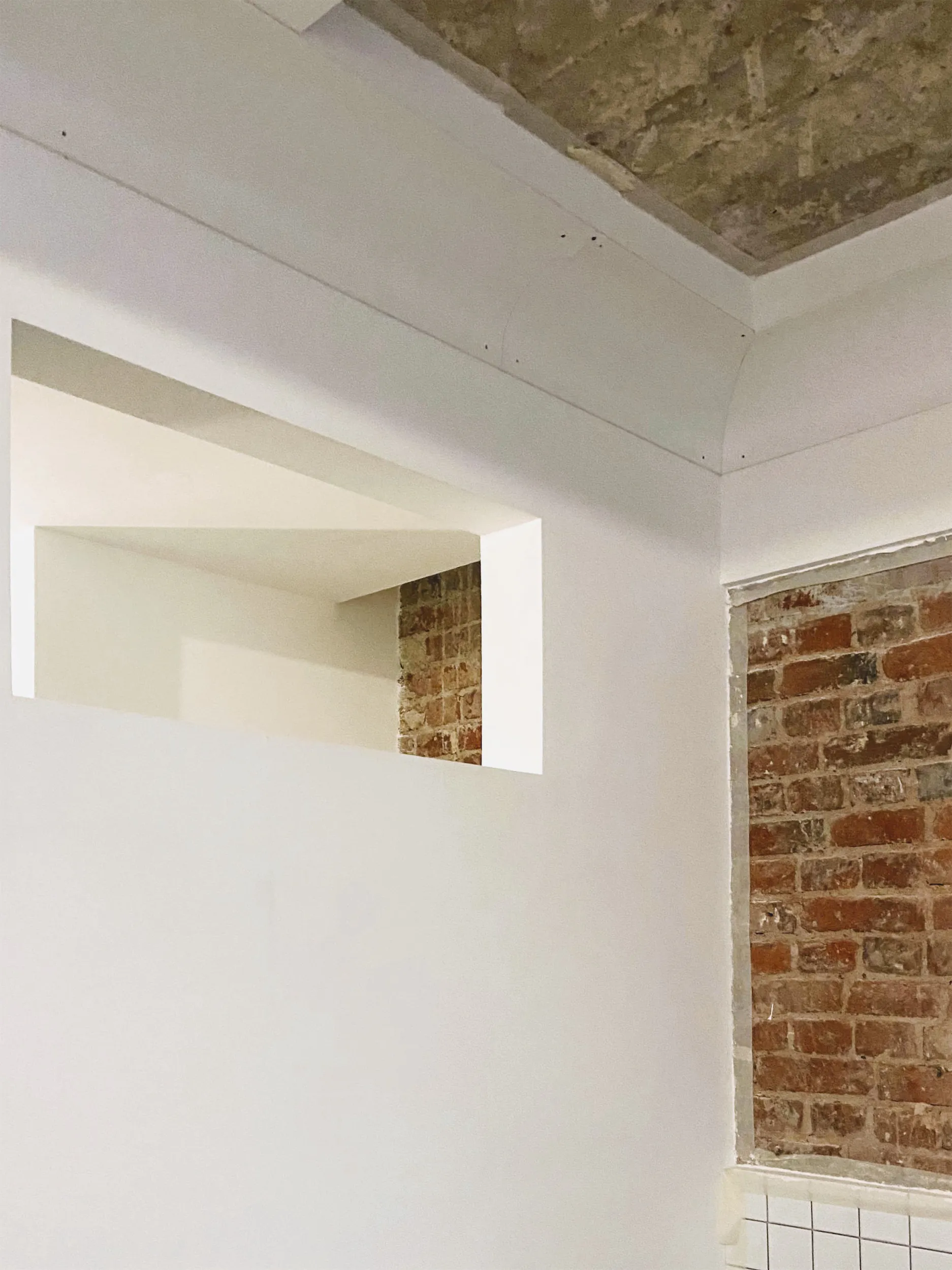
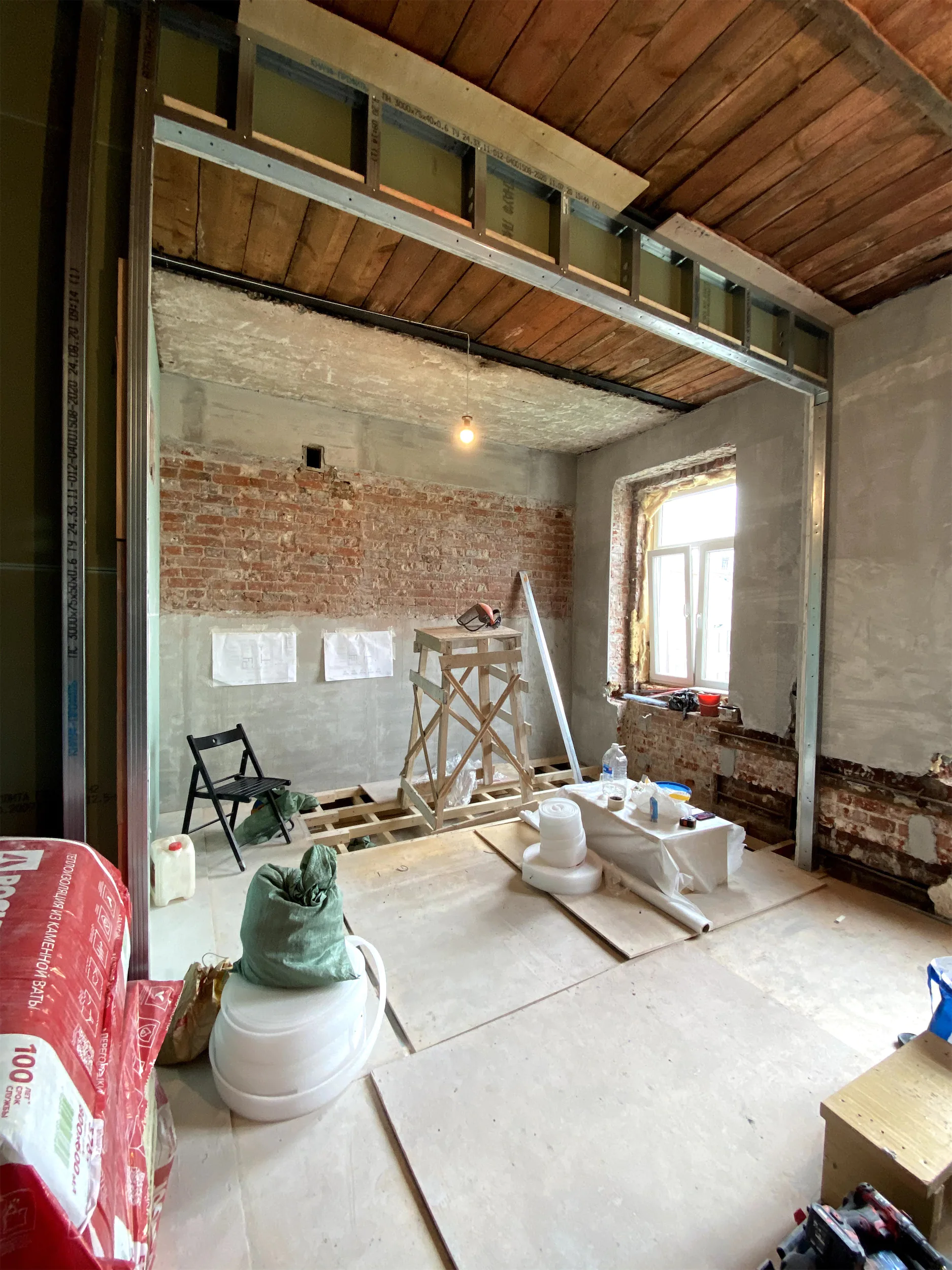
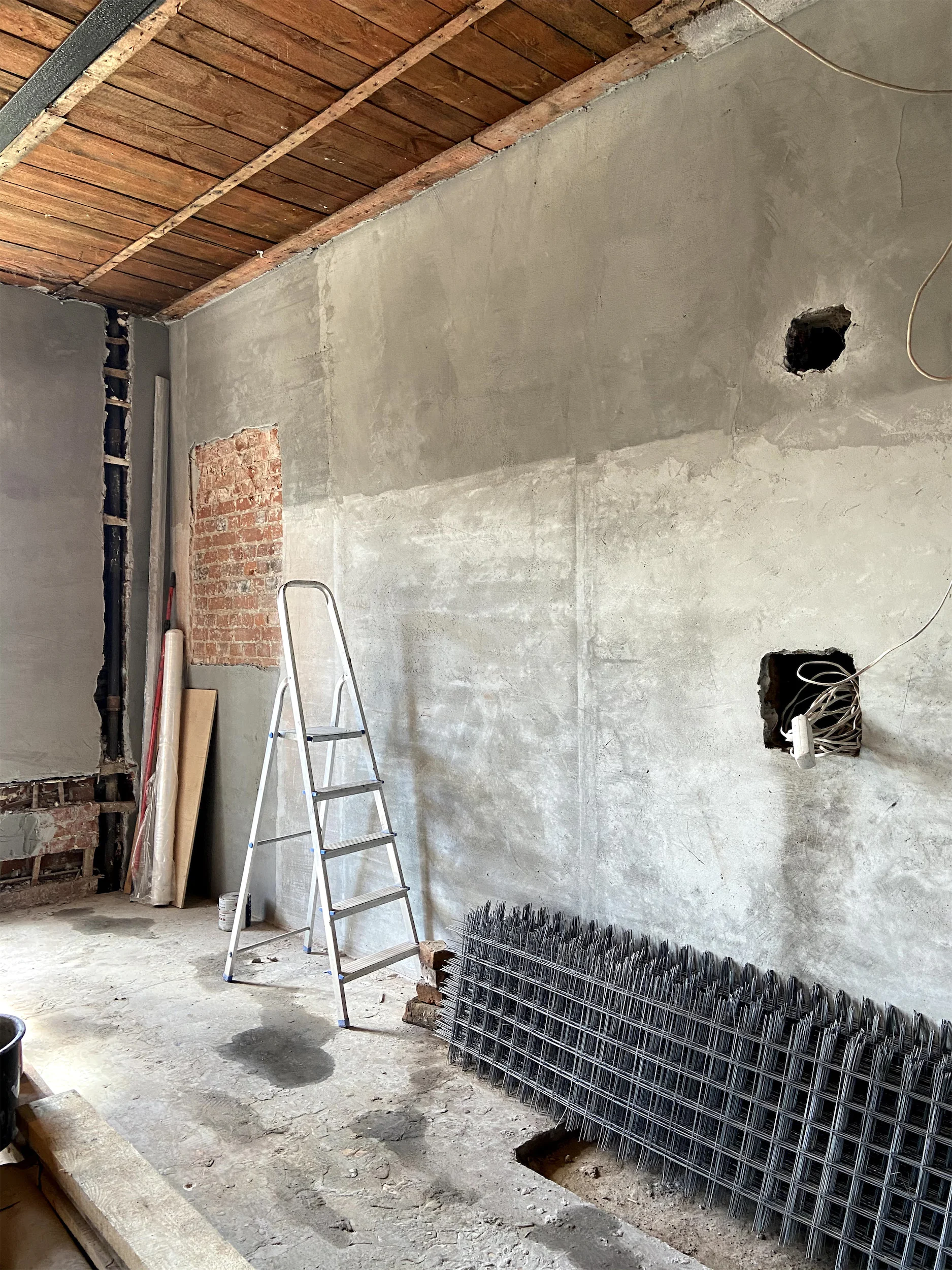
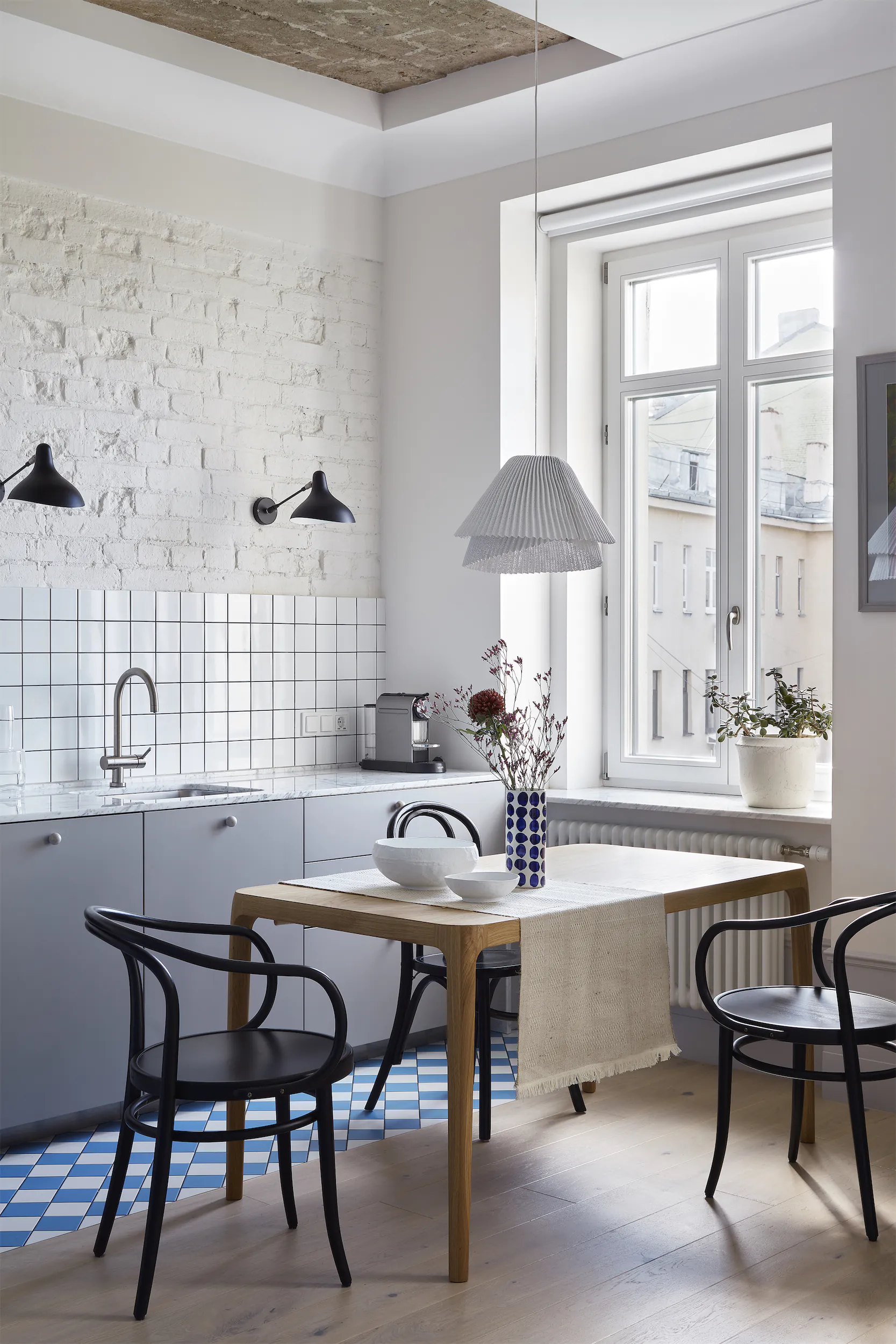
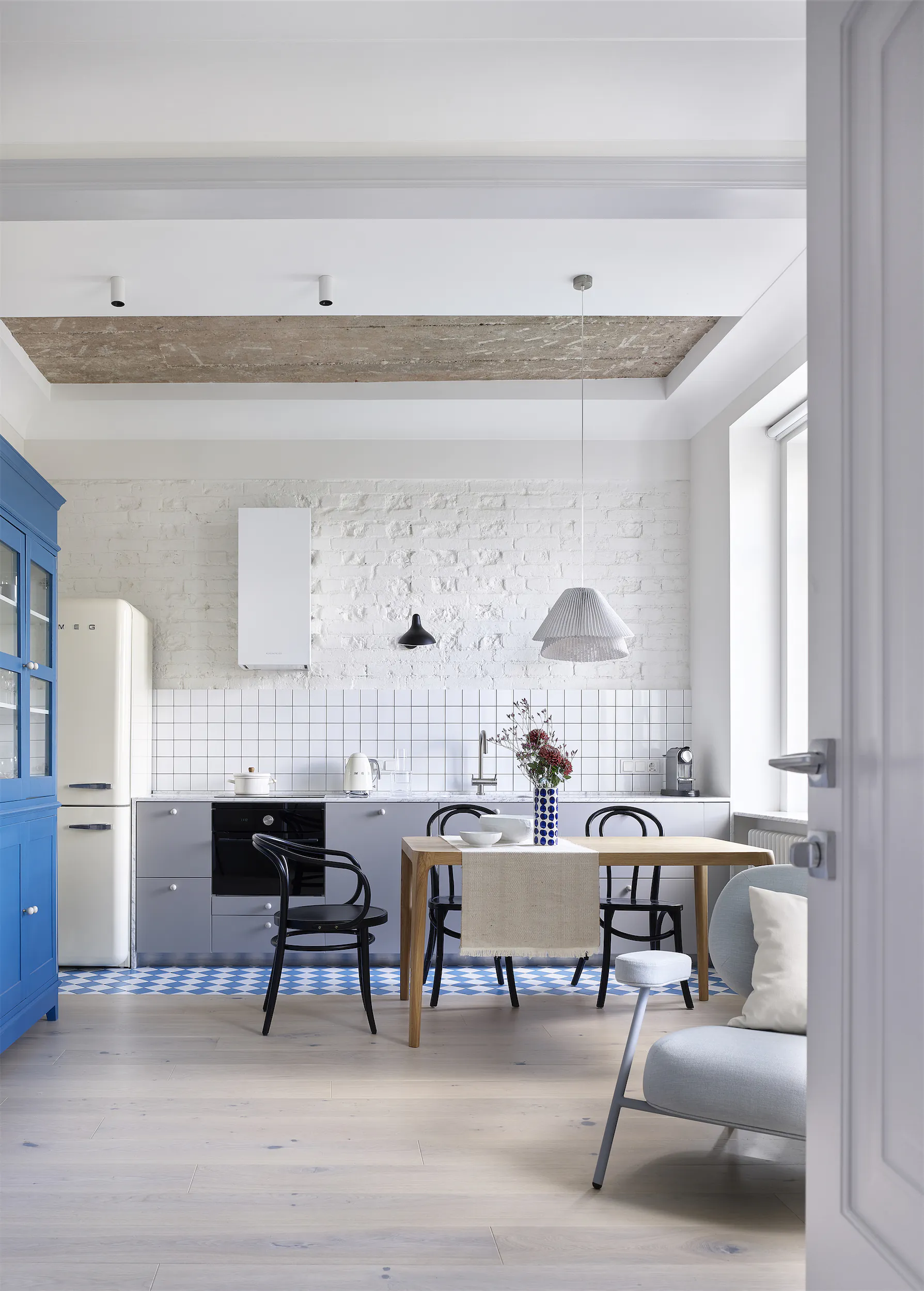
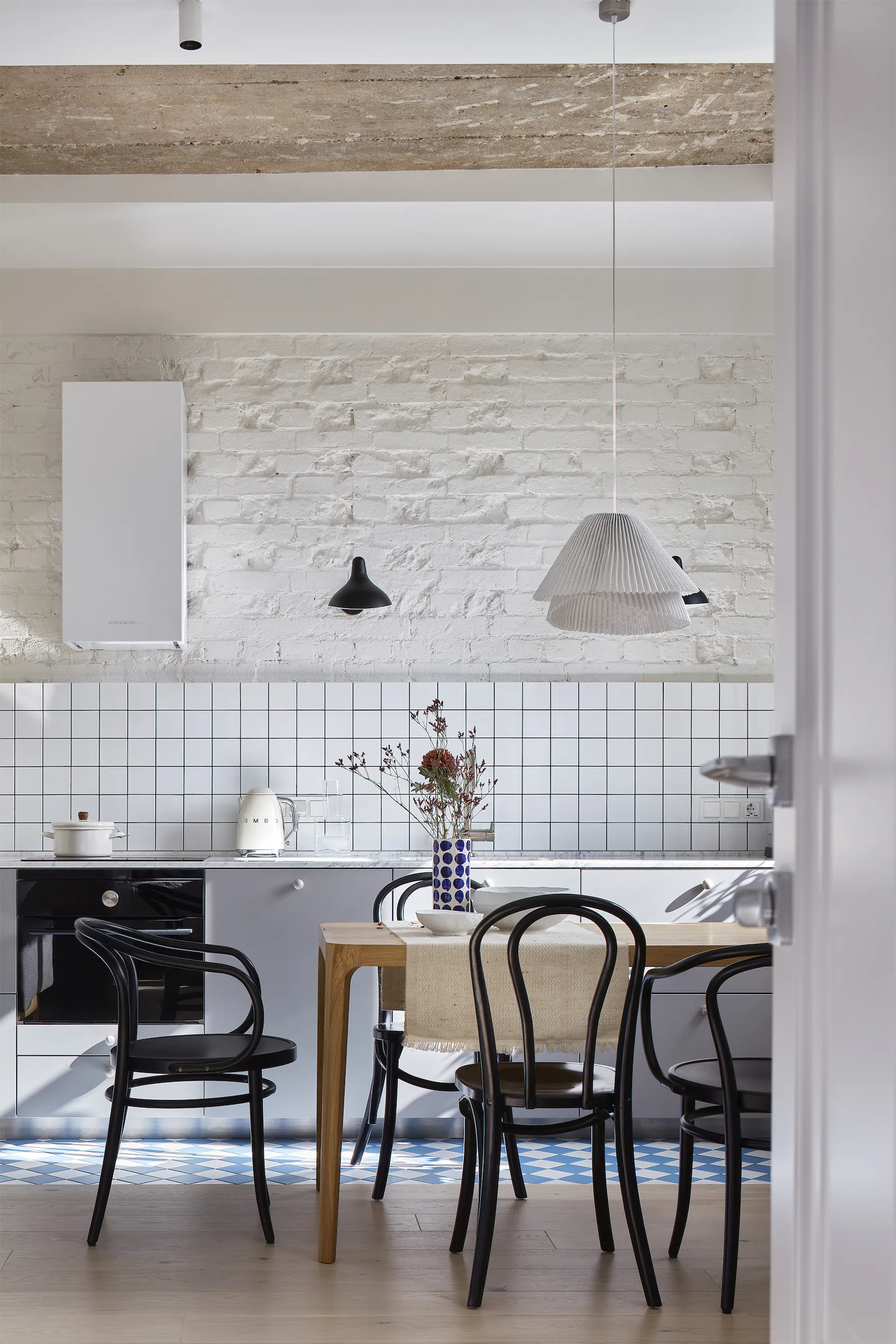
The building belongs to the timber-floor type. The apartment sits on the top floor, which explains the presence of a concrete slab above the kitchen. This is not an inter-storey structure but most likely an element of later reinforcement or an added story. The slab was left exposed — its texture visually separates the kitchen zone from the rest of the space without a physical boundary.
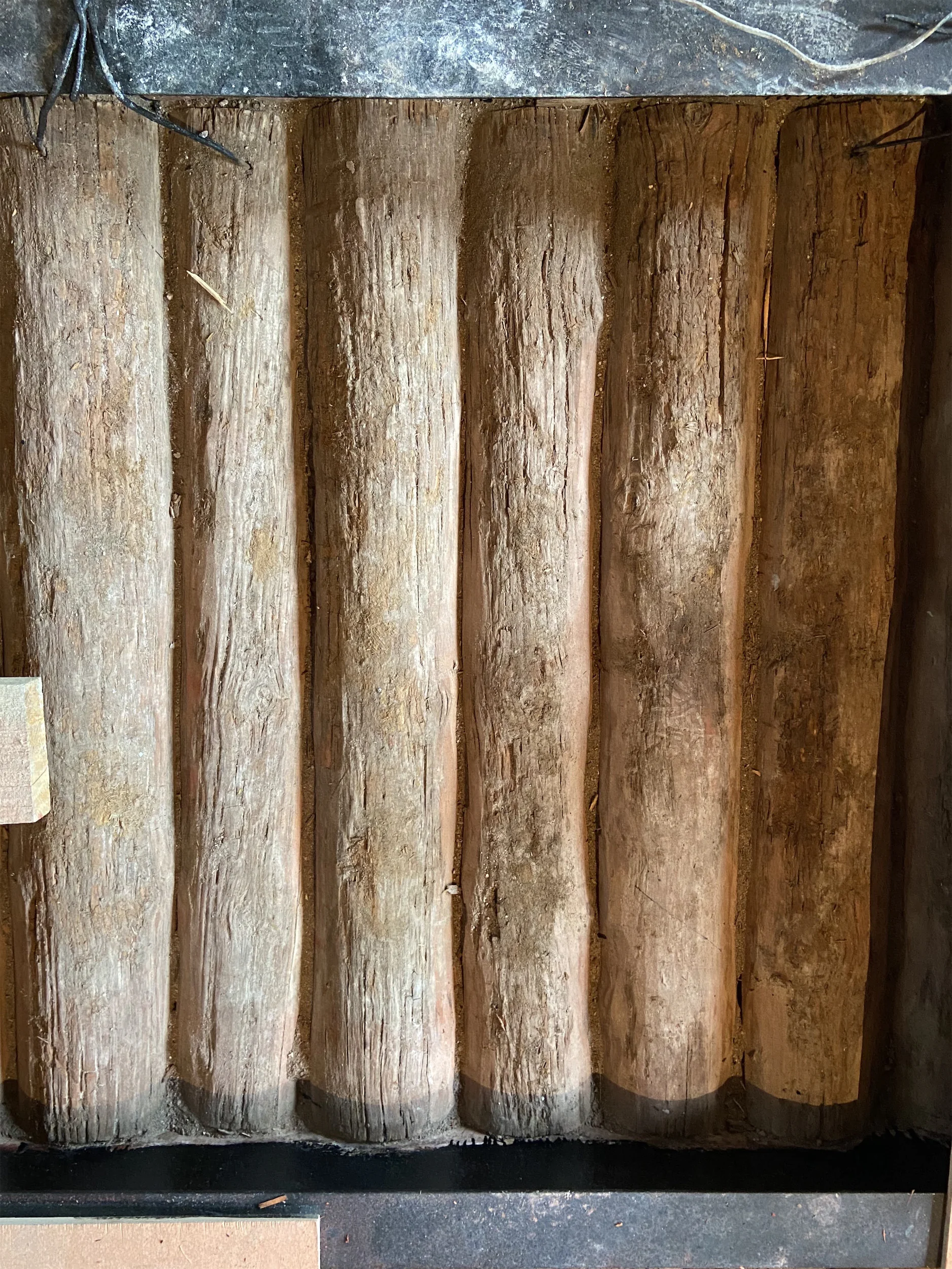
The timber structure above the living room is concealed by plasterboard with recessed lighting. The reason is pragmatic: an uneven timber surface does not take plaster well. This decision marks the point at which the principle of authenticity meets the realities of construction.
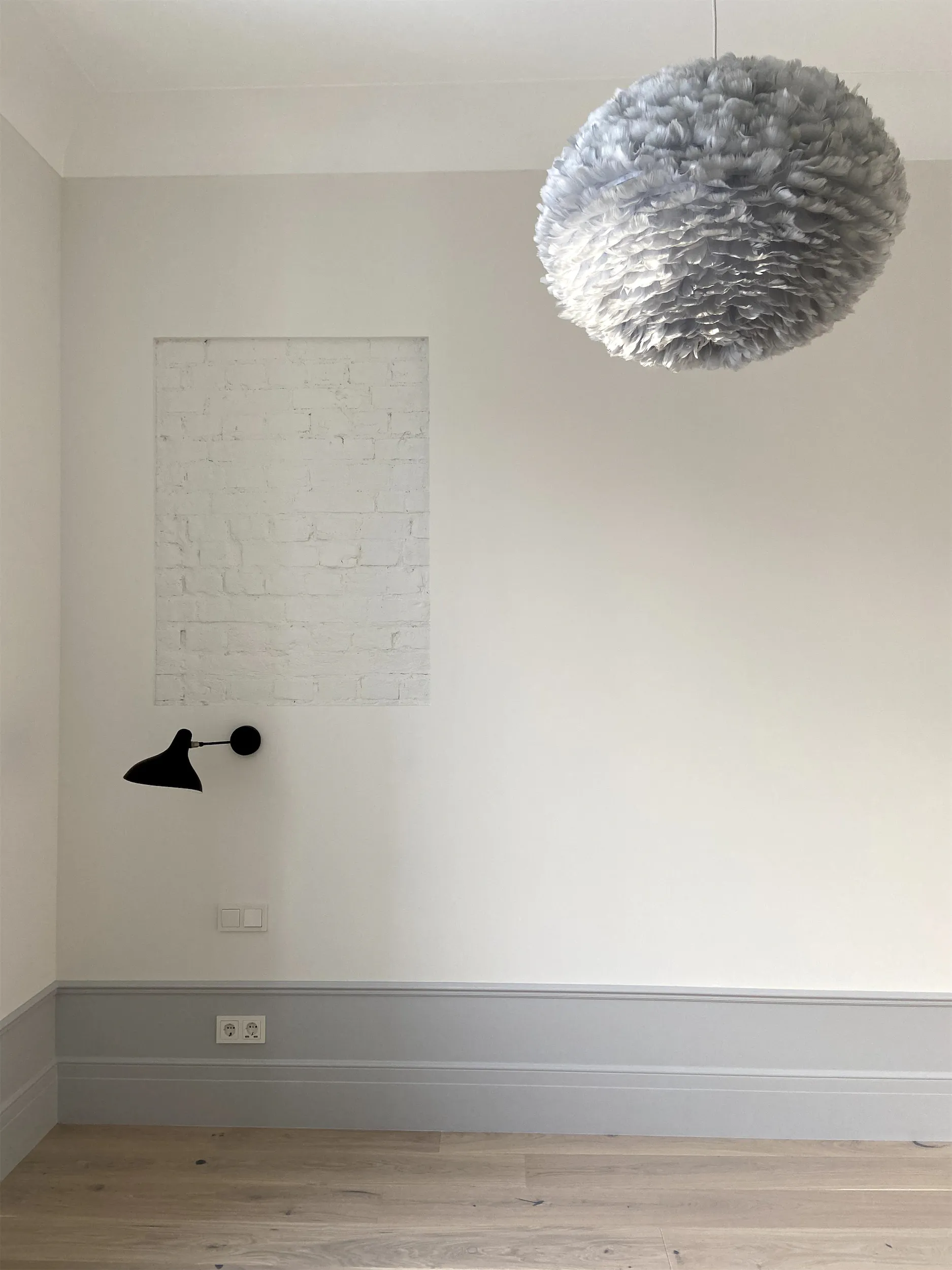
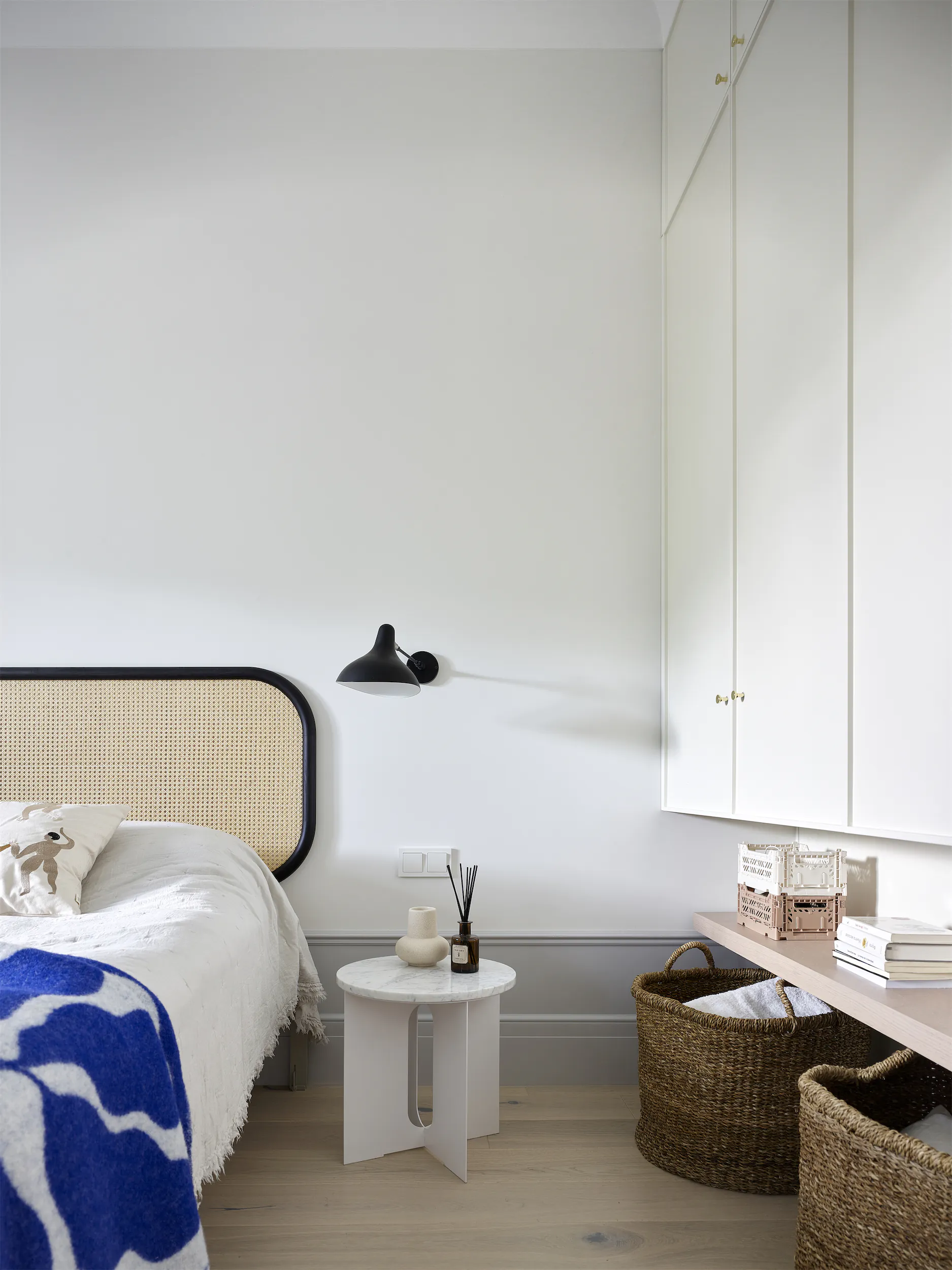
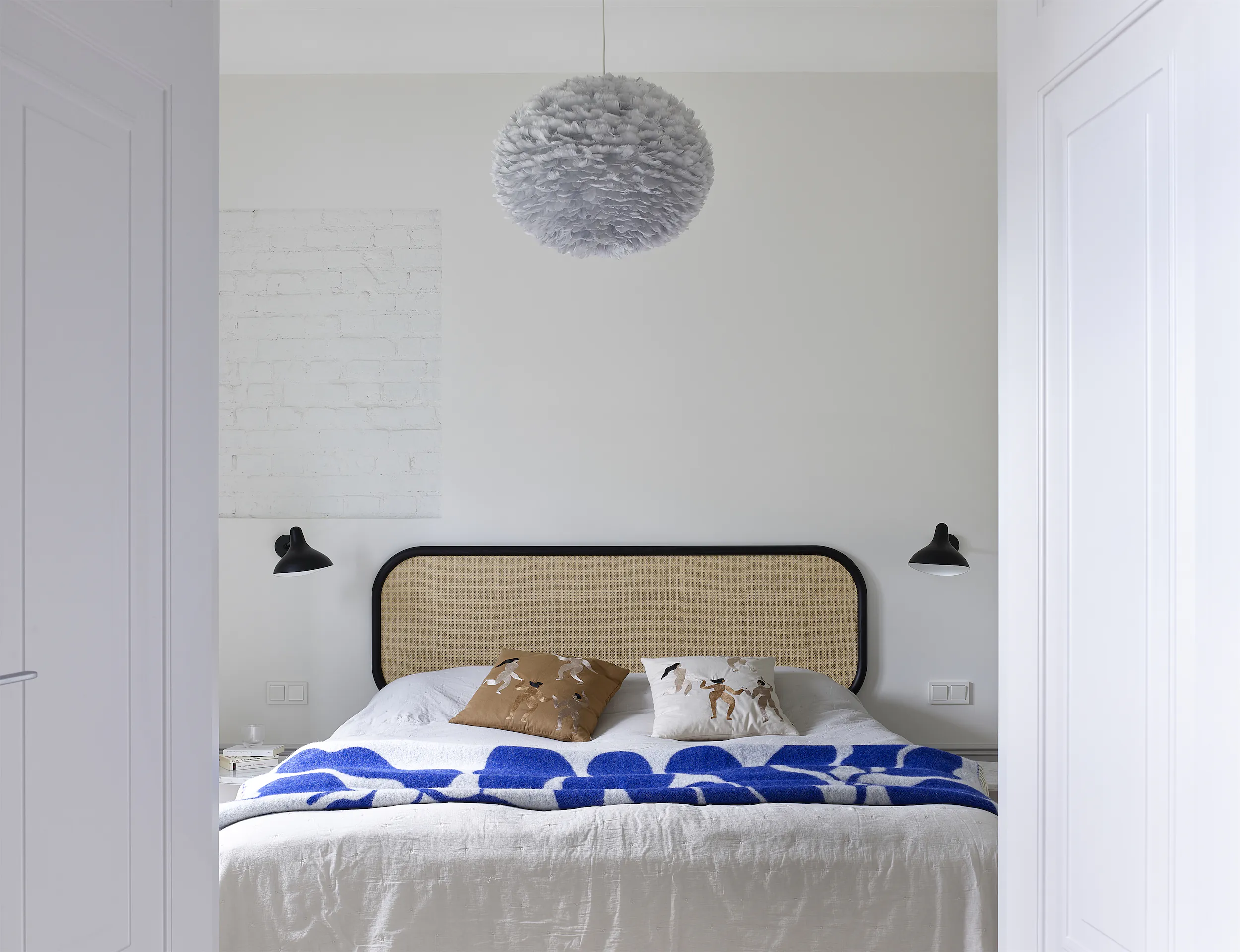
Three fragments of original brickwork are left exposed: above the kitchen backsplash, above the bedhead, and in the bathroom. Brick in Moscow’s early twentieth-century rental buildings is typically solid red, laid in lime mortar. After years of use and successive finishes, the masonry retains its structural function while losing its surface layer. The exposed fragments serve as dating markers — they show the material of a specific historical moment without imitating it.
The Enfilade as Spatial Principle, Not Historical Motif
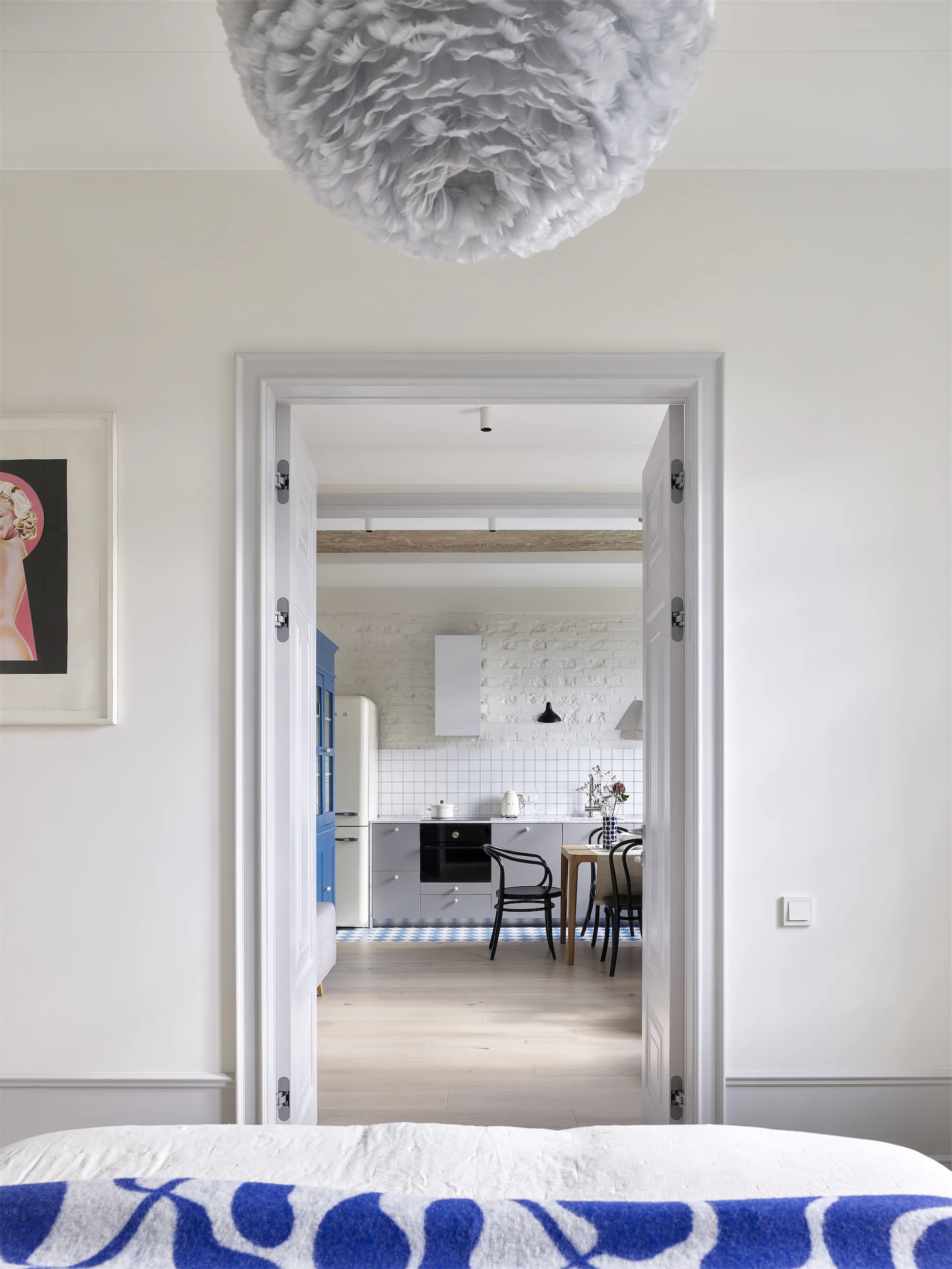
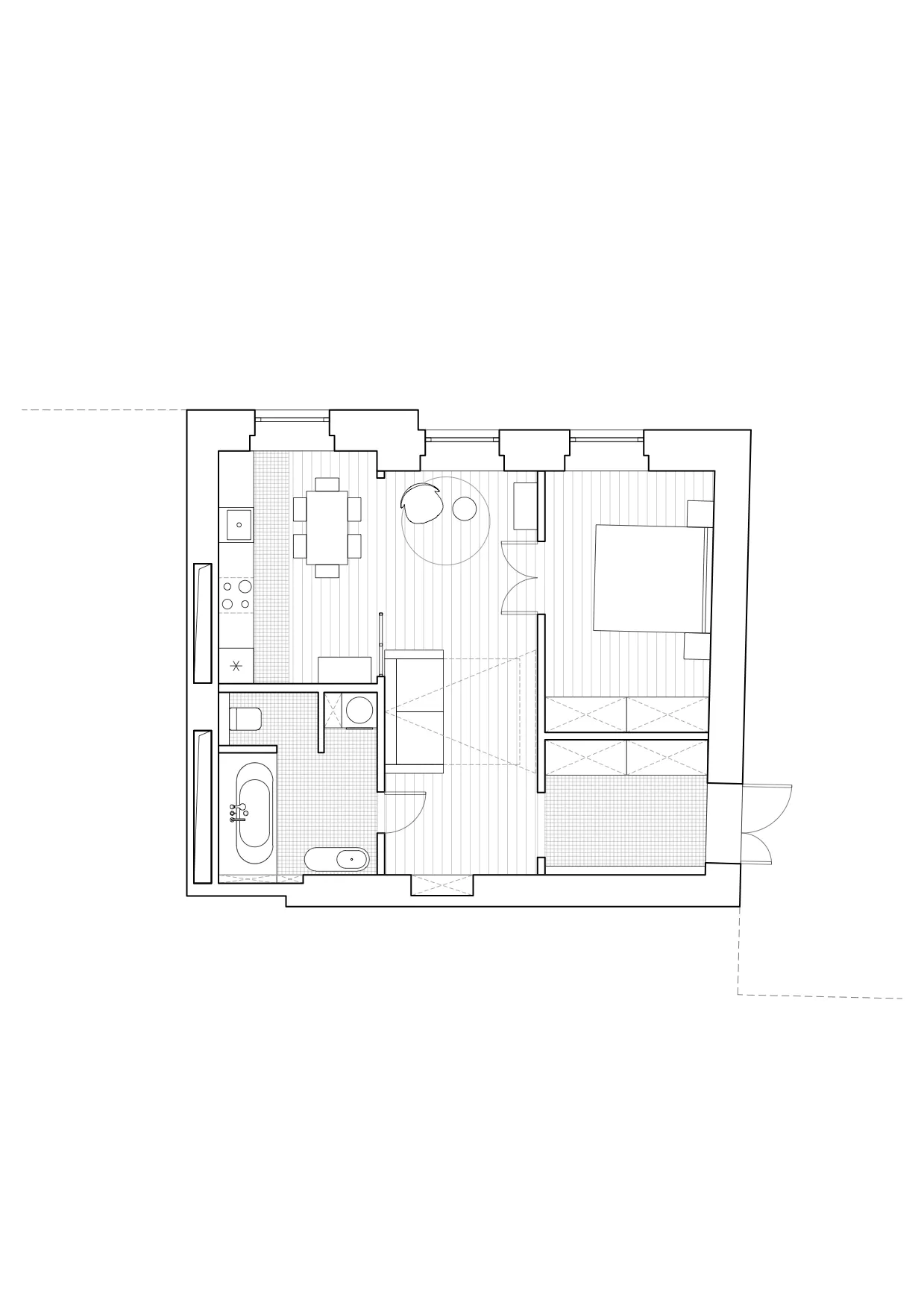
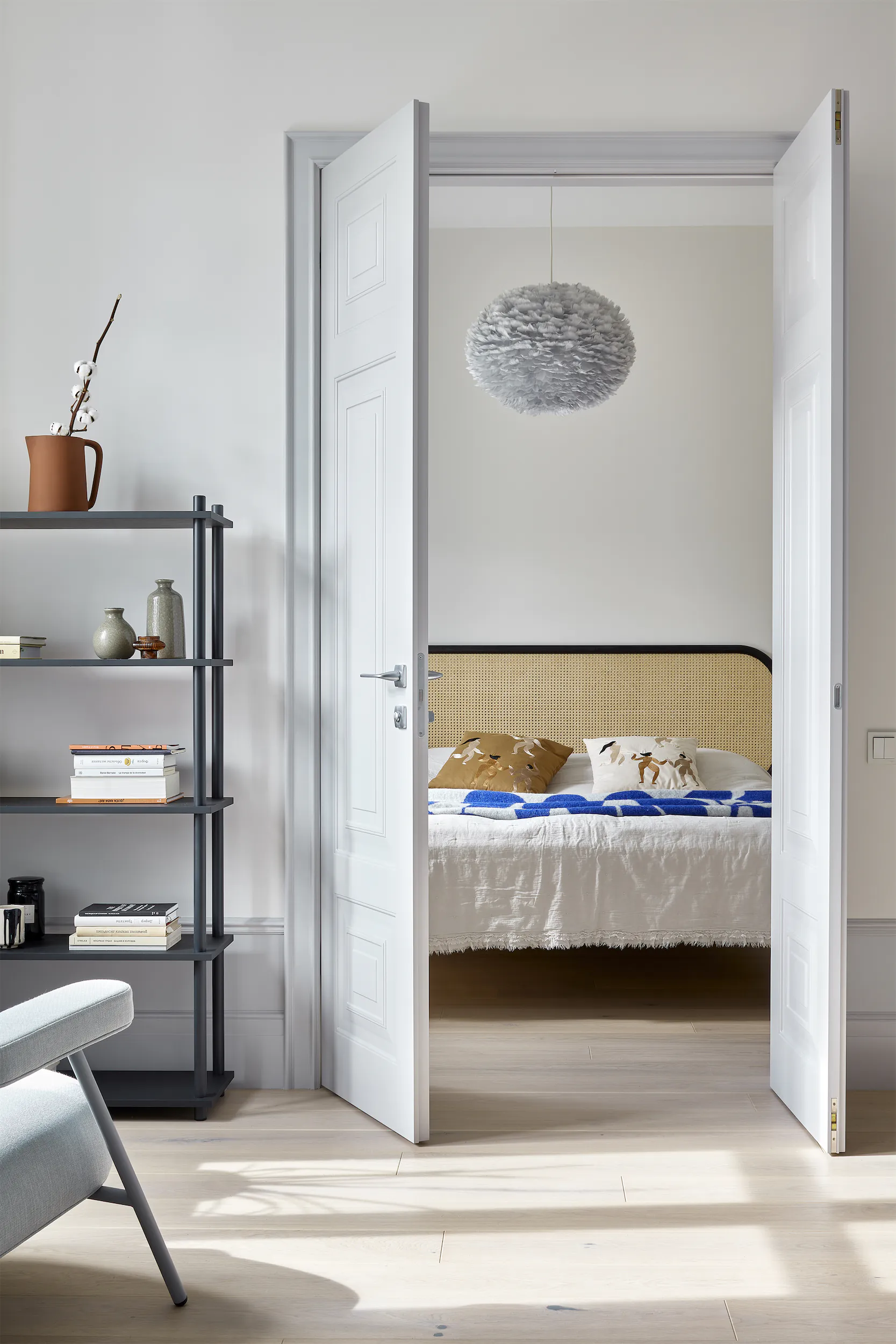
Double doors from the living room to the bedroom allow a sightline through several rooms. Enfilade spatial organization was characteristic of Moscow rental buildings at the turn of the nineteenth and twentieth centuries: it allowed interior rooms to be lit through adjacent spaces and created spatial depth within compact plans. Here1 the principle is reproduced at a miniature scale — not as a stylistic quotation but as a way of connecting the kitchen, living room, and bedroom along a single visual axis.
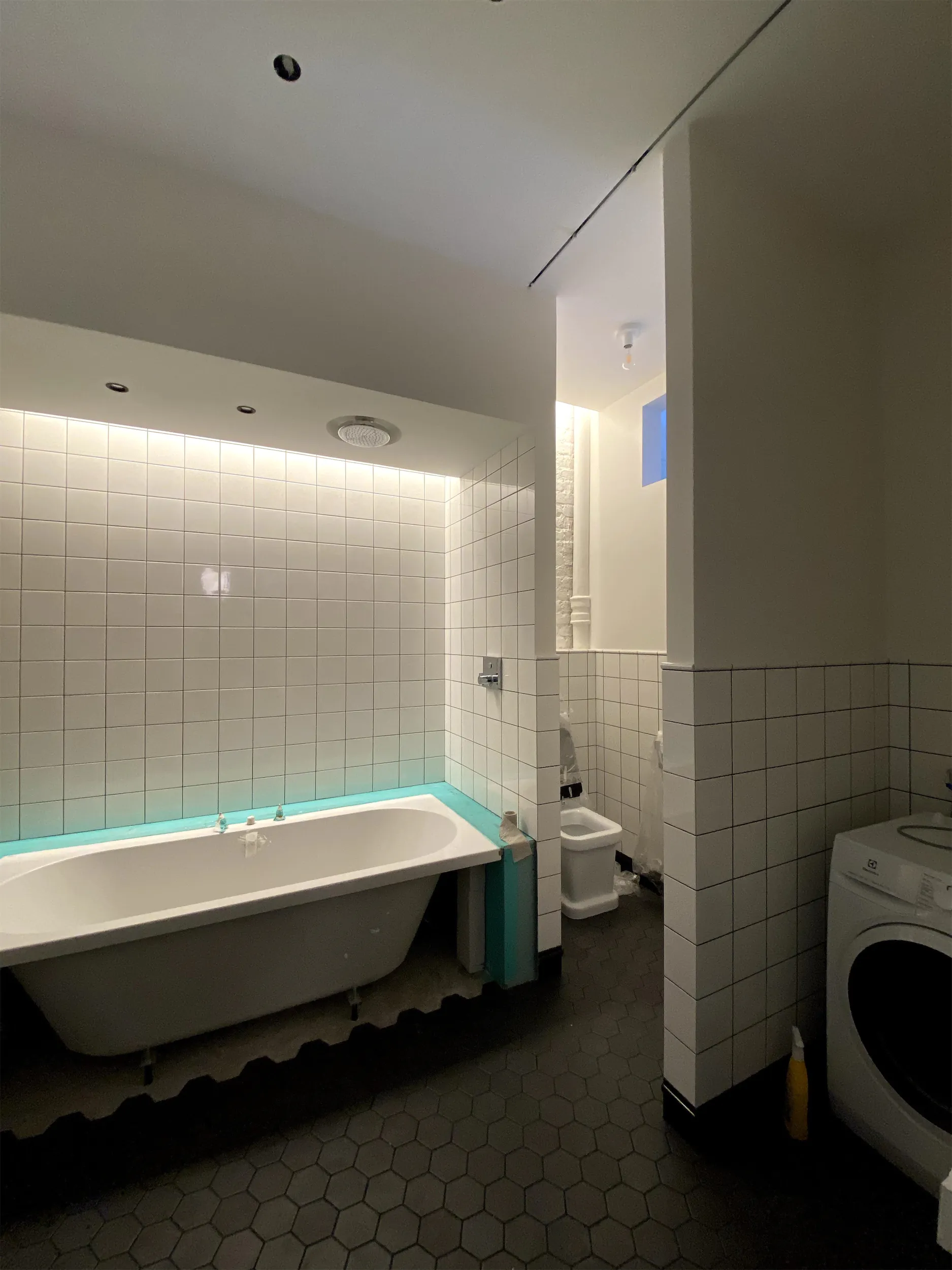
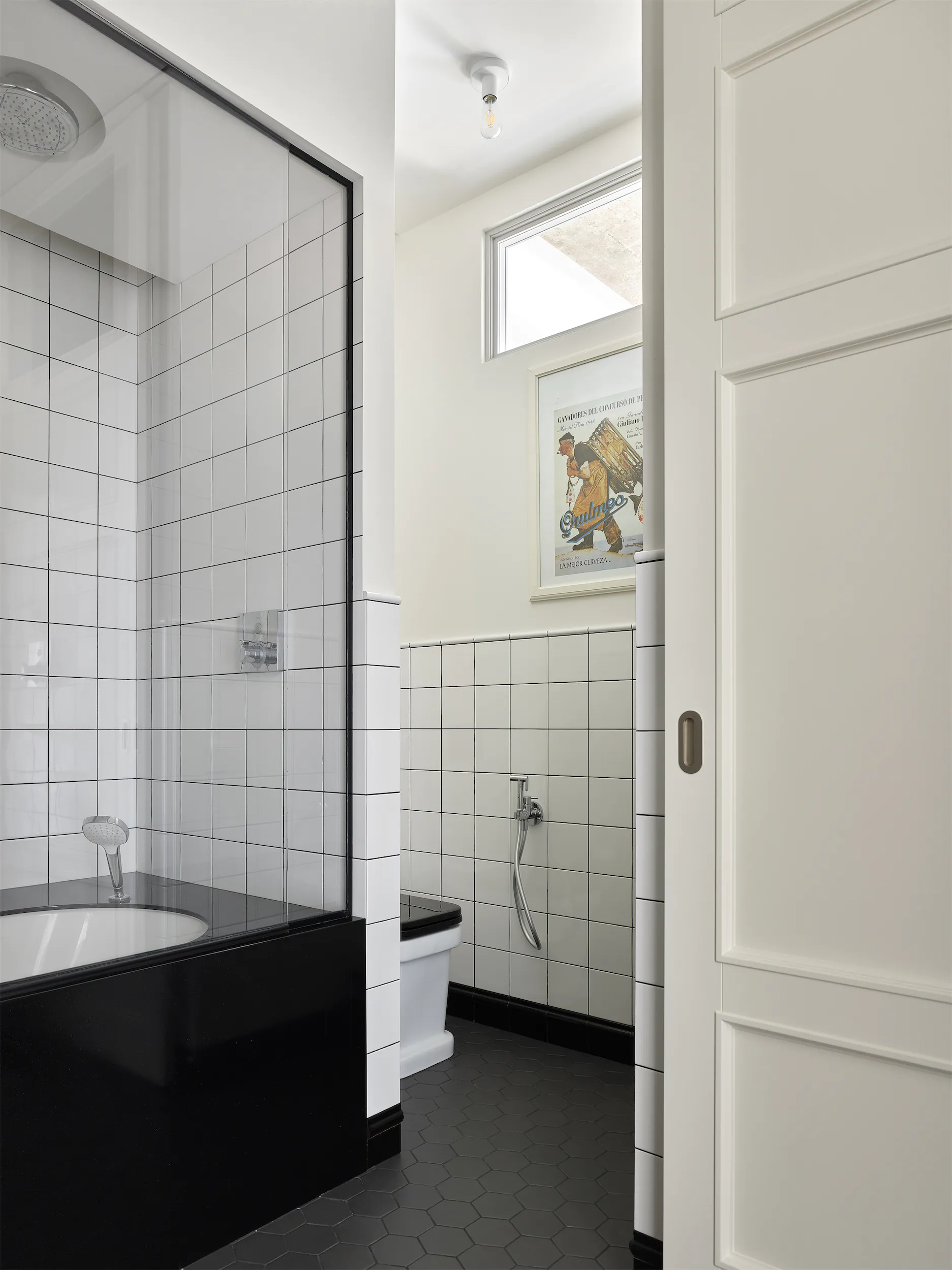
Transom windows into the bathroom refer to Soviet building practice, when glazed transoms above doors provided natural light to bathrooms without external windows. This solution was regulated by the 1954 SNiP building codes. Here the transom performs the same light-transmitting function and simultaneously reads as a recognizable element of a specific construction era.
Storage in Every Available Volume
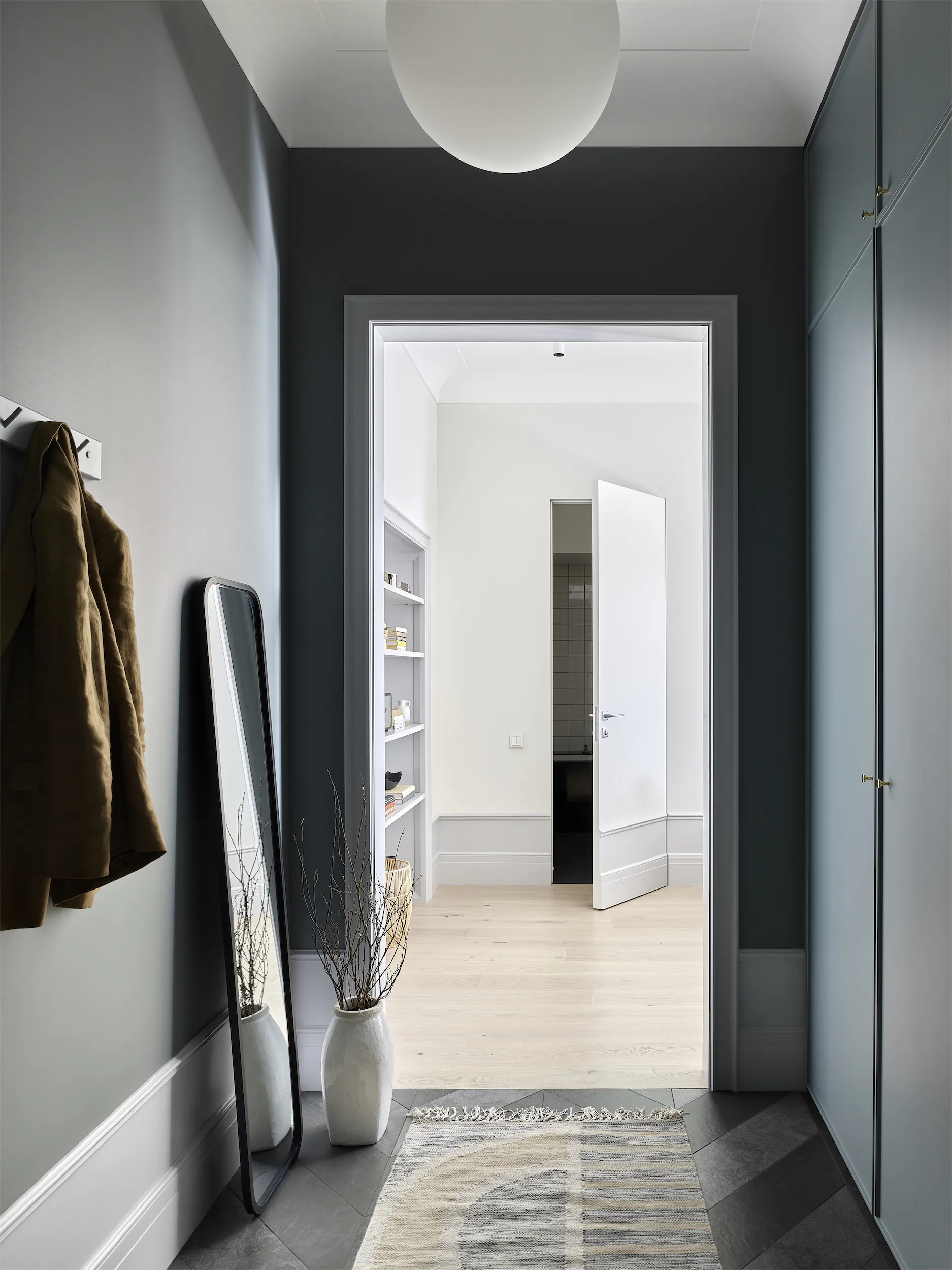
With 3.3-metre ceilings, the three-metre wardrobe in the entry uses the full height: the lower section for everyday clothes and shoes, the upper for seasonal storage that in apartments with lower ceilings is typically pushed to mezzanine shelves or a separate storeroom. In the bedroom an equivalent wardrobe is cut short at the bottom. An open shelf and space for baskets break up a continuous façade that in a small room reads as a monolithic block and visually compresses the space.
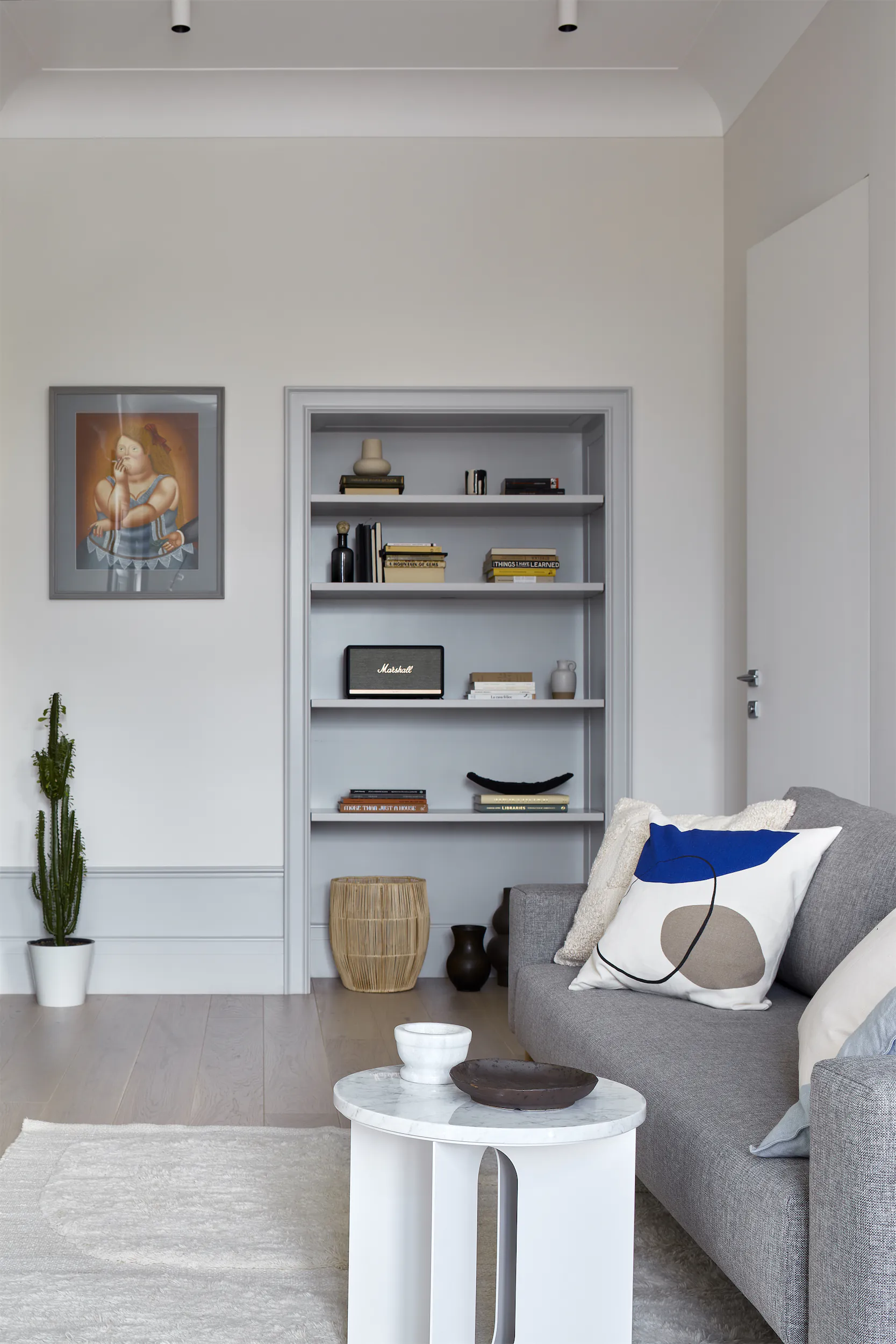
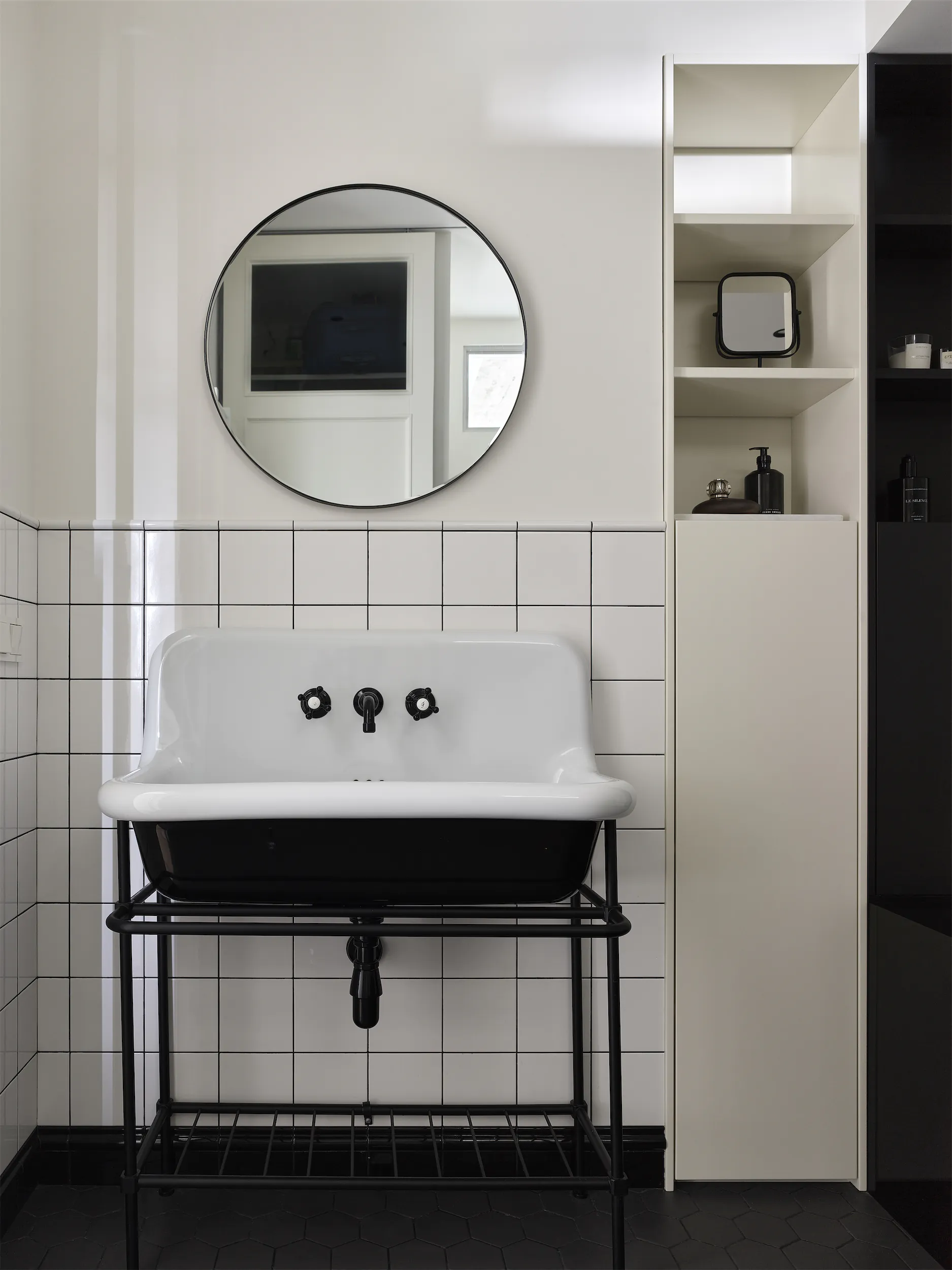
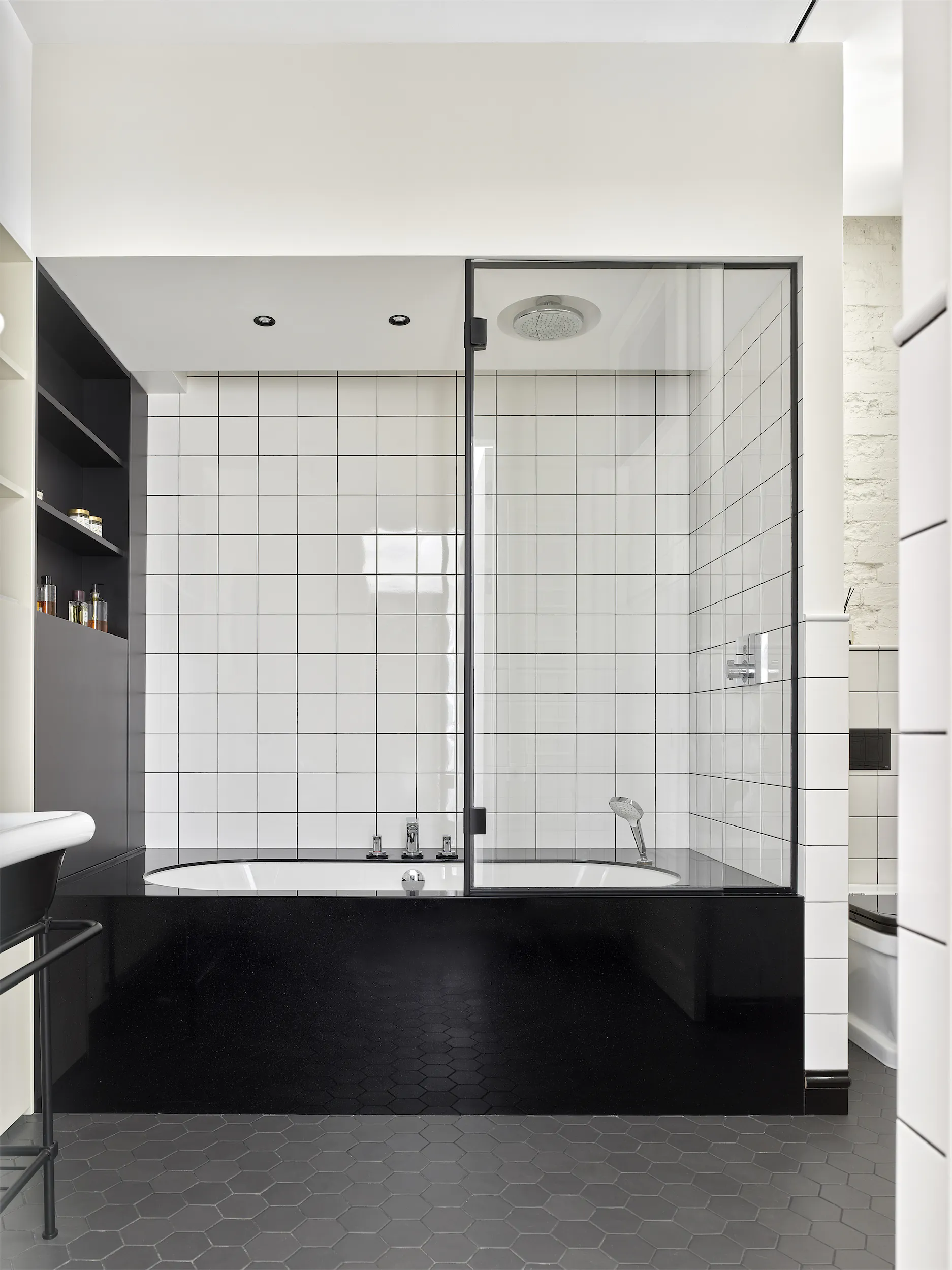
The bathroom has two independent storage volumes. The first is a niche housing a concealed distribution manifold and a cabinet with open and closed shelving. The open section is given to cosmetics and perfume requiring constant access. The second is a separate cabinet for appliances and cleaning products. The niche in the living room holds a bookshelf.
The kitchen has no upper cabinets — by design. In their place: a sideboard for tableware, a wine cabinet, and bottles. This allows the kitchen to read as a continuation of the living room.
What Remains When Nothing Remained
The interior contains no element that could be called a replica. The enfilade works because it connects the rooms along a visual axis. The transom transmits light. The brickwork shows brickwork. The concrete slab above the kitchen is simply a slab that was found and kept.
This is precisely what makes the interior convincing where period styling tends to fail: there is no effort to please the past. Every decision is justified functionally, and the sense of time emerges as a side effect — not as an aim.
Footnotes
-
Kirichenko, E.I. Russian Architecture of the 1830s–1910s. Moscow: Iskusstvo, 1982. pp. 241–260. On the spatial organization of rental housing in Russia. ↩
Process