Kotovo Villas: Six Typologies
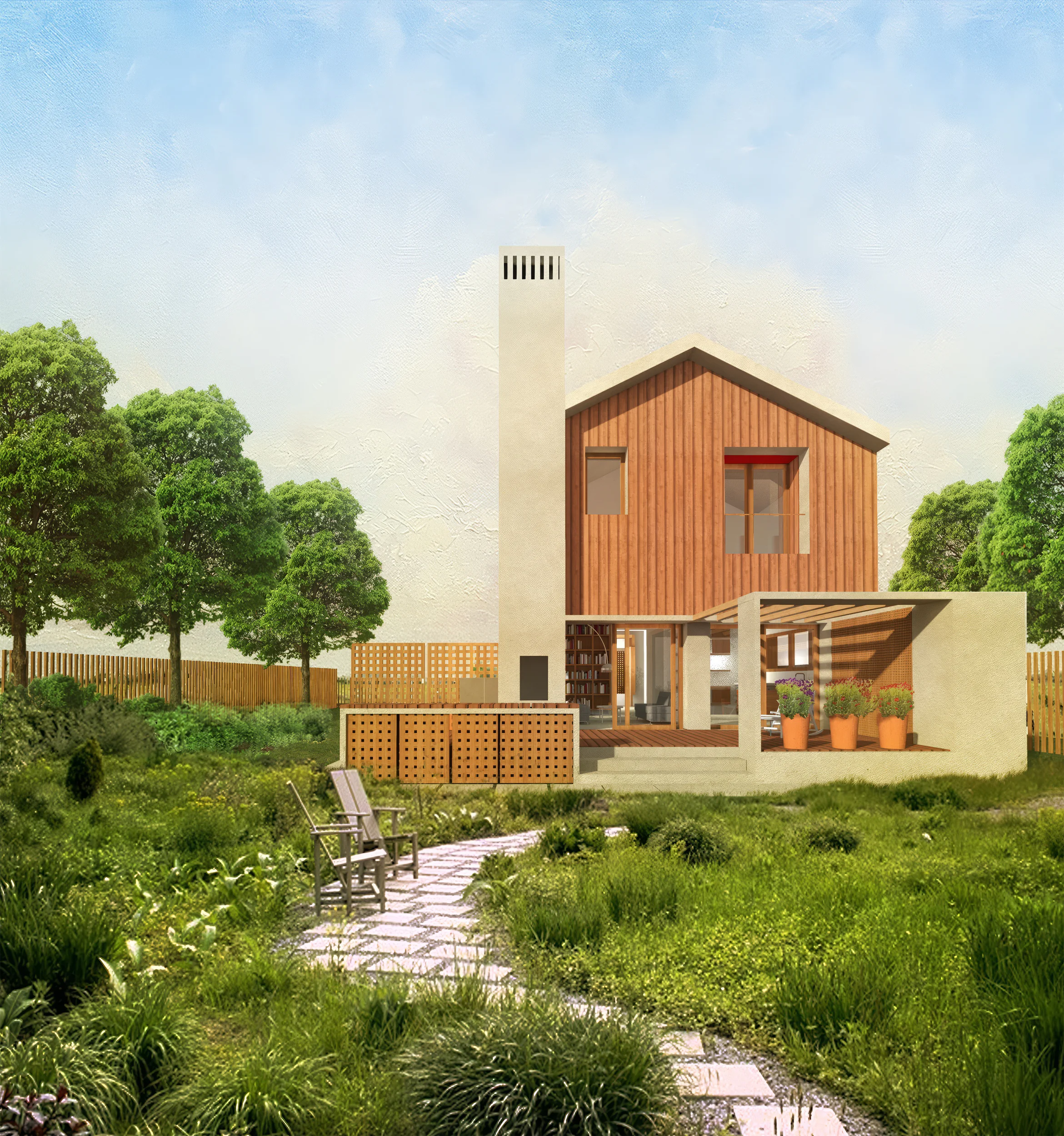
Six homes ranging from 80 to 210 m², sharing one common principle: large windows facing the street, panoramic glazing toward the courtyard, and no compromise on privacy.
Gallery
Drawings
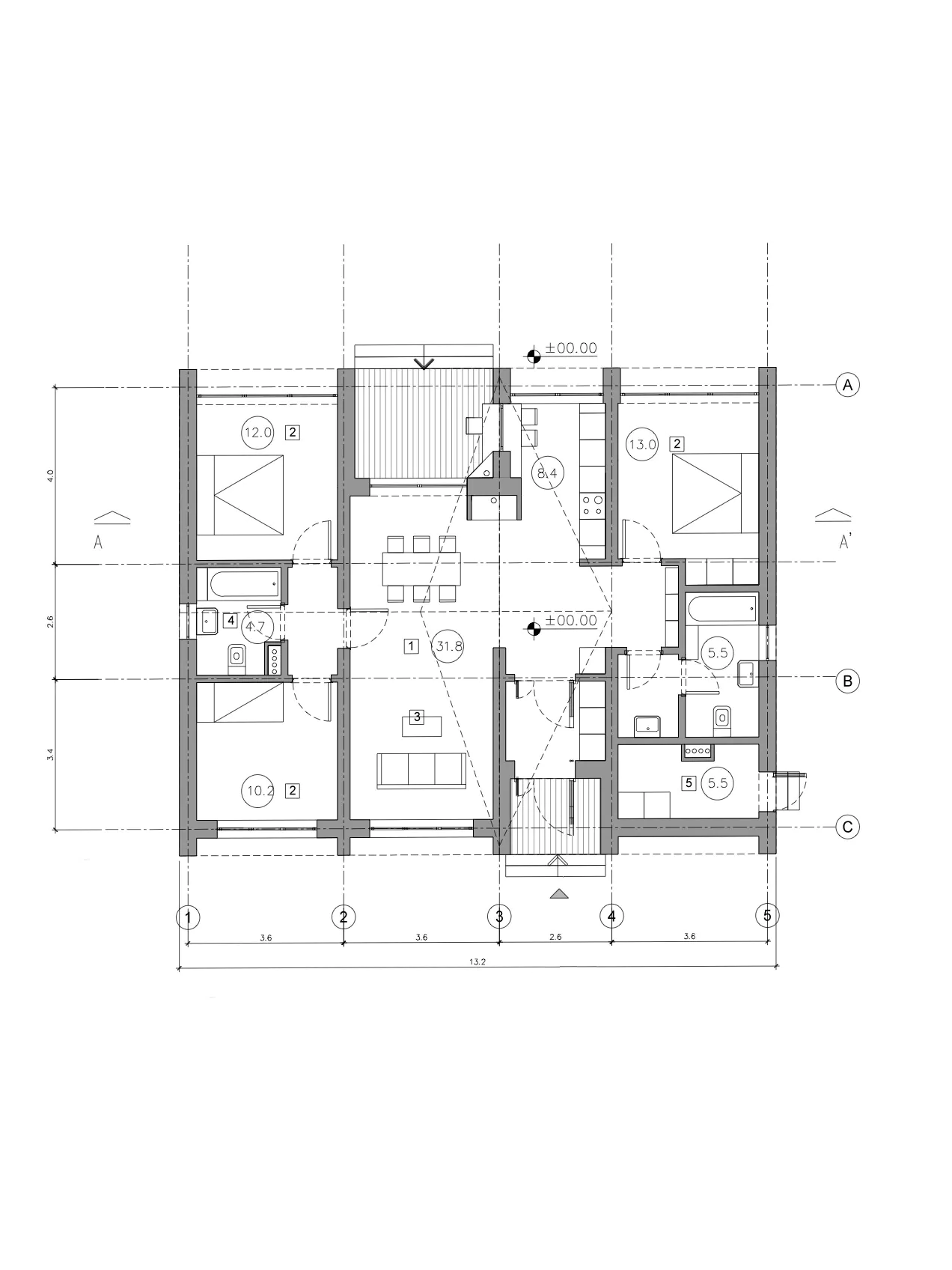
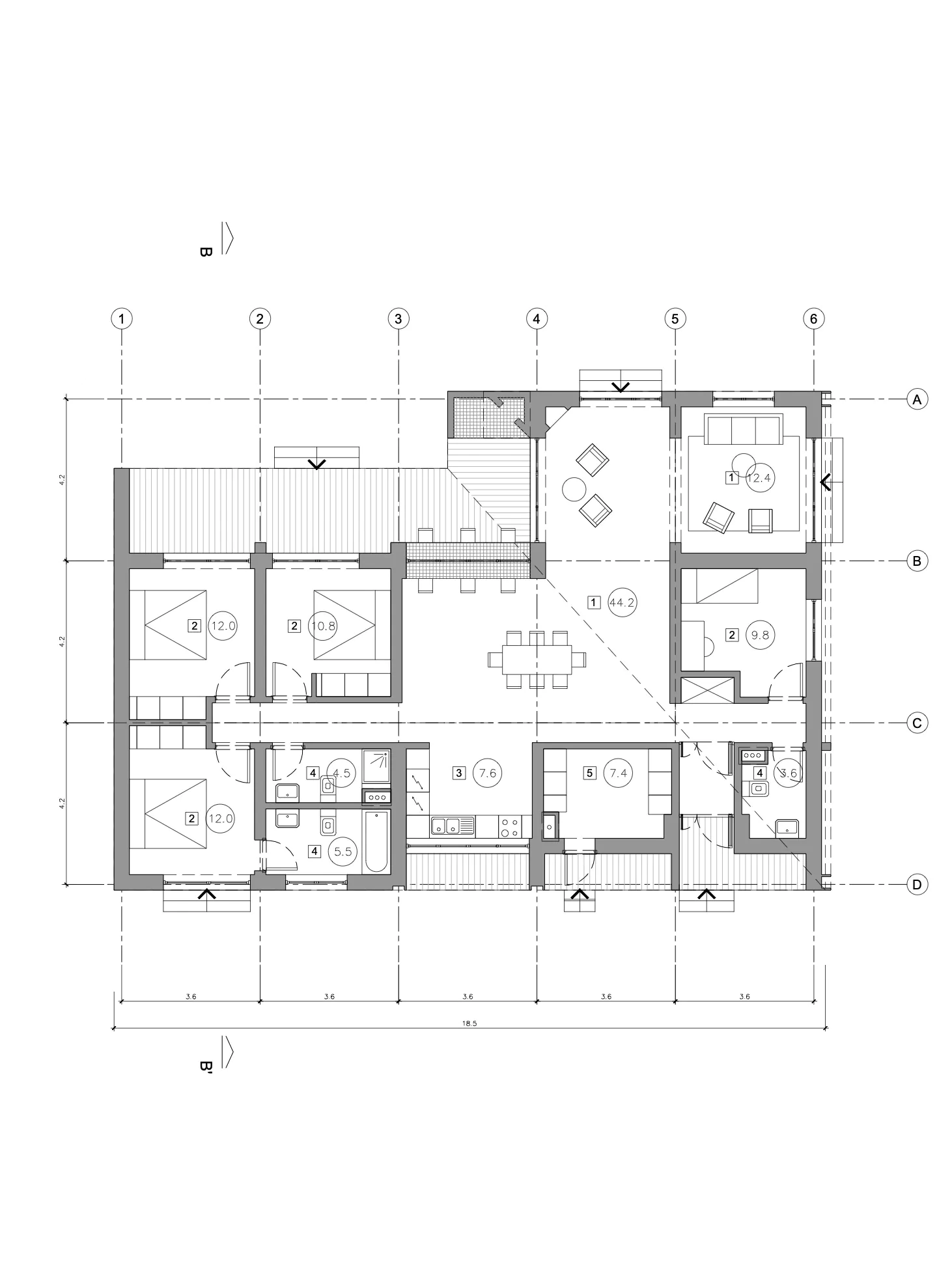
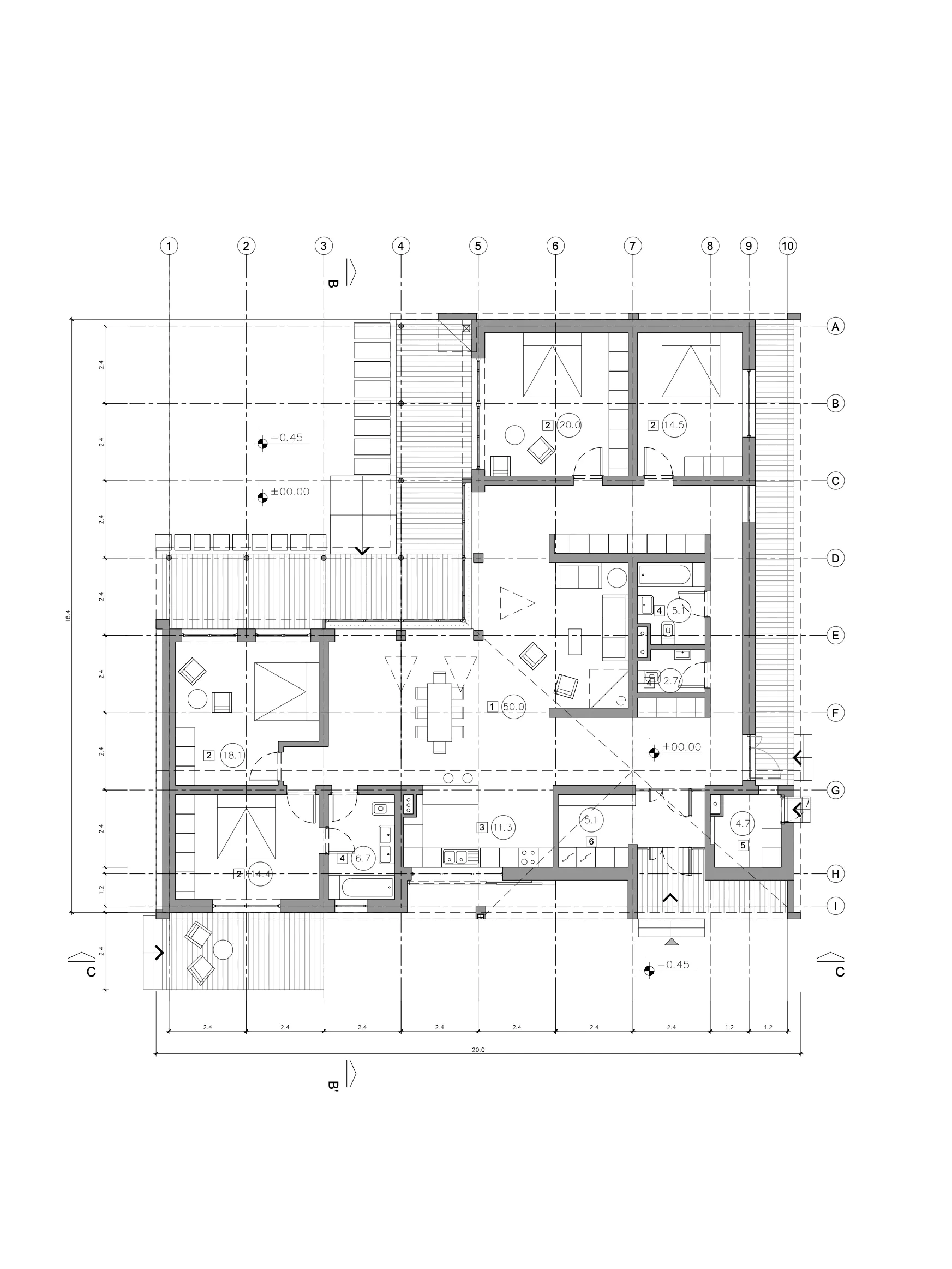
Description
Dual Orientation
The perimeter layout of Kotovo’s masterplan gives each home two fundamentally different sides. The outer façade faces the street or park — the public side, the source of long-range views. The inner façade opens onto the enclosed cluster courtyard, an intimate space belonging exclusively to residents.
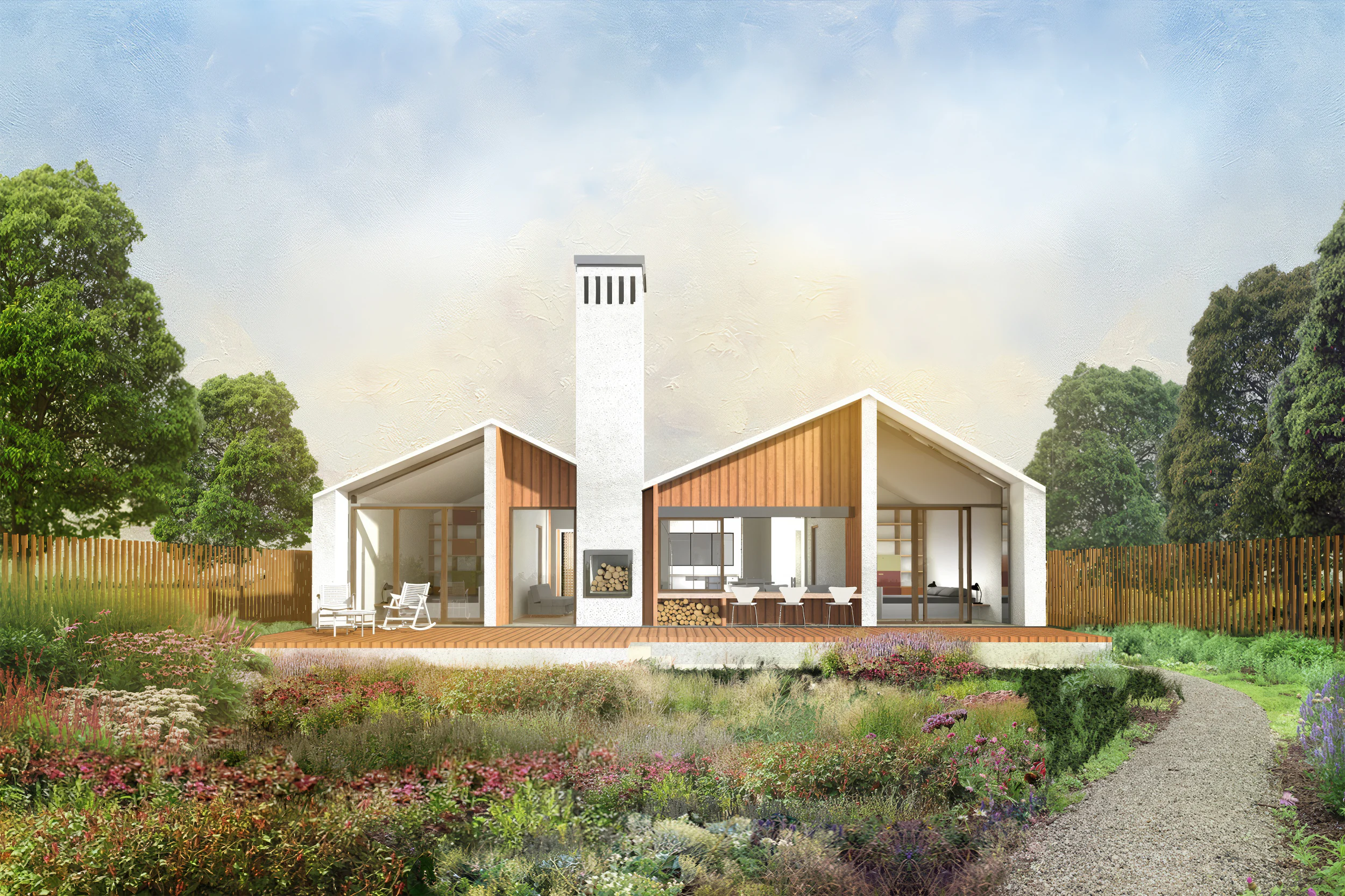
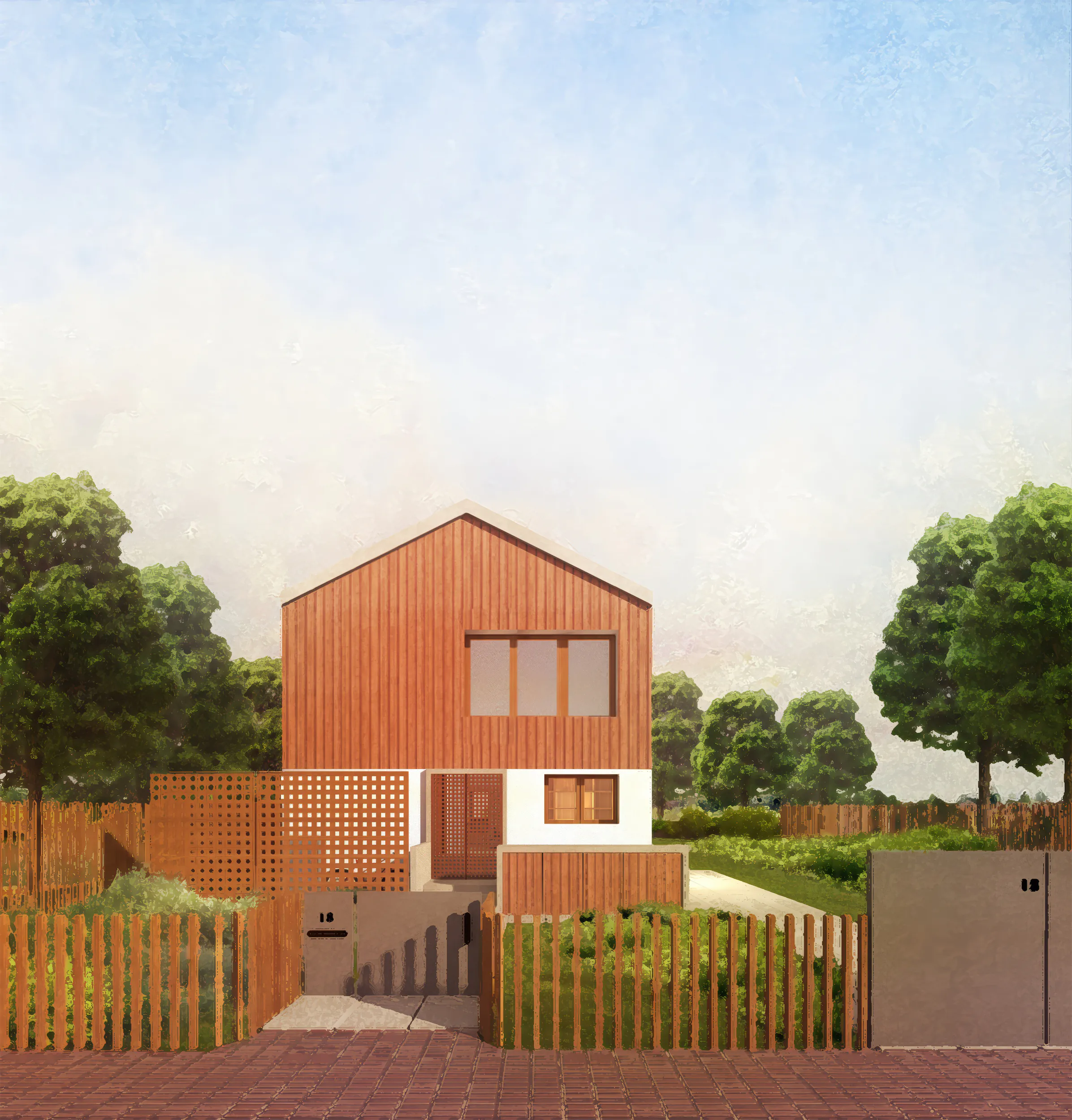
Both façades feature generous glazing, though with different degrees of openness. On the street-facing façade, large windows provide light and distant views while maintaining distance from passersby. The courtyard façade is resolved through panoramic glazing that opens the living room and terrace toward the enclosed cluster courtyard.
This approach breaks the conventional logic of low-rise residential architecture, where panoramic windows face either a private garden or the street — not a shared space among neighbors. Here it works because the cluster courtyard belongs to a limited number of households: the gaze through the glass is never anonymous.
The side façades are solid. The exception is clerestory windows in rooms that require light or ventilation without visual contact — bathrooms and utility areas. These openings sit above eye level and ensure air circulation without exposing the interior to a neighbor’s view. A solid gable wall is a standard solution in dense perimeter development. It is precisely how side walls are arranged in European townhouses, where adjacent homes stand flush or with minimal setback.
A precedent for this logic is found in Japanese1 machiya — the urban townhouses of Kyoto, where a narrow house opens through an inner garden at the rear while presenting a solid or restrained street façade. In the Kotovo villas the logic is reversed: both façades are open, and privacy is secured not through enclosure but through the geometry of the layout.
The Terrace as Connective Element
The terrace opening onto the inner courtyard solves a specific transitional task: moving from the living room to the outdoors without a change in spatial register. It is not a separate functional room but a continuation of the living area under a different roof treatment.
A direct connection from the living room to a terrace became standard in Scandinavian and Dutch residential architecture from the 1960s onward. A canonical example is Alvar2 Aalto’s housing in Hämeenlinna (1955): each unit opens onto a private balcony directly from the living zone, not from the kitchen or entry hall. In the Kotovo villas this principle is carried into the format of a detached house, with a greater indoor/outdoor contact area.
The terrace faces the courtyard rather than the street. This fixes the social hierarchy of spaces: the courtyard is where residents meet their neighbors; the street façade remains the boundary with the outside world. Everyday life unfolds inward, toward the cluster.
Range of Areas and Typological Variety
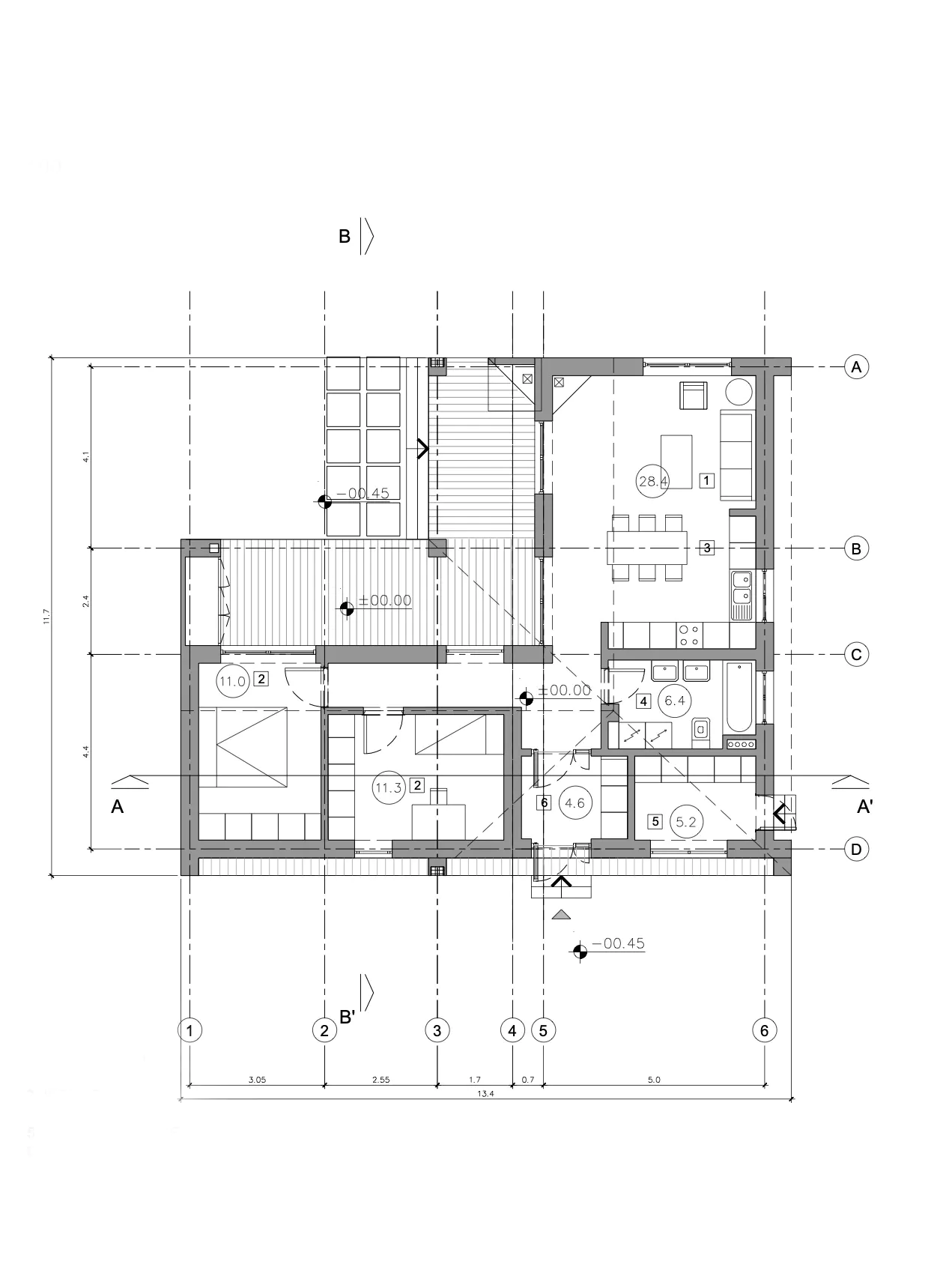
Six typologies span a range from 80 to 210 m² — a factor of 2.6. This is a significant variation for a single development. The smaller homes (80–100 m²) are functionally closer to a European cottage or bungalow; the larger ones (180–210 m²) approach a full villa, with distinct zones for private and communal living.
All six typologies nonetheless follow a single masterplan rule: perimeter placement. The geometry of each plot and the orientation of its façades are fixed. The typologies vary in area, number of levels, and internal layout — but not in their position within the cluster structure.
Privacy Through Geometry, Not Enclosure
The central design thesis — privacy without enclosure — requires a technical explanation. The standard way to ensure privacy in a suburban home is a solid fence, minimal windows facing neighbors, and all living spaces oriented inward toward the plot. Panoramic glazing on the courtyard side directly contradicts this.
The solution lies not in the material of the boundary but in the geometry of sight lines. The street façade with its large windows offers long views without direct visual contact with passersby. The courtyard façade opens through panoramic glazing onto a space observed only by those who already share the territory. Privacy here is a function of spatial arrangement, not physical barrier.
This approach aligns with what Jan Gehl calls “soft edges”: semi-transparent3 transition zones between private and shared space that allow contact without intrusion.
The six Kotovo villa typologies address a problem that mass low-rise construction rarely even frames: how to make a home simultaneously open to two different spatial registers — public and collective — while preserving a sense of seclusion. The answer turns out to be not structural but geometric. It is embedded in the masterplan before the first house is designed.
Footnotes
-
Morse, E. The Traditional Japanese House. Tuttle Publishing, 2005. On the machiya typology and principles of spatial orientation in traditional Japanese urban fabric. ↩
-
Quantrill, M. Alvar Aalto: A Critical Study. Schocken Books, 1983. Analysis of Aalto’s housing complexes and principles of transition between interior and exterior space. ↩
-
Gehl, J. Life Between Buildings: Using Public Space. Island Press, 2011. The concept of soft edges as a tool for creating transitional zones between private and public space. ↩