Polytechnic Museum Laboratories
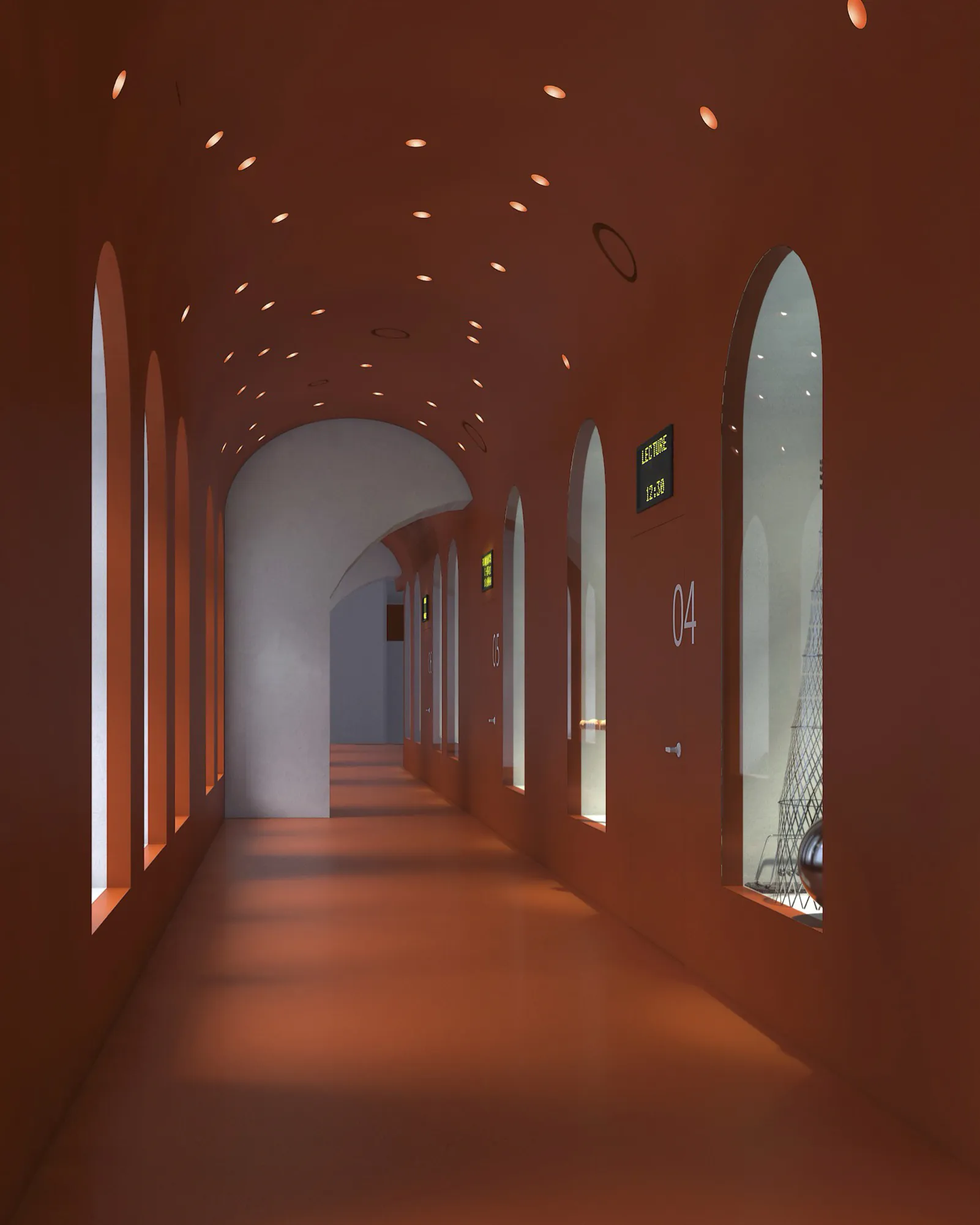
Interiors for children and teenagers inside a nineteenth-century landmark — rejecting both museum neutrality and playful excess in favour of something more precise.
Gallery
Drawings
Description
A Problem That Standard Equipment Cannot Solve
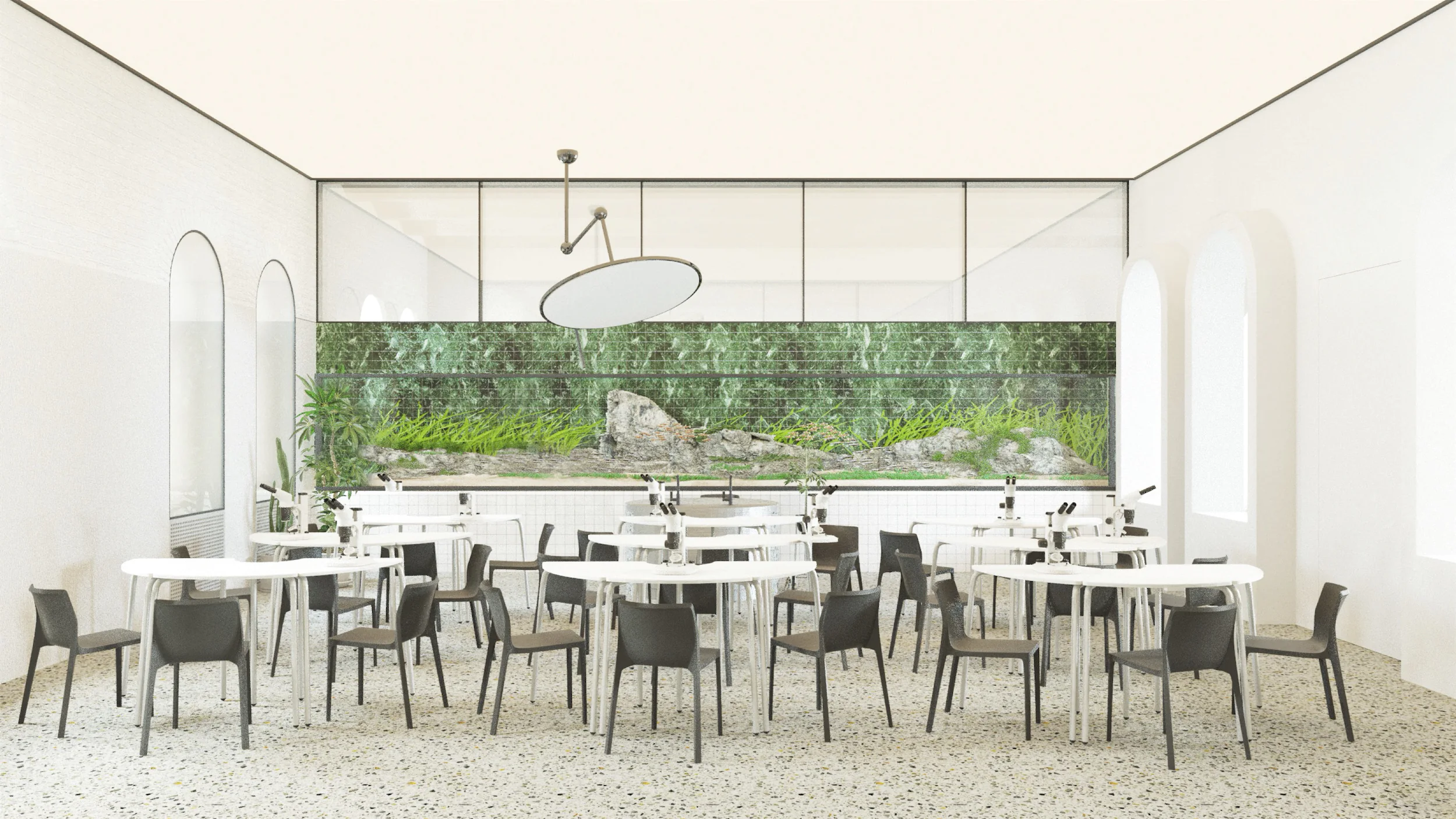
A school laboratory is typically designed as a neutral environment: surfaces resistant to reagents, ventilation, fixed modular tables. Function dictates form, and form stops there. The Polytechnic Museum set a different brief: the space had to withstand experiments with acids and function as an environment where thinking feels natural.
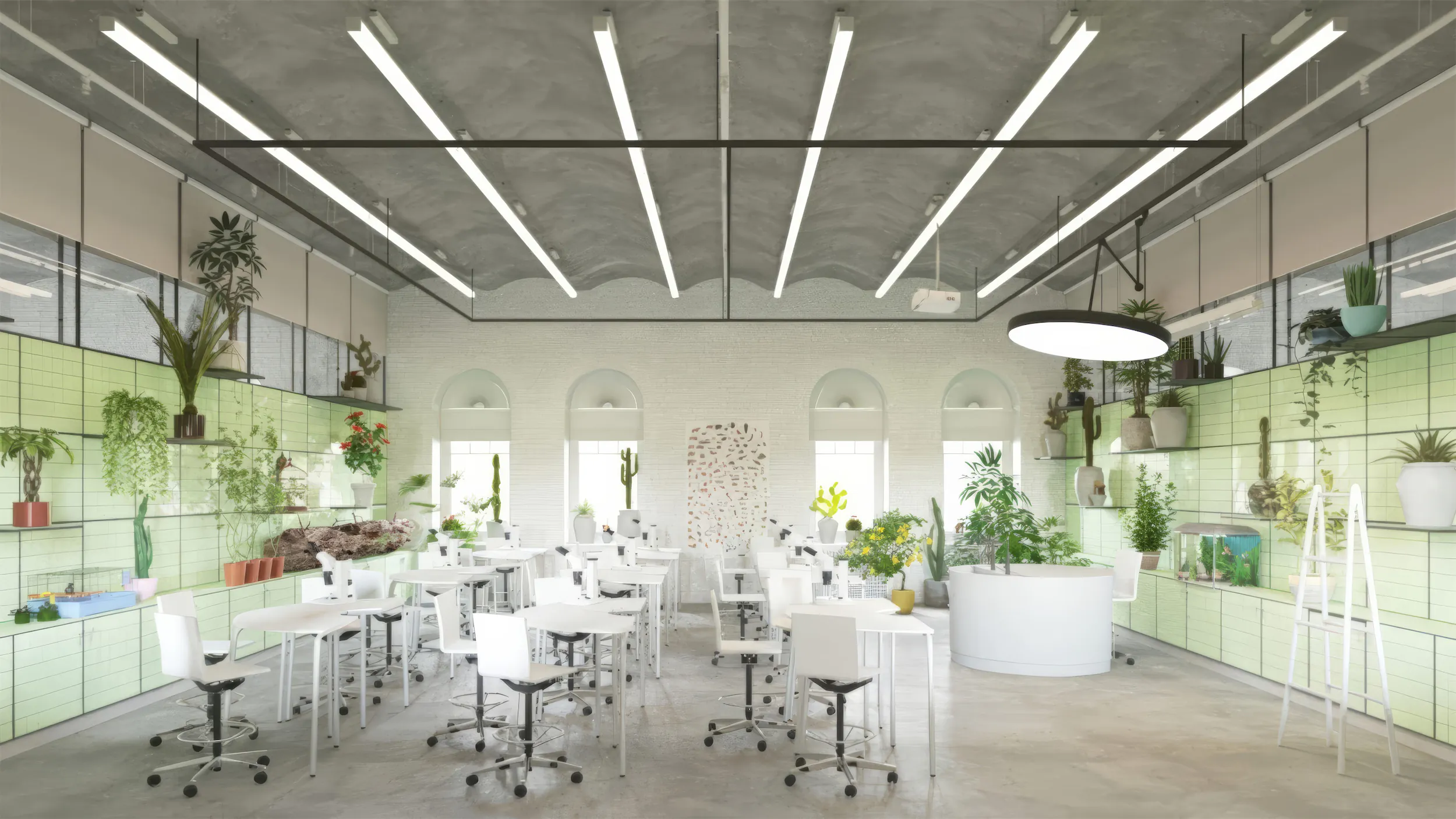
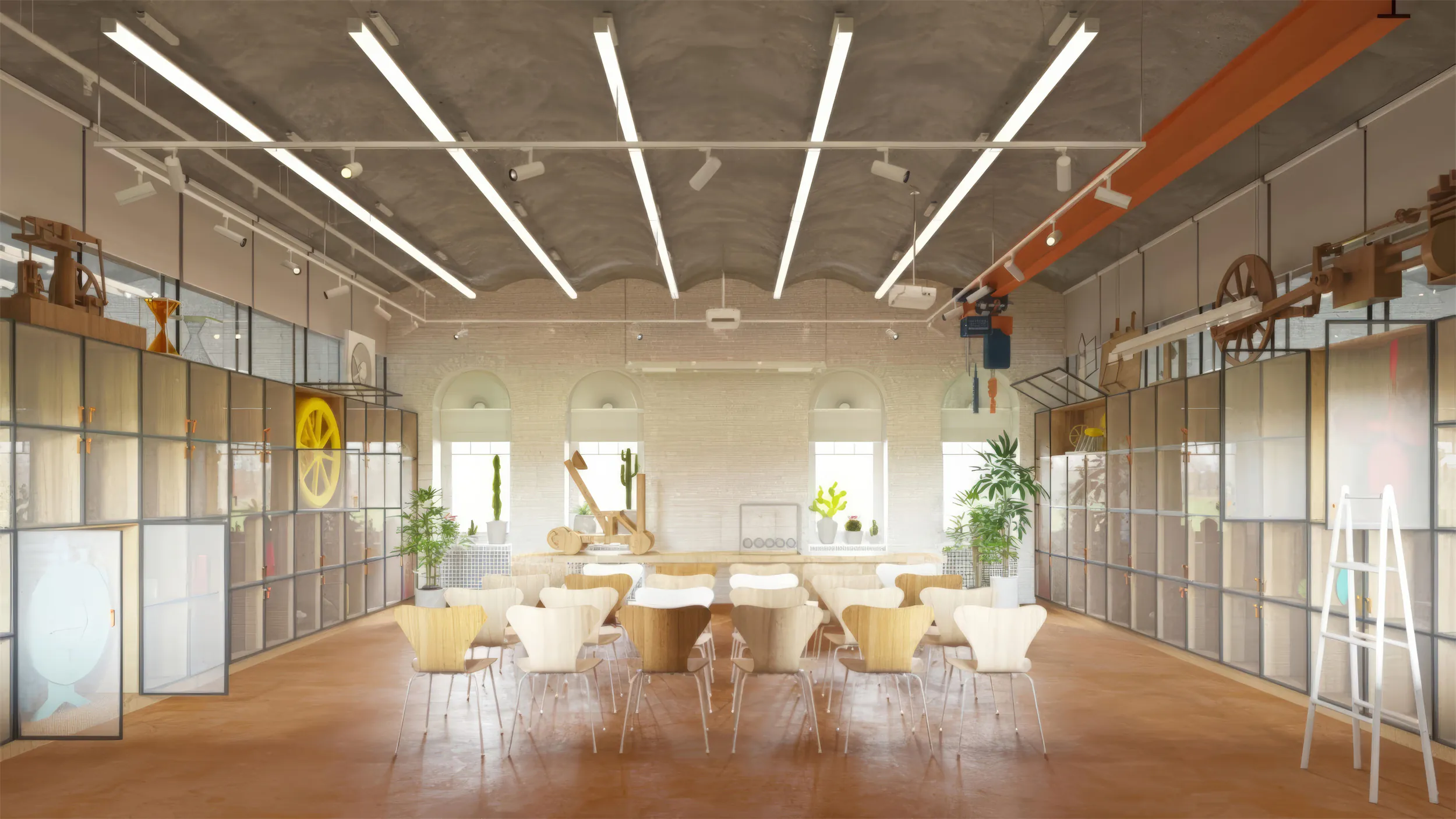
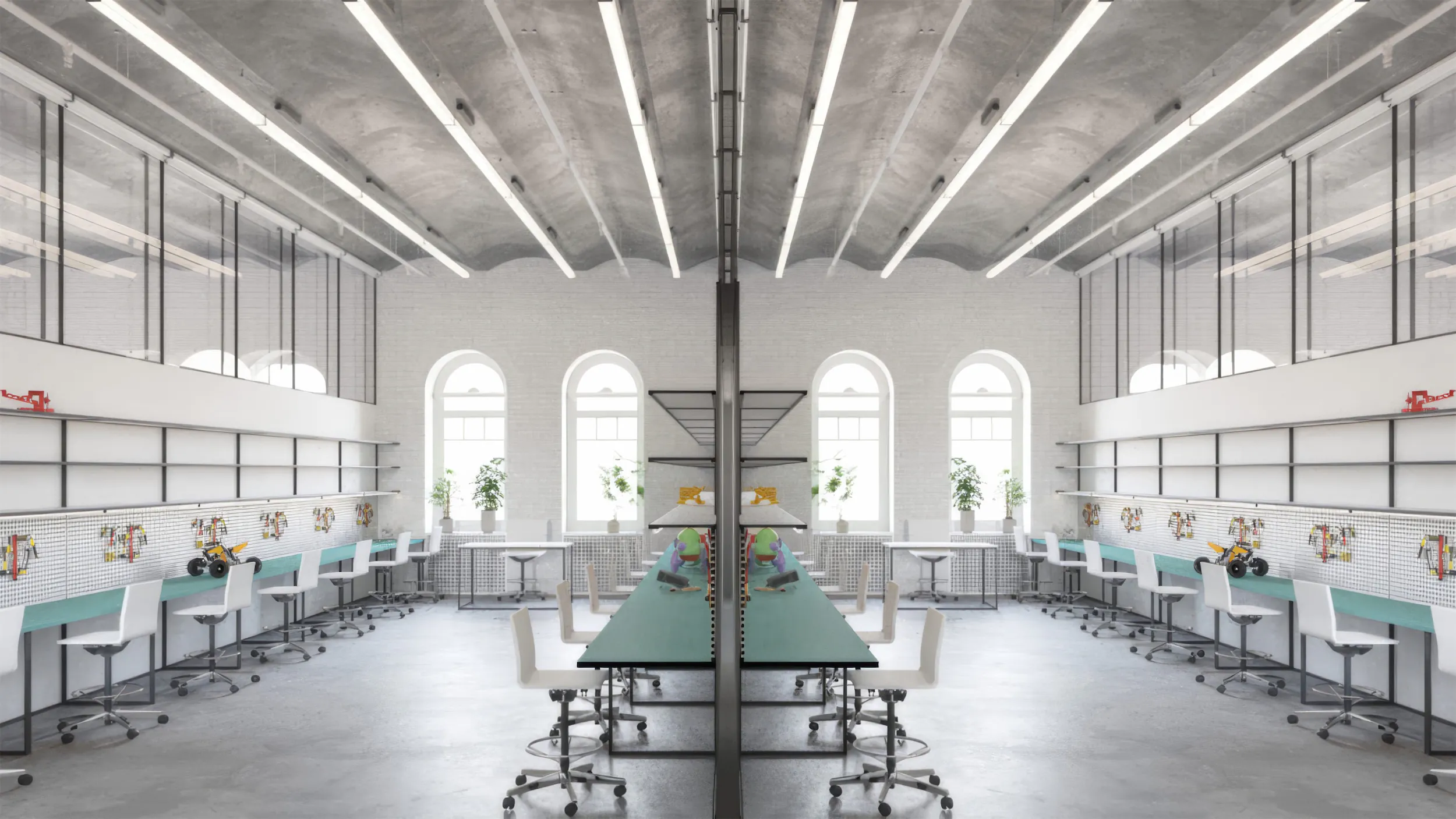
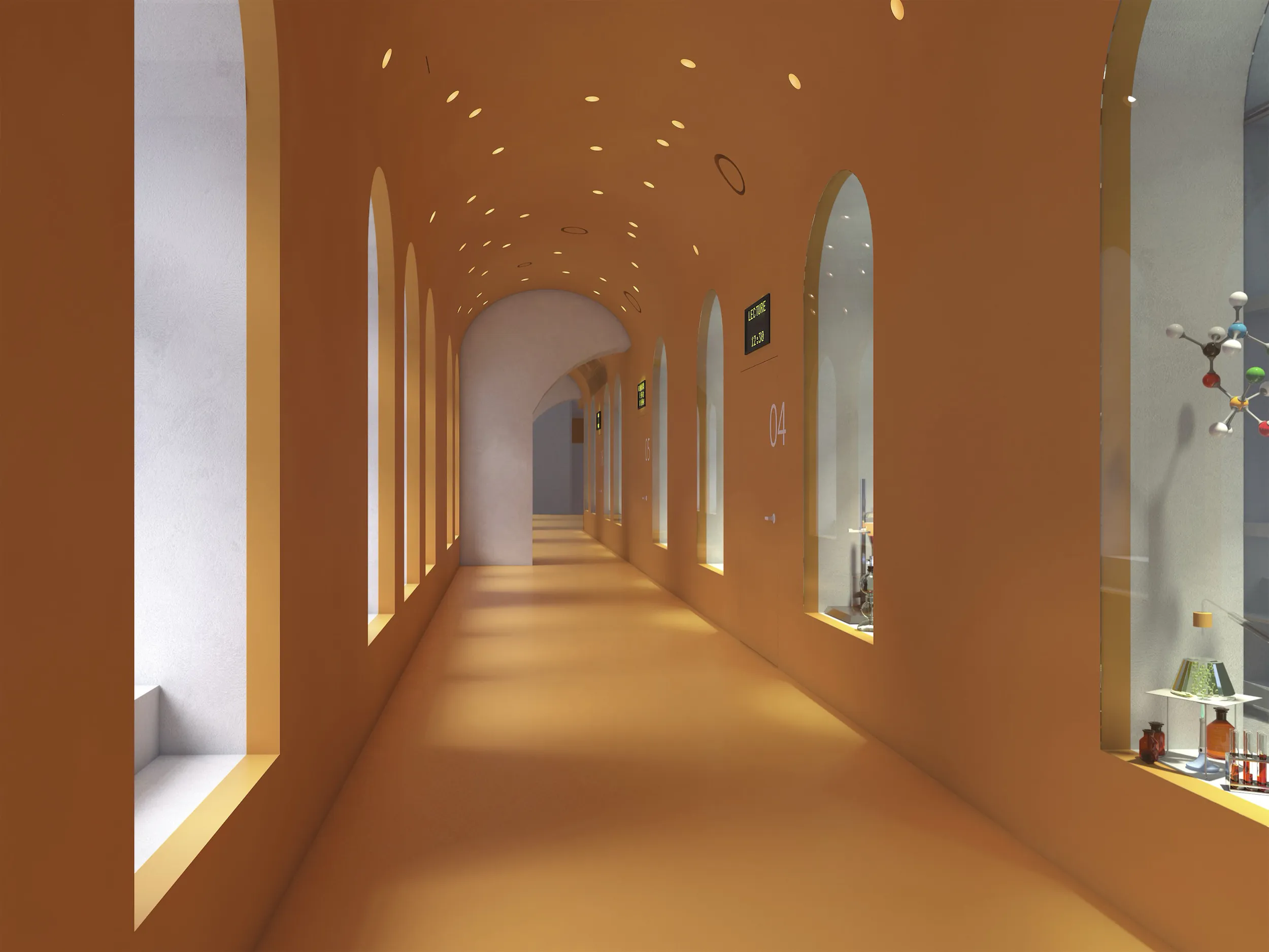
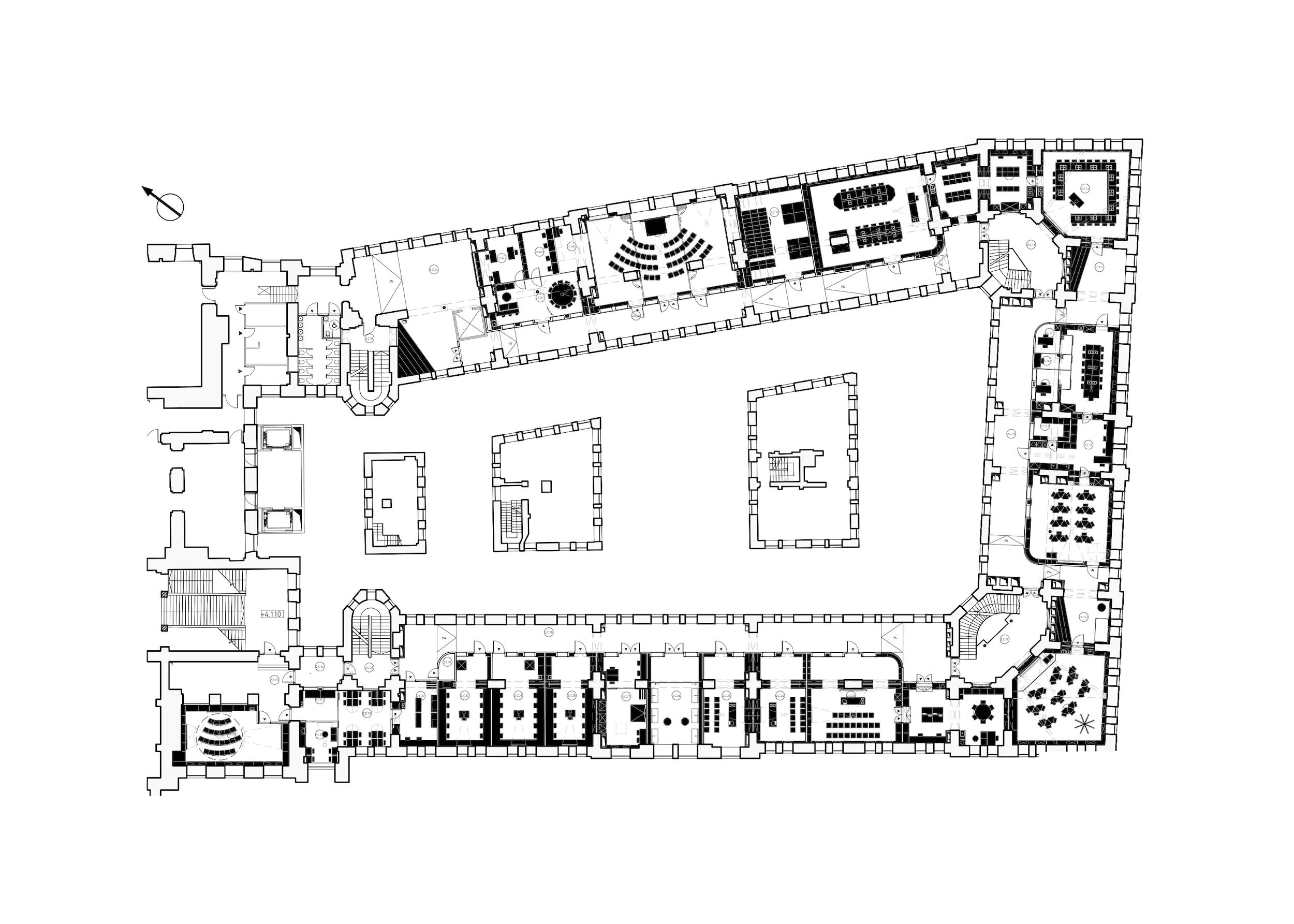
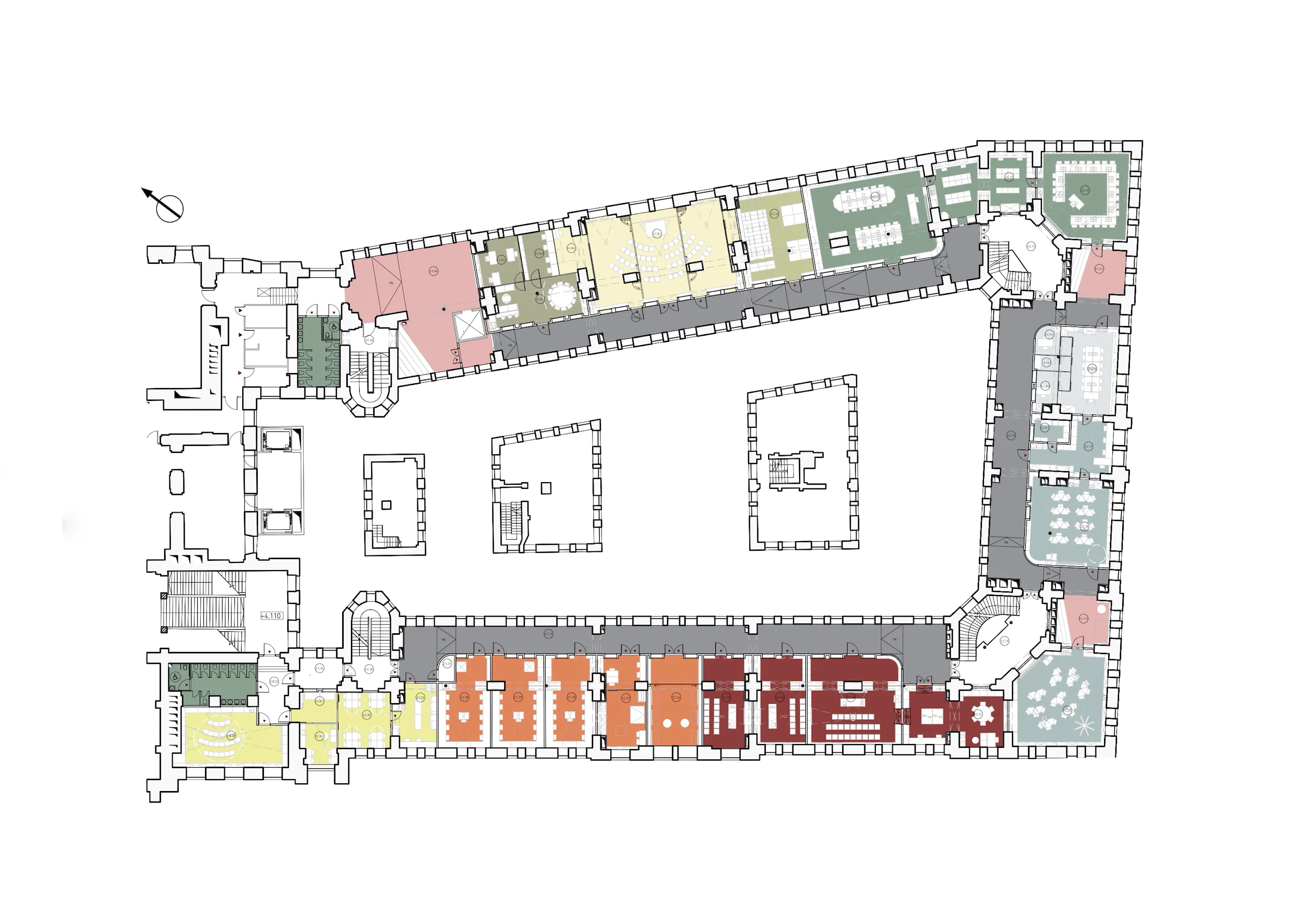
The team spent several months working alongside laboratory heads, gathering requirements for each discipline separately. Physics, biology, chemistry, and robotics each place different demands on equipment storage, workstation lighting, age-based zoning, and safety requirements. The result is not a single repeatable module but four distinct spatial scenarios unified by a shared material logic.
Light as a Working Tool, Not Decoration
In a laboratory, lighting solves several problems at once: it provides even illumination across the work surface without shadows — critical when working with a microscope or small components — allows intensity to be adjusted for specific tasks, and produces no glare on screens or glass surfaces.
Standard practice in school laboratories is ceiling-mounted fluorescent or LED panels at a fixed colour temperature of around 4000K. This delivers adequate lux at the surface but does not account for the difference between working with live specimens — where high colour accuracy is essential, CRI 90+ — and assembling electronic circuits, where contrast matters more. In the Polytechnic laboratories each zone received an independent lighting scenario with the ability to reconfigure.
Storage as Part of the Pedagogical Environment
In children’s and adolescent educational spaces, equipment storage is usually resolved in one of two ways: closed cabinets with no independent access for students, or fully open shelving without a system. The first prevents accidental contact with hazardous reagents but also removes the ability to pick up a tool independently. The second produces chaos within a few months.
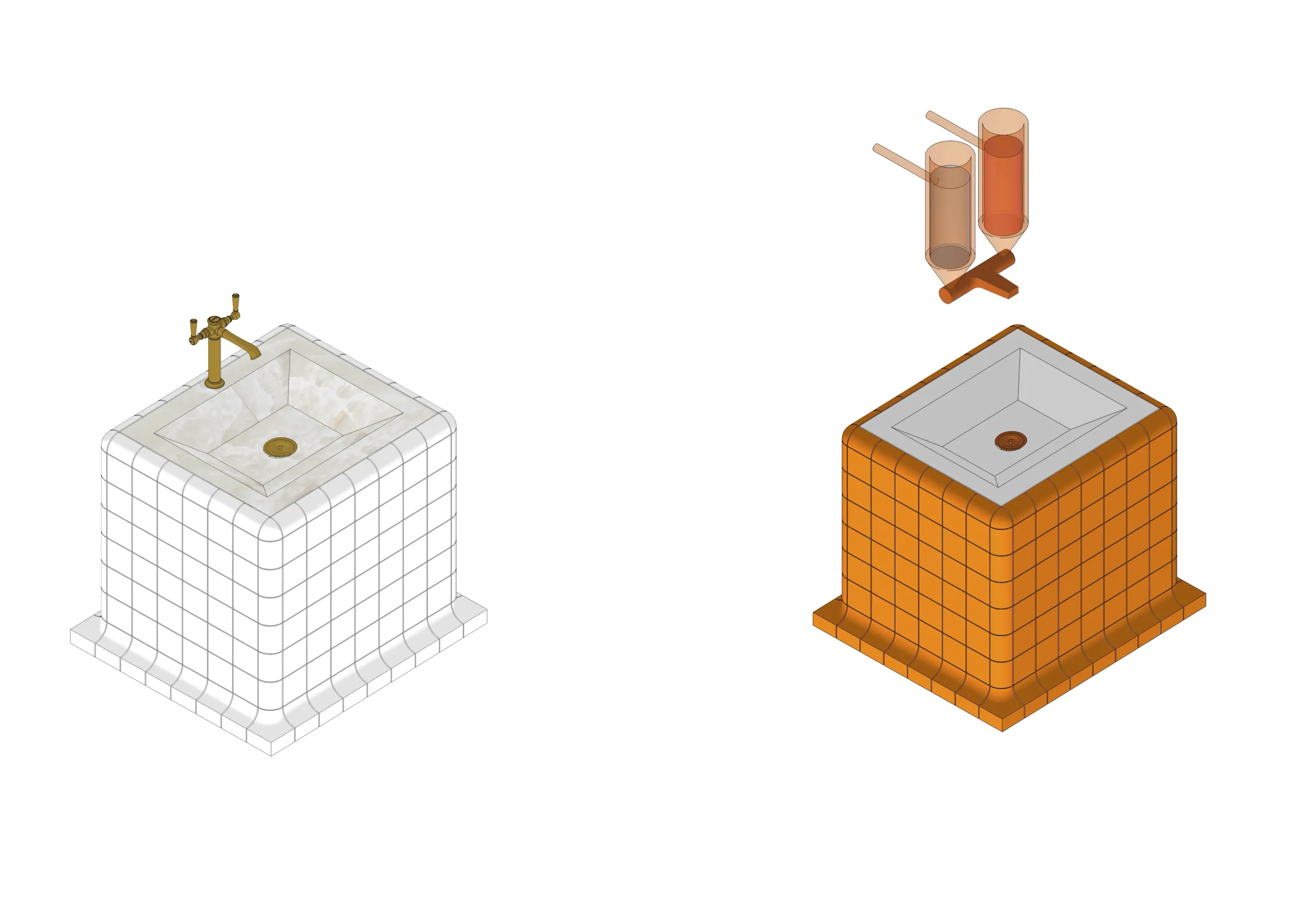
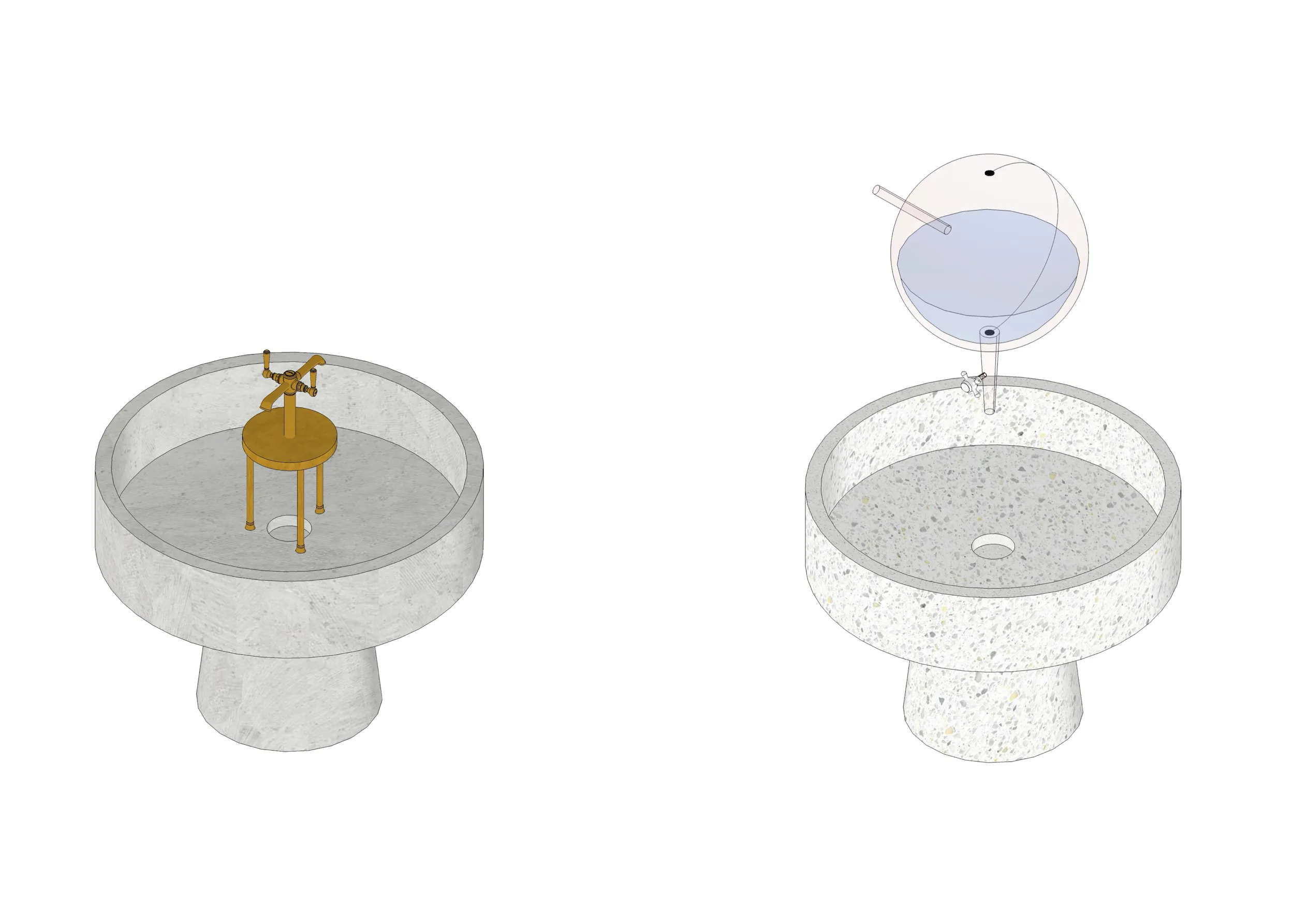
The project proposes a differentiated system: open access to consumables and tools that carry no risk, and zoned storage with restricted access for reagents and sensitive equipment. Furniture was developed to the anthropometrics of specific age groups. In a laboratory context this means not only worktop height but shelf depth, the force required to open locks, and the sightline radius from the working position.
A Nineteenth-Century Landmark as Physical Constraint
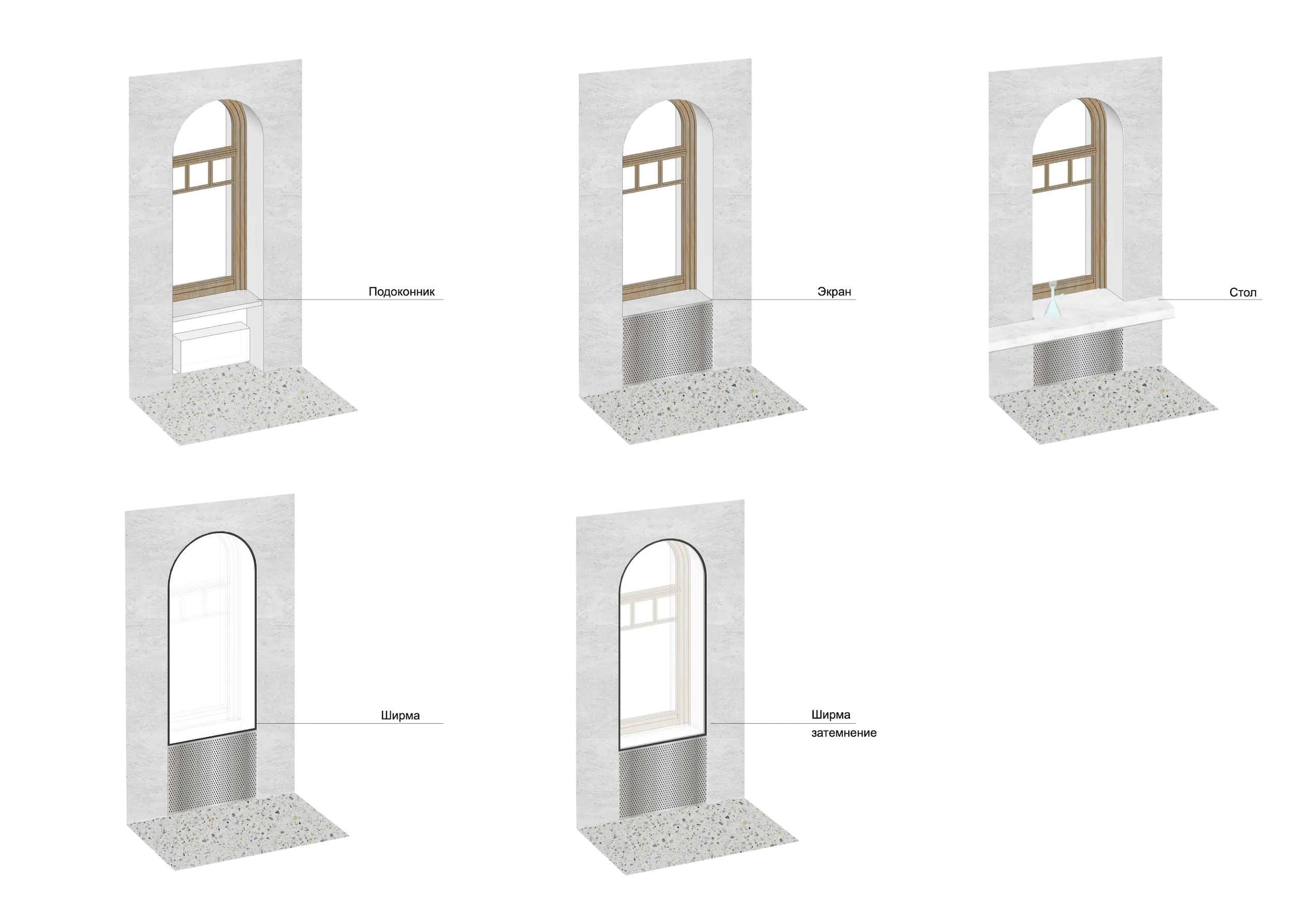
The1 Polytechnic Museum building was constructed in 1877 and holds federal listed status. This imposes direct constraints: load-bearing walls cannot be touched, original floor structures require load limitations, and historic surfaces must be preserved. Routing new engineering services — ventilation required for the chemistry laboratory and electrical supply for contemporary loads — is resolved without intervention in the historic structure.
The coexistence of a historic volume and new contents is not a question of style but a technical problem: how to install a fume hood in a room with an original coffered ceiling without compromising either the ceiling or the ventilation requirements. Junya2 Ishigami’s masterplan frames the reconstruction as a strategic process in which each individual decision is coordinated with the whole.
Restraint as a Working Principle
In pedagogical design — particularly for children — visual activity in the environment is often treated as a proxy for engagement. Bright colours, graphics, narrative elements on surfaces. Research into learning environments, including work by Barrett3 and Davies at the University of Salford, points in the opposite direction: excessive visual load reduces concentration, particularly in children with differences in information processing.
The Polytechnic laboratories choose restraint not as an aesthetic position but as a functional one. A calm, neutral background leaves attention free for the object on the table. The few accents — precise, placed at specific points — provide spatial orientation without overloading perception.
An environment that does not compete with its content allows the content to be primary. In a teaching laboratory where that content is a physical experiment, this is not a designer’s restraint. It is a condition of work.
Footnotes
-
Polytechnic Museum. The Building. polymus.ru ↩
-
Junya Ishigami + Associates. Polytechnic Museum reconstruction project. jnyi.jp ↩
-
Barrett, P., Davies, F., Zhang, Y., Barrett, L. (2015). The impact of classroom design on pupils’ learning: Final results of a holistic, multi-level analysis. Building and Environment, 89, 118–133. ↩