Polytechnic Museum Library
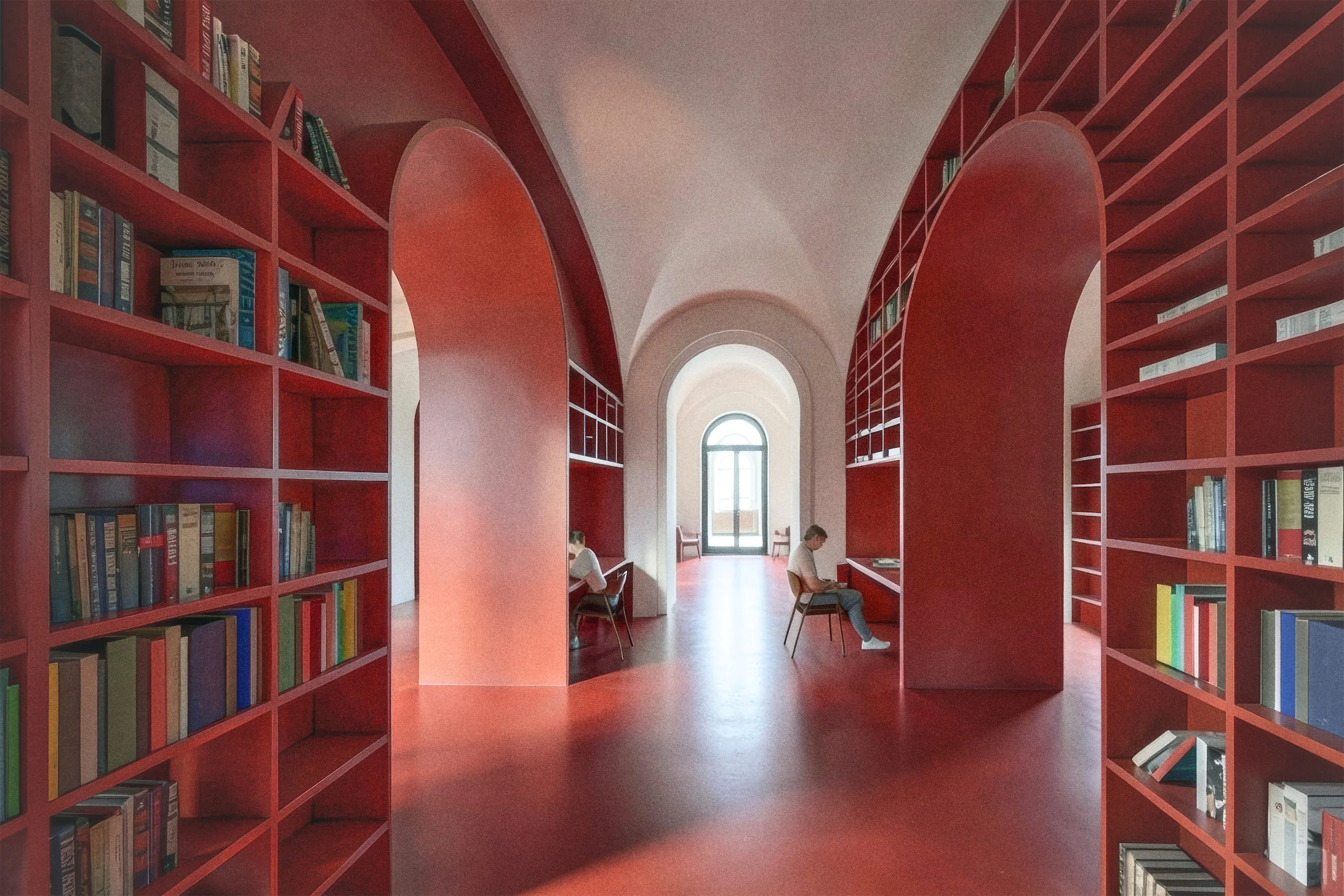
A library of 3.5 million volumes returns to its nineteenth-century building — with new interiors that read the historic structure and extend its logic rather than conceal it.
Gallery
Description
A Historic Collection in a Renewed Building
The Polytechnic Library has been assembling scientific literature for nearly 160 years: from nine books in 1864 to 3.5 million volumes today. The collection passed through several institutional transformations. The library of the Imperial Society of Naturalists, Anthropologists and Ethnographers was founded in 1864; the Polytechnic Museum library was established in 1872 alongside the museum itself. The two collections were merged only in 1923.
The most significant event in the library’s recent history was the reconstruction of the historic building on Novaya Ploshchad, where it has been housed since 1877. The reconstruction, underway since 2013 to a design by Japanese architect Junya Ishigami, added two floors by deepening the foundations. The interior brief was set separately: the historic shell was restored by conservators; the space inside was rethought.
The Building’s Structure as a Generator of Form
The building was constructed in three phases over thirty years. By the early twenty-first century, no one could say with precision how it was organised — with its staircases, arches, and connecting passages. Detailed drawings had not survived and the building had to be re-surveyed from scratch. The heterogeneity of the plan is not accidental but a consequence of phased construction with intervals. Each phase added its own module, differing in height and geometry from the last.
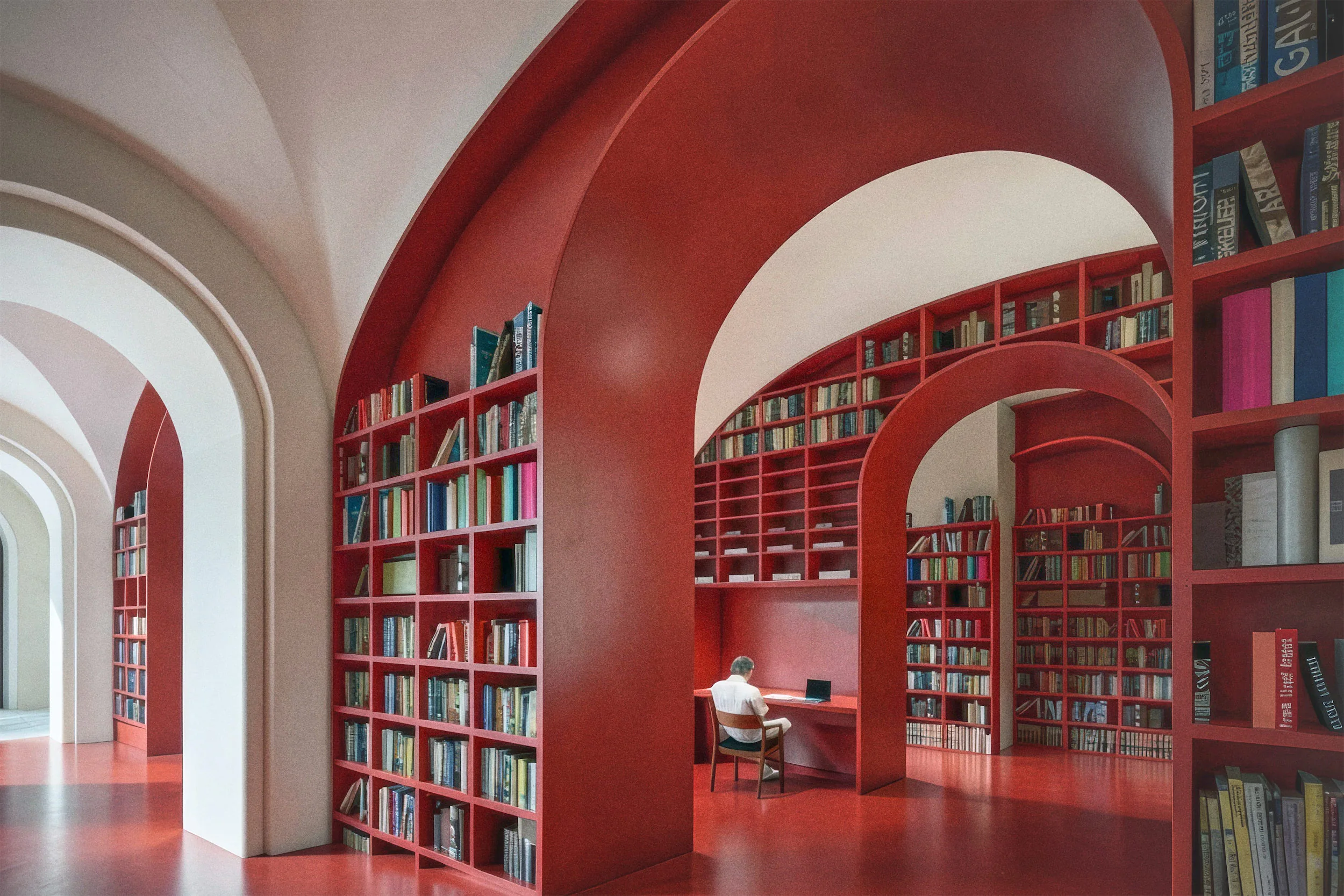
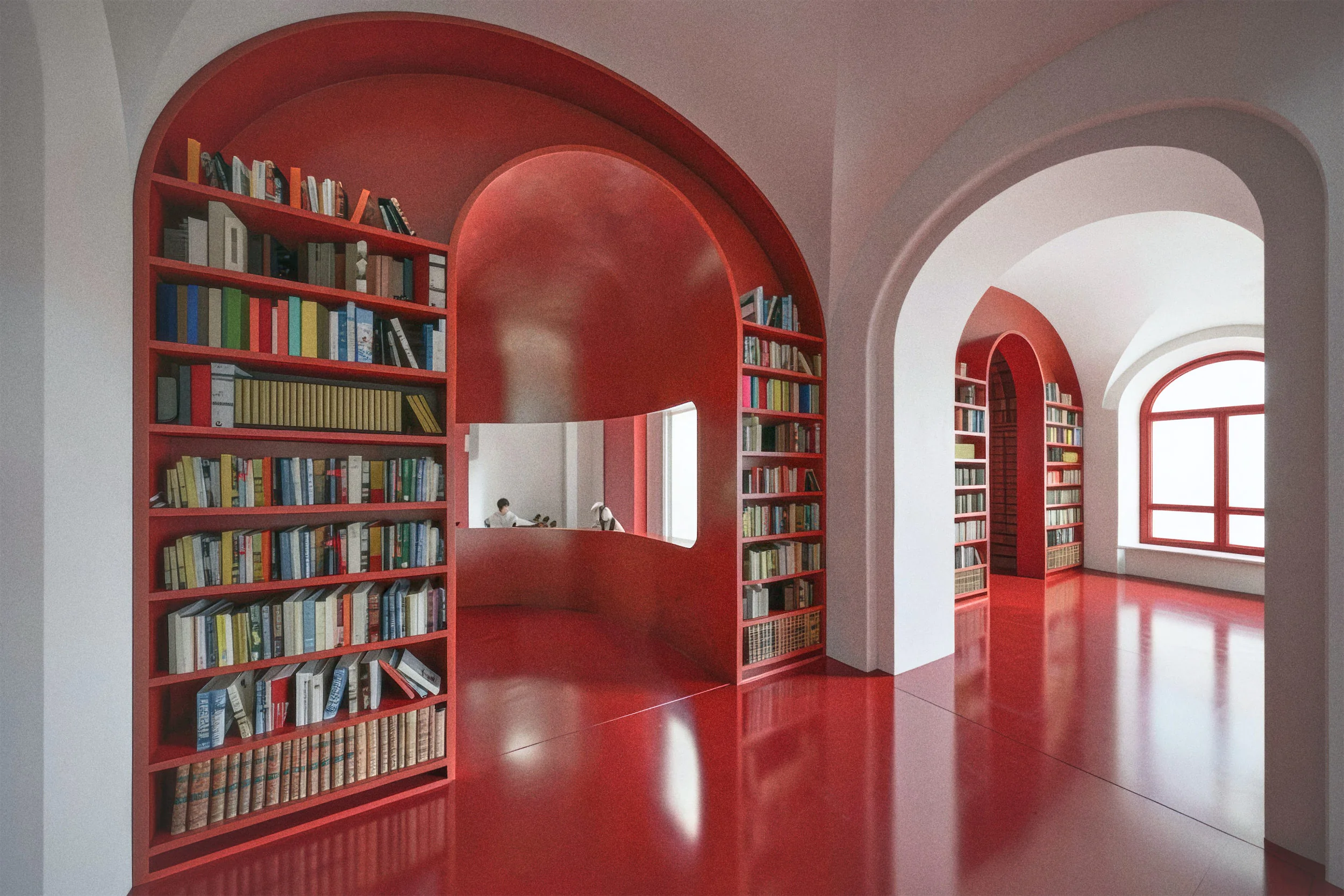
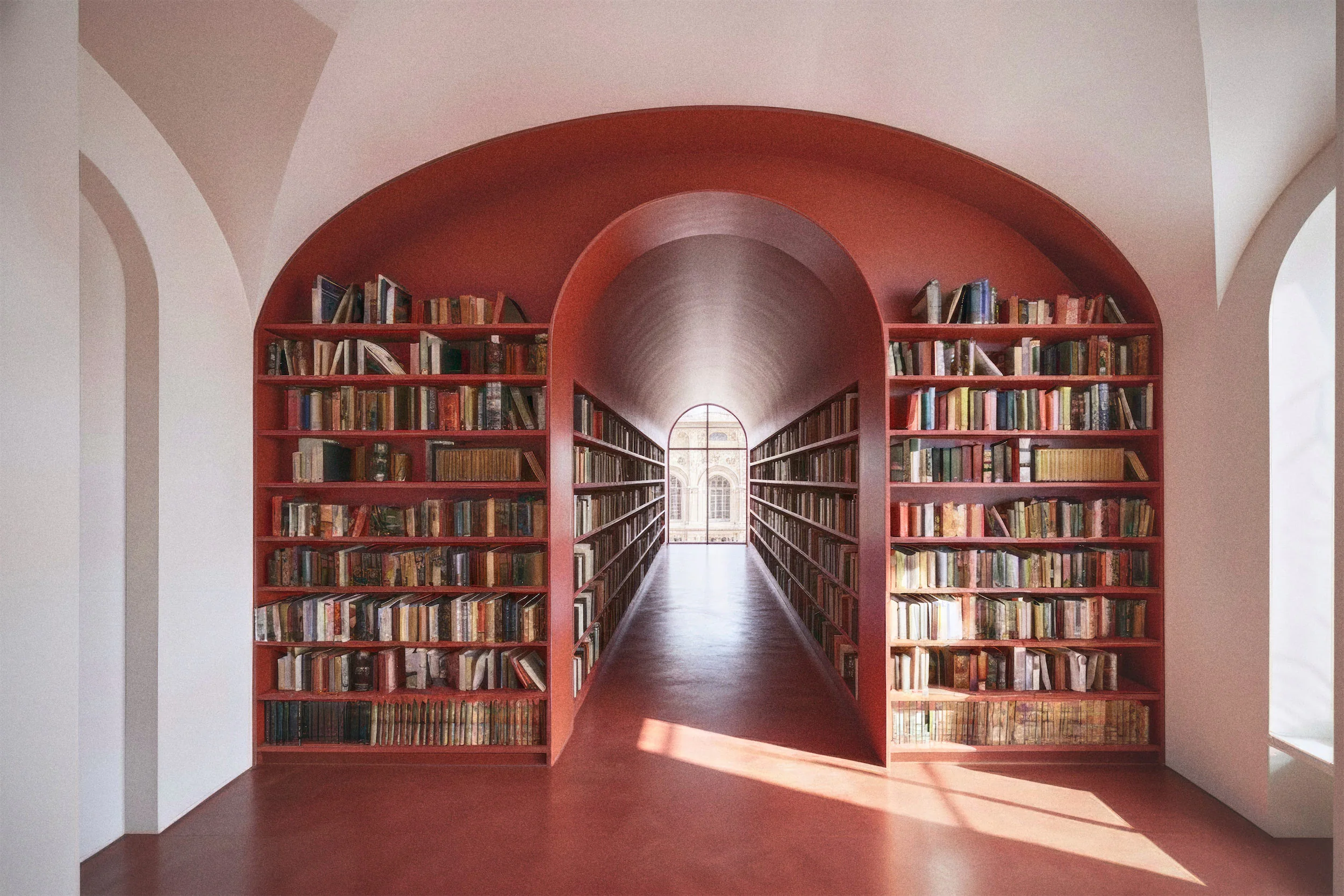
The project is built on reading this structure and extrapolating it literally into new elements. The principle is expressed through a specific device: decisions embedded in the existing construction are repeated in the furniture. This approach rules out designing from scratch. The form of each object is derived from the parameters of the load-bearing walls, spans, and rhythm of window openings — not from the typological norms of a reading room.
The reading room is resolved as a space for individual work. The planning logic is subordinate to isolation: each workstation has sufficient autonomy to be independent of its neighbours. At the same time the overall geometry of the space reads as unified. The colour and formal accents of the furniture support the scale of the room without disrupting its historic rhythm.
Furniture as Architectural Element
The bespoke pieces were developed within the same project, without engaging outside manufacturers of standard furniture. This is a deliberate decision. Standard office or library furniture is designed for averaged room parameters. The historic halls of the Polytechnic are different in height, proportion, and material character. A standard piece in this context either disappears or conflicts with the scale.
Bespoke furniture operates differently: its proportions are derived from the specific room rather than from generic dimensions. The result is that the furniture is perceived not as objects introduced into the space but as part of the hall’s own structure. The boundary between architecture and object is deliberately blurred.
The form and colour of the furniture carry independent weight. The space is described as restrained and well-suited to solitary work, yet expressive in form and colour. This is not a contradiction: formal intensity within an overall quiet produces an environment that holds concentration without becoming a neutral backdrop.