Prospekt Library
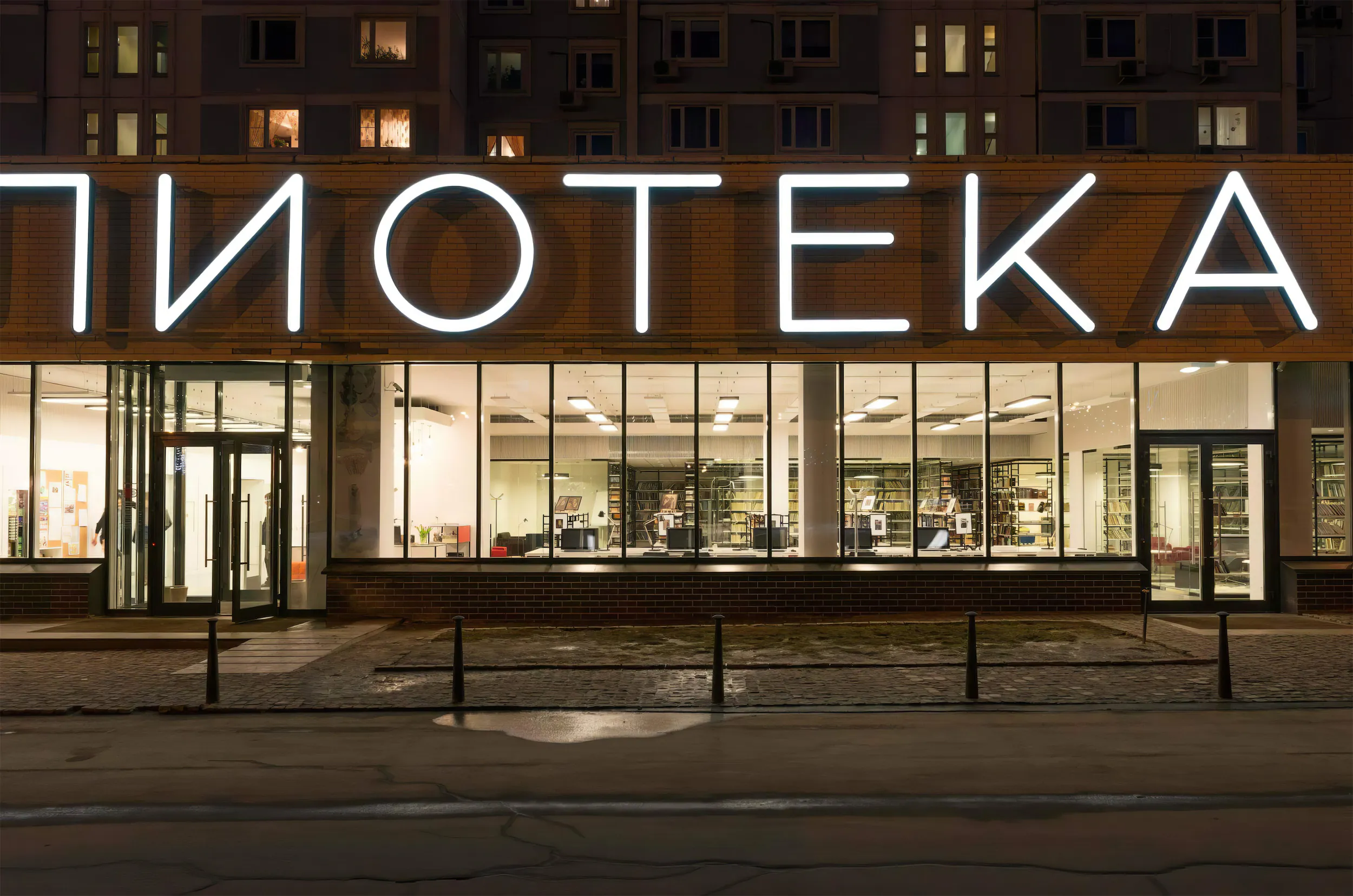
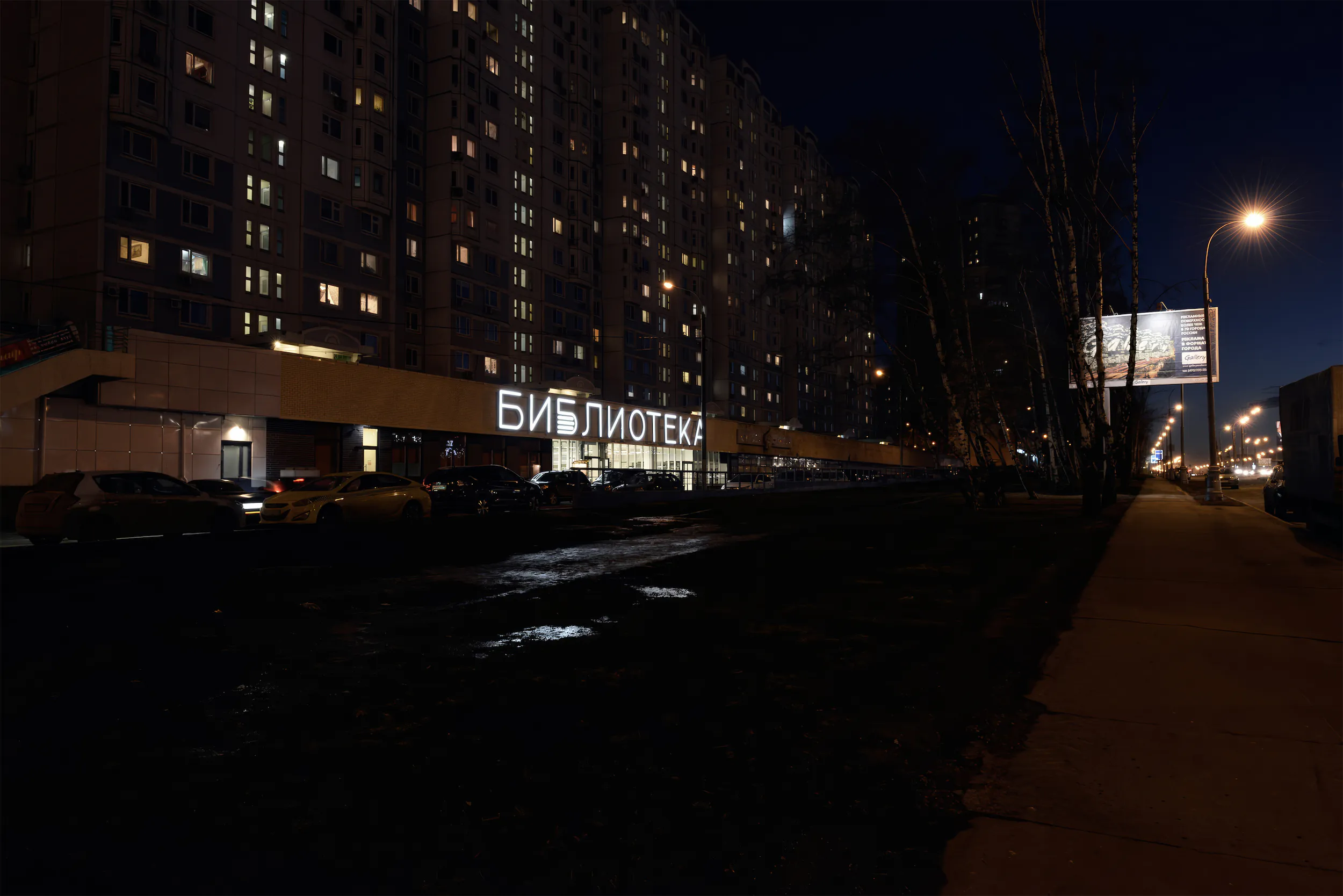
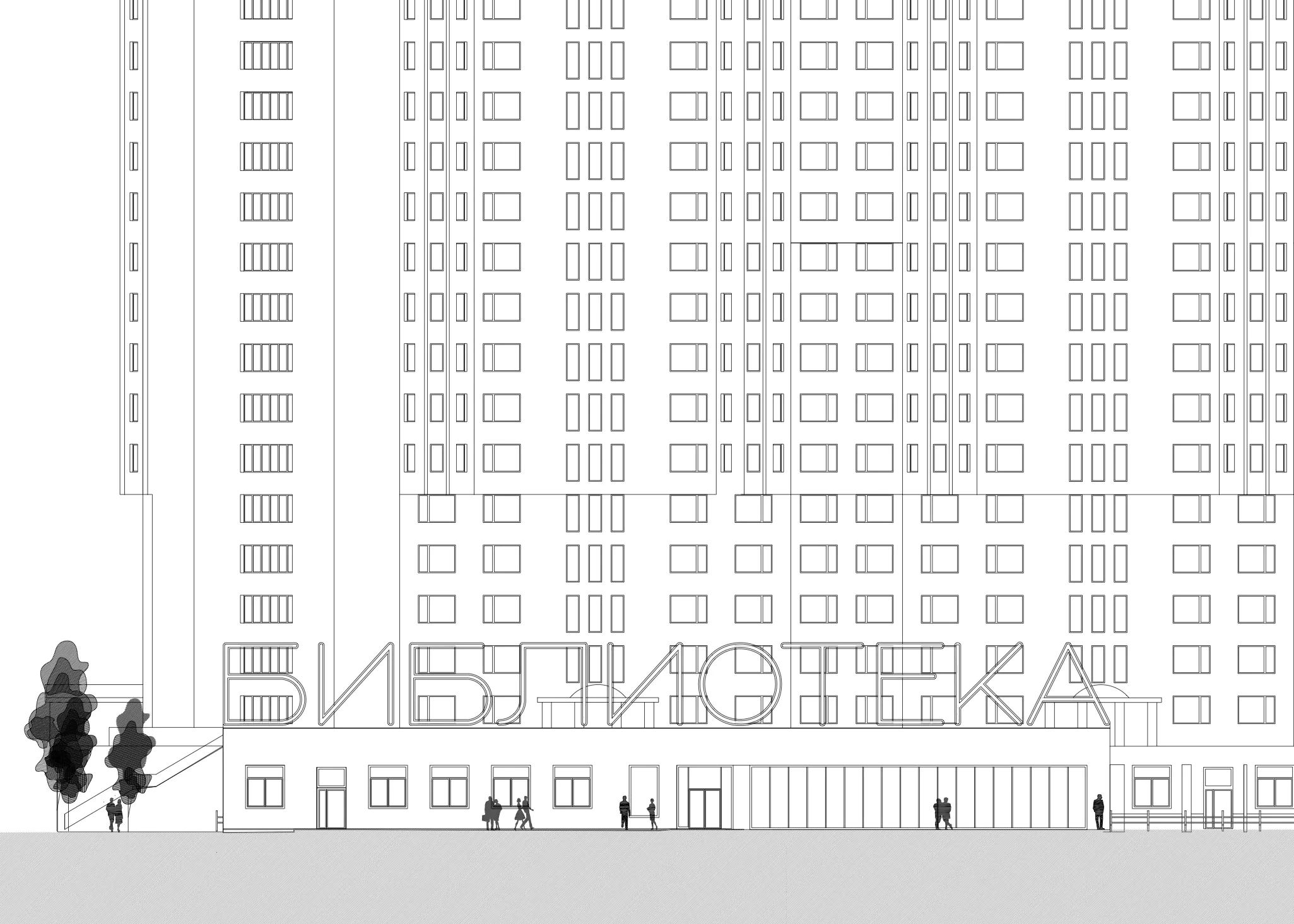
Library No. 127 at the far end of Leninsky Prospekt, reimagined as a public space visible from a highway — through panoramic glazing and 1.8-metre letters on the faсade.
Gallery
Drawings
Description
Signage Designed for a Fast Road
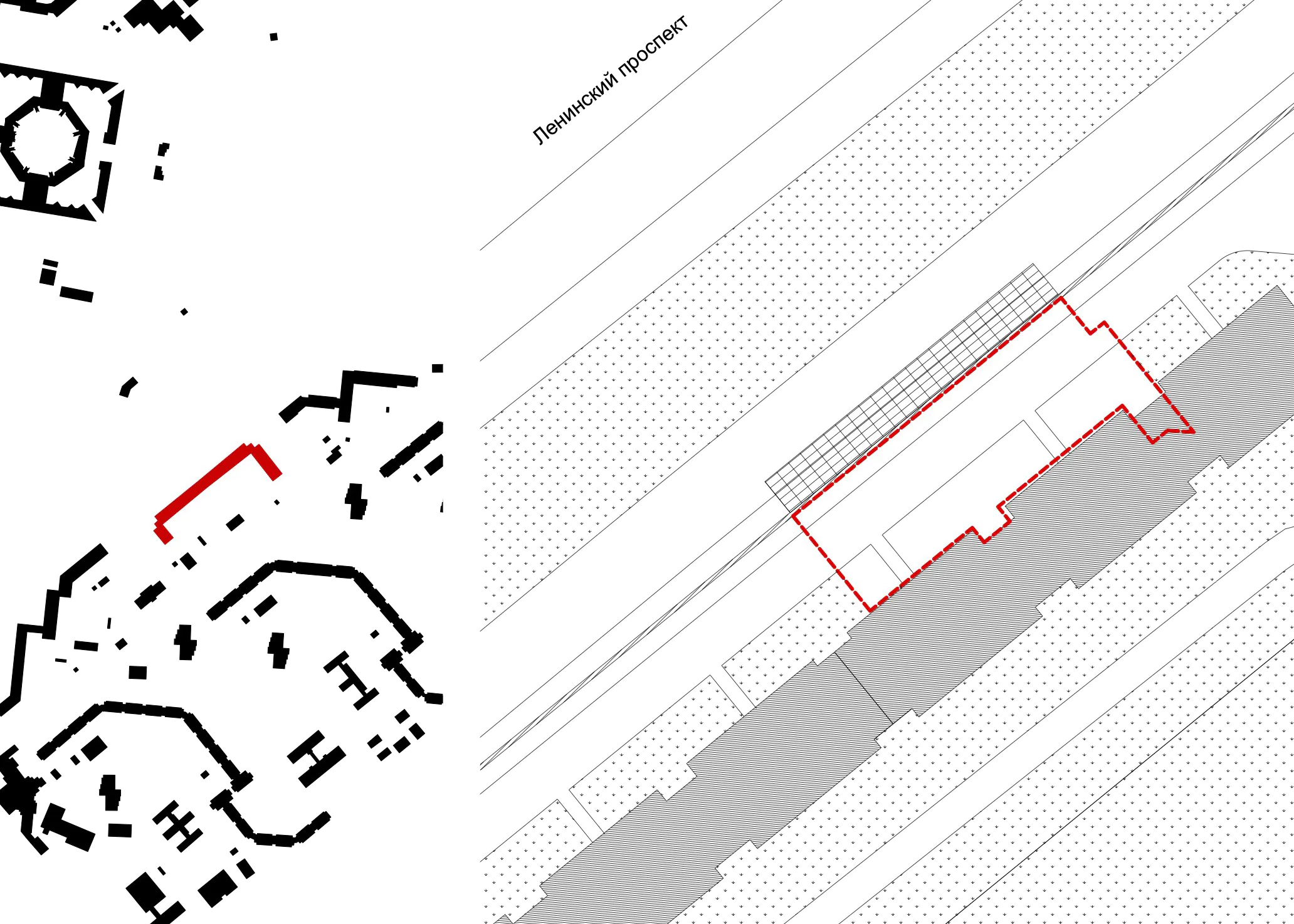
Leninsky Prospekt near building 127 is a wide, multi-lane road with dense traffic. Pedestrian flow here is minimal: the primary audience moves by car or public transport. Communicating with that audience requires a scale that matches the speed of perception.
The letters of the БИБЛИОТЕКА sign — 1.8 metres tall, illuminated in white — are legible from the carriageway at speed. This is not decorative typography but a navigation decision: the sign functions as a road marker rather than a shopfront. On a façade that had been featureless for years, it creates the only visual anchor.
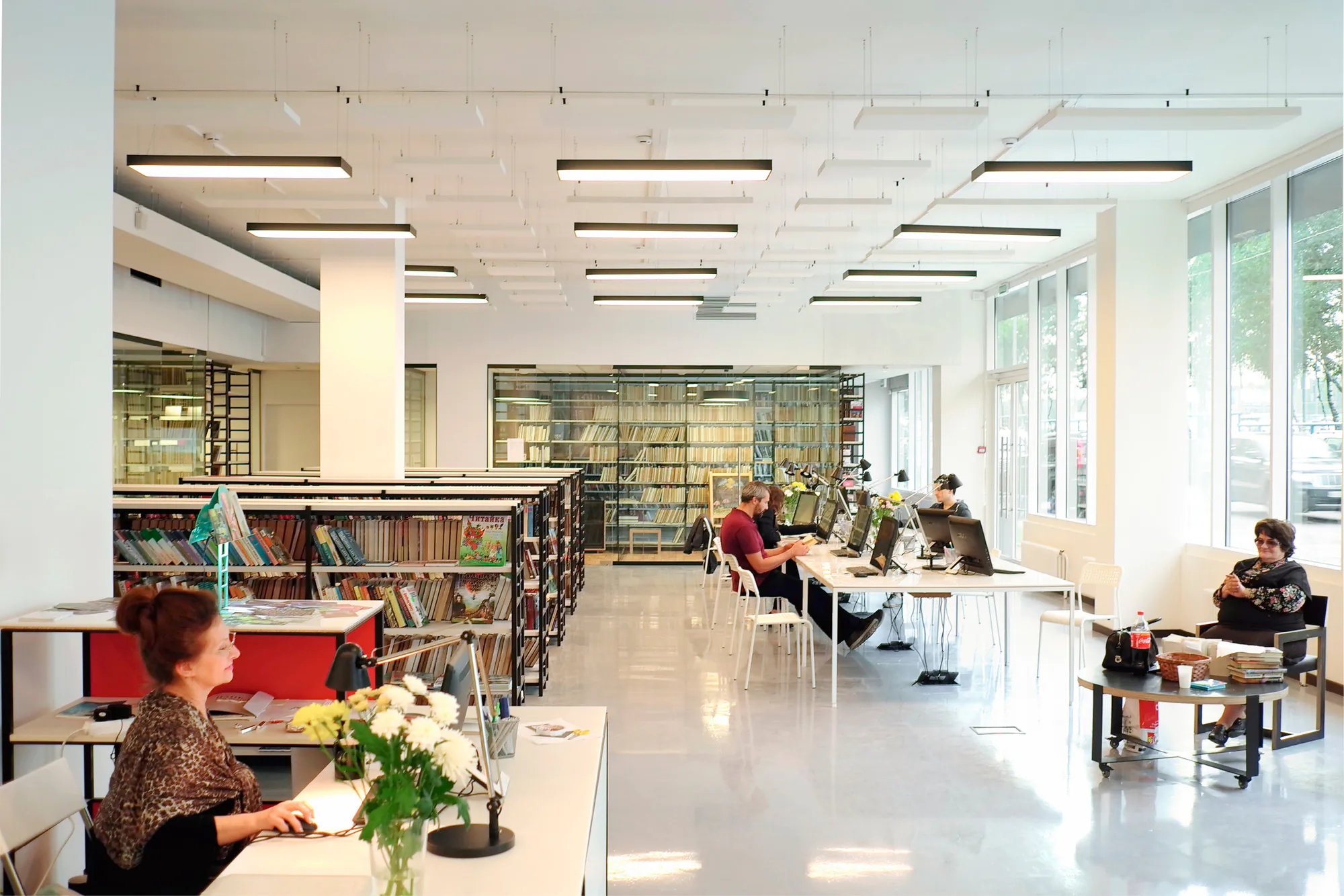
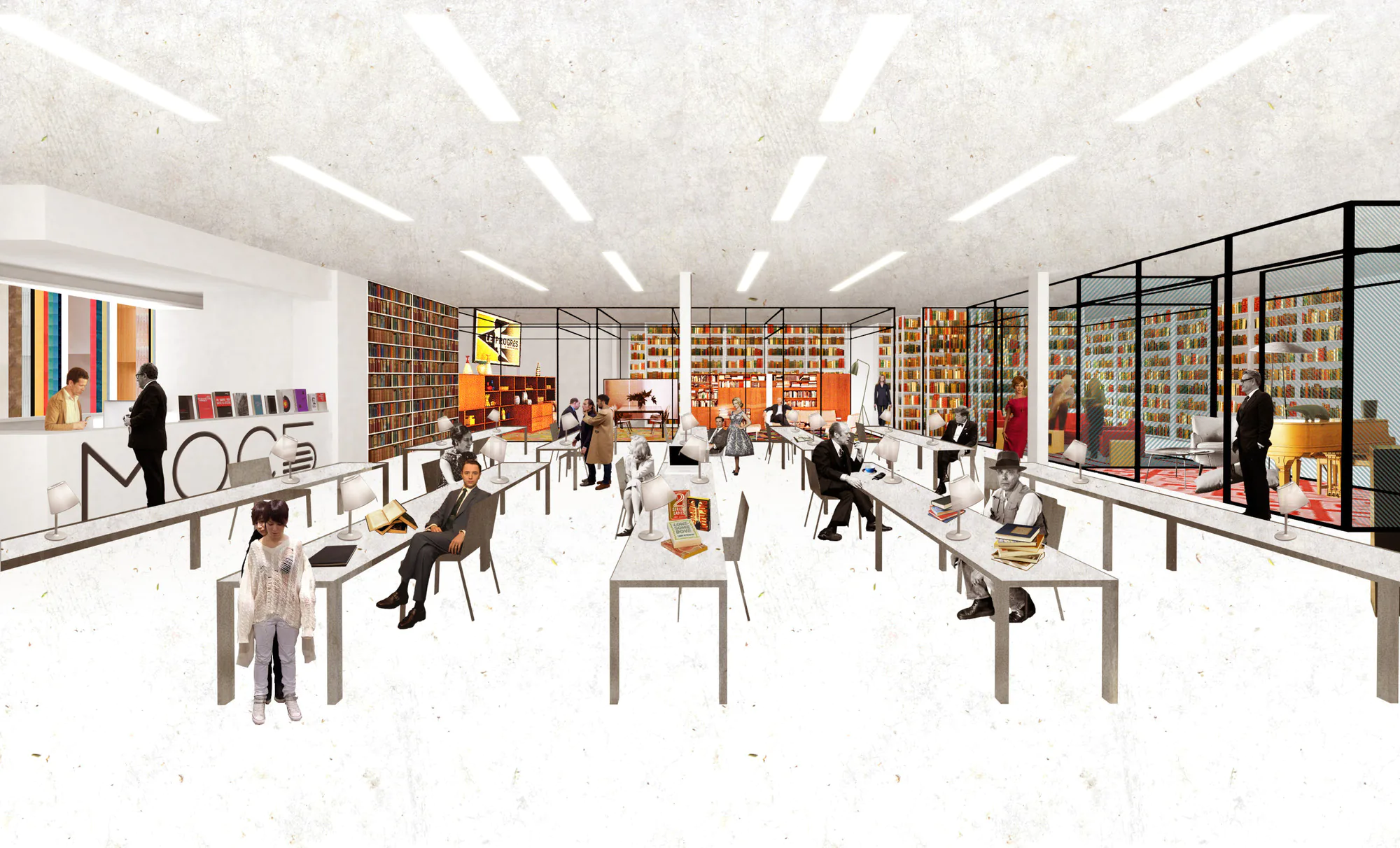
At the same time, panoramic glazing at the base of the building opened the interior to the outside. The reading room — long tables, people at work — is visible from the pavement and from the road. The sign makes a promise; the interior delivers it.
Planning Logic: Cabinets Instead of Open Plan
Most municipal library reconstructions follow one scheme: remove the partitions, create a single open space with shelving. Prospekt takes a different approach.
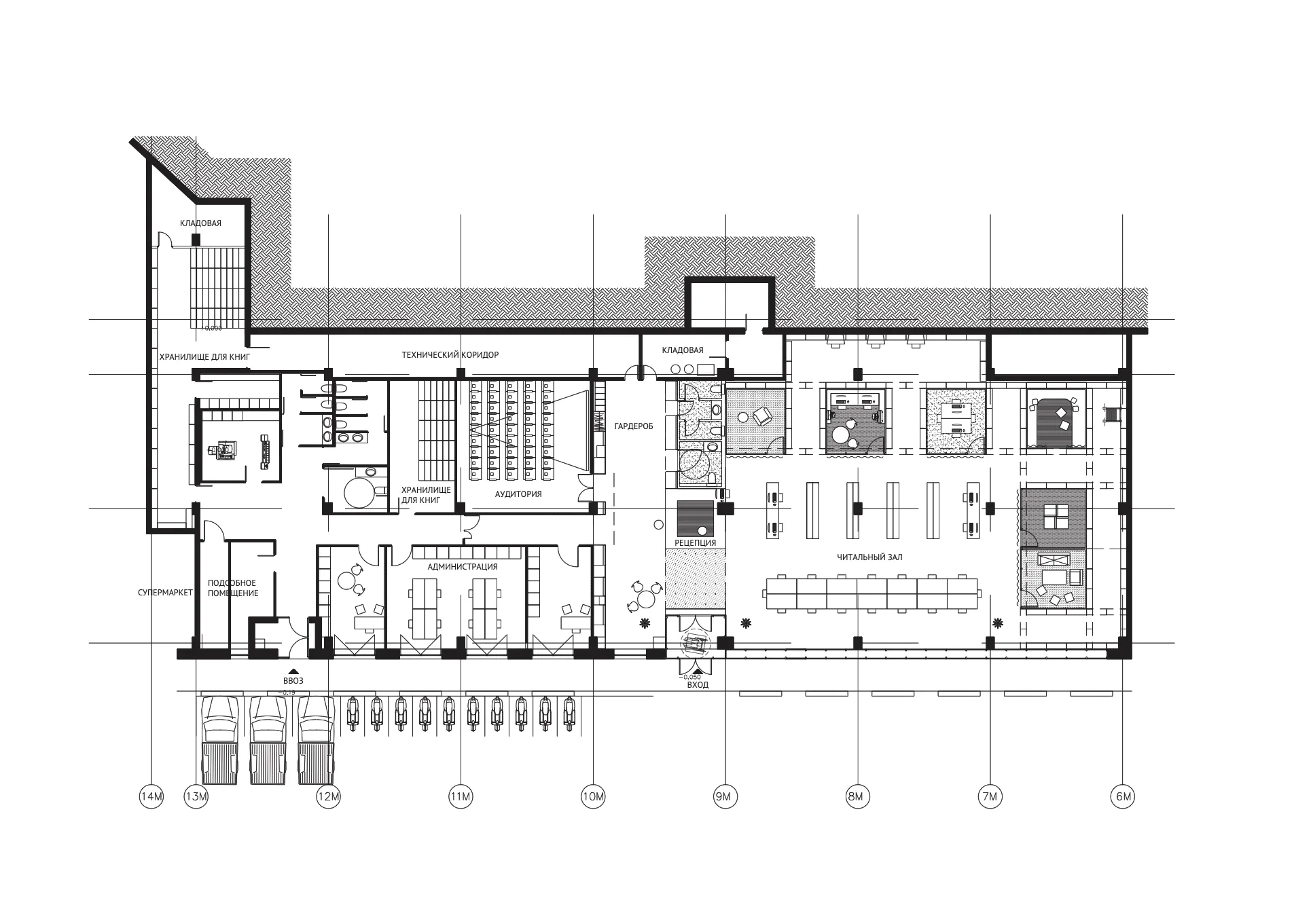
The space is divided into a system of glazed rooms — autonomous zones with partial visual connection. Each room accommodates a specific mode of use: film screening, a course, a meeting, individual work. The glass partitions preserve the visual continuity of the space while providing acoustic separation between zones.
This structure responds to the actual scenario: events with different noise levels, different audiences, and different time rhythms run in parallel. An open plan does not separate these programmes.
Materials Under Operating Conditions
The long working tables the library became known for have a surface that accumulates traces of use without visual degradation. Scratches and wear read as patina rather than damage. Gloss laminate in the same conditions peels and delaminates at the edges.
Context: The Reform of Moscow’s Libraries
Of the 448 municipal libraries operating in Moscow at the time the project launched, Library No. 127 was unremarkable. Closed stacks, fixed rules, low footfall — a standard picture. The Moscow library reform initiated by the Department of Culture after 2012 set out to transform1 a number of them into destinations with an expanded programme.
A liberal lending policy and an events programme only work if the space reads from outside as open and accessible. The sign and the transparent façade make the library visible before a person has decided to enter.
Postscript
Most library reconstructions work with the interior and leave the façade untouched. Here the key decisions are on the outside: the sign and the glazing. They change the building’s relationship with the highway before any conversation about layout or programme begins.
Footnotes
-
Moscow Department of Culture. Library Development Programme as Cultural Centres. Moscow, 2013–2018. ↩
Analysis
Process